




Learn More: How to Deal With FDA's Food Hauling Rules
What Fleets Need to Know About FDA's Food Transport Rules
The Food and Drug Administration regulations on the safe transport of food went into effect in 2018. The regulations apply to vehicles, operations, driver training, and records.
by Tom Bray, J.J. Keller
April 25, 2017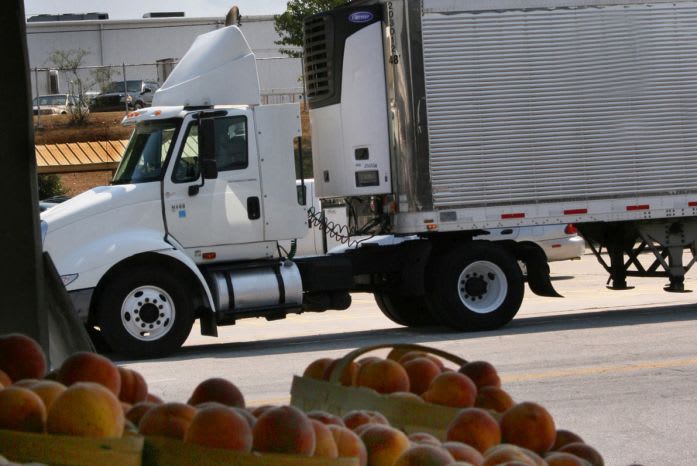
The regulation applies to shippers, receivers, loaders, and carriers involved in the transportation of human or animal food within the U.S. Photo: Carrier Transicold
5 min to read
The regulation applies to shippers, receivers, loaders, and carriers involved in the transportation of human or animal food within the U.S.Photo: Carrier Transicold
The Food and Drug Administration regulations on the safe transport of food went into effect in 2018. The regulations apply to vehicles, operations, driver training, and records.
FDA was required by the Sanitary Food Transportation Act of 2005 and the Food Safety Modernization Act of 2011 to establish regulations to reduce the risk of food becoming contaminated during transportation. FDA proposed these regulations in 2014 and finalized them in the spring of 2016.
Who and what is covered?
The regulation applies to shippers, receivers, loaders, and carriers involved in the transportation of human or animal food within the United States. There are a few exceptions, including:
Shippers, receivers, or carriers engaged in food transportation operations that have less than $500,000 in average annual revenue (the average is based on annual revenue the previous three calendar years);
Transportation activities performed by a farm and the transportation of live animals;
Food that will be transshipped to another country;
Transportation of compressed food gasses (e.g. carbon dioxide, nitrogen or oxygen intended for use in food and beverage products), and food contact substances;
Transportation of human food byproducts transported for use as animal food without further processing; and
Transportation of food that is completely enclosed by a container except for a food that requires temperature control for safety.
The regulations, found in Part 1 of Title 21 of the Code of Federal Regulations (CFR), apply to vehicles and transportation equipment, transportation operations, training, and records.
The shipper is the entity that is ultimately responsible for the safe transportation of the food product. However, the shipper can, by written agreement, assign responsibilities to other entities. If the shipper assigns responsibility to the carrier for providing safe transportation, the carrier has become the responsible entity for the following:
Making sure the vehicle and equipment meet the shipper’s specifications and requirements;
Making sure any shipper requirements for cleaning and sanitation are met.
If temperature control is required, pre-cooling the vehicle or equipment before loading (shipper is to verify that the temperature is correct before loading);
Making sure effective measures are taken to avoid contamination or cross-contamination, such as housekeeping practices and hand washing;
Making sure the food is appropriately isolated or segregated to avoid contamination by raw food products or non-food products that are part of the same shipment;
Meeting the temperature control requirements of the shipper;
Providing information to the shipper, if requested, about the previous product carried in a vehicle that is a “bulk vehicle” (one that carries bulk shipments that are in direct contact with the inside of the vehicle); and
Providing information on the most recent cleaning of a bulk vehicle, if requested.
Carriers must also have written procedures covering:
Cleaning, sanitizing, and inspecting vehicles and equipment;
Monitoring and recording the temperature of a temperature-controlled shipment; and
Recordkeeping related to the last shipment and the most recent cleaning of a bulk vehicle.
Driver training
Just as with the vehicles and equipment used to transport food, the shipper is the one responsible for the training of drivers transporting food. Here again, a shipper’s written agreement with a carrier may require that the carrier provides the training. Whether it is the shipper or the carrier, the driver will need to be in a training program that provides:
An awareness of potential food safety problems that may occur during transportation;
Instruction on basic sanitary food transportation practices; and
Instruction on the responsibilities of the carrier in the transporting of the food product.
The training will be required upon hire and as needed thereafter. The carrier will be responsible for maintaining records of the training. The records must include the driver’s name, the date of the training, and a description of the training.
Records
Shippers and carriers are required to create and maintain specific records related to the food shipment process. Carriers must maintain:
Any written agreements related to procedures or responsibilities assigned to them by shippers. These agreements must be kept the entire time they are in effect, then for an additional 12 months.
The procedures that a carrier is required to have under the regulations, or is required by a shipper to have and/or follow under the terms of an agreement. The procedures must be kept the entire time they are in effect, then for an additional 12 months.
Records of individual driver training. These records are to be kept for the entire time the driver is involved in food transportation, then for an additional 12 months.
The records can be paper or electronic and must be made available within 24 hours of a request by an authorized individual. The procedures related to cleaning and inspecting of vehicles and equipment must be available onsite where the vehicles are loaded.
Review your transport processes
If you haul food that fits into one of the covered categories, food that is not completely enclosed in a container, or food that requires temperature control, these new regulations will affect you. Make sure you and the shippers you work with are on the same page regarding these requirements, or you may find yourself losing customers if equipment and/or in-house procedures are not up to the standards your shippers require.
Tom Bray is a transportation industry consultant at J.J. Keller & Associates, with an extensive background in DOT compliance, driver training, CDL testing and more. This article was authored under the guidance and editorial standards of HDT’s editors to provide useful information to our readers.
Subscribe to Our Newsletter
More Safety & Compliance

FMCSA Pauses Biennial-Update Enforcement Amid Motus Transition
Carriers whose updates were due on or after June 1 have more time, while FMCSA works to stabilize its new registration system and warns of phishing sites impersonating its new carrier registration system, Motus.
Read More →
ZF Expands Commercial Vehicle Push in North America
ZF is expanding its North American commercial-vehicle presence with new transmission applications, electrification, trailer technology and autonomous-driving systems.
Read More →
Truck Drivers Need More Than Another Alert
Fleets have more visibility into truck health, safety events, and driver activity than ever. The next challenge is turning all that information into useful guidance for the person who has to decide what to do next.
Read More →
Tesla Wants a Self-Driving Semi. Are Cameras Enough?
Could Tesla’s camera-only autonomous driving technology work on an 80,000-pound Semi? In this commentary, HDT's Deborah Lockridge takes a look at Tesla, Cybercab, and how autonomous trucks see the road.
Read More →
What DOT’s Automated Vehicle Strategy Means for Trucking
The U.S. Department of Transportation issued a new automated-vehicle strategy that outlines plans for driverless-truck regulations, cross-state freight corridors, and federal safety standards.
Read More →
NYC Expands Speed, Pedestrian Safety Tech Across Fleet
New York City is expanding intelligent speed assistance and pedestrian-alert systems across its municipal fleet, moving the technologies from pilot programs into vehicle procurement and retrofit requirements.
Read More →
FMCSA Removes 110 Truck Driver Training Schools from Certified ELDT List
Federal regulators also are targeting more than 160 additional training providers and launching a nationwide audit of third-party CDL skills testers as part of a broader crackdown on trucking fraud.
Read More →
Beyond DOT Compliance: What Makes a Trucking Fleet Truly Safe?
A trucking fleet can follow every rule and still make unsafe decisions. The real test comes when safety conflicts with freight, productivity, or cost.
Read More →
Hours of Service Pilot Programs: FMCSA Readies for 2027 Rollout
Two pilot programs could eventually reshape hours-of-service rules, giving truck drivers options to pause their 14-hour clock or use longer split sleeper rest periods.
Read More →
New Guide Offers Pet Safety Tips for Truck Drivers
Hundreds of thousands of pets travel in truck cabs. A new safety guide from Volvo Trucks and the Center for Pet Safety offers practical advice for truck drivers who bring dogs and cats along for the ride.
Read More →