




Shell Debuts Fuel-Efficient Starship Concept Truck
Shell and Airflow Truck Company have debuted the full-size version of the company’s Starship Project truck - a concept Class 8 truck that maximizes fuel efficiency using a combination of custom and currently available technologies.
by Staff
March 6, 2018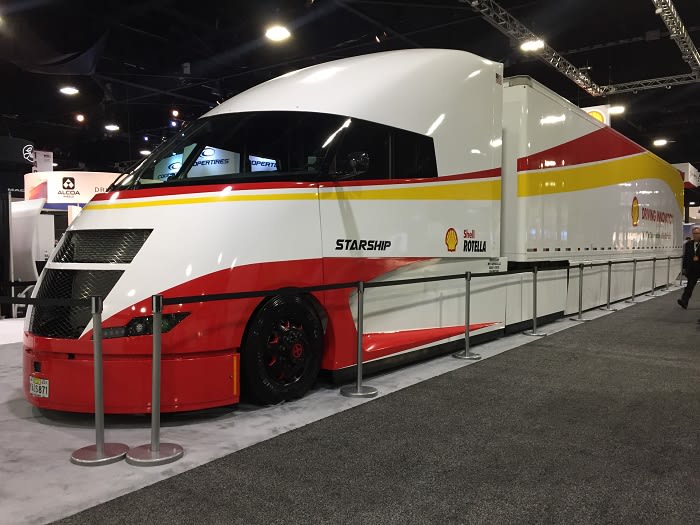
The Starship Project is a concept Class 8 truck that maximizes fuel efficiency using a combination of custom and currently available technologies. Photo: Deborah Lockridge
2 min to read
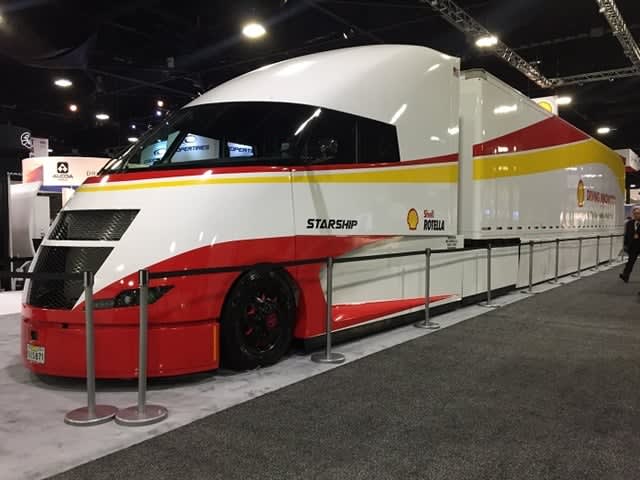
The Starship Project is a concept Class 8 truck that maximizes fuel efficiency using a combination of custom and currently available technologies. Photo: Deborah Lockridge
Shell and Airflow Truck Company have debuted the full-size version of the company’s Starship Project truck – a concept Class 8 truck that maximizes fuel efficiency using a combination of currently available technologies.
The long-teased Starship Project concept truck was finally unveiled at The Technology and Maintenance Council Annual Meeting in Atlanta. The project was first announced in 2015 and was designed by Bob Sliwa’s AirFlow Truck Company, which produces hyper-efficient commercial trucks.
“We seek projects such as the Starship initiative to keep Shell at the leading edge of technology development and energy efficiency,” said Bob Mainwaring, technology manager for innovation, Shell Lubricants. “The transportation industry is constantly changing, and our goal is to be at the forefront of innovation by collaborating with companies like AirFlow and others to develop creative solutions that provide benefits for years to come.”
The body of the Starship Project tractor is a custom-made aerodynamic design made of carbon fiber. This includes the side skirts, hood, and front end. A custom, Department of Transportation-approved wrap-around windshield was designed specifically for the truck. The trailer includes energy efficient features such as full side skirts to reduce drag and a 5,000-watt solar array on top of the trailer to power interior accessories and reduce the energy load.
The Starship is powered by a 2017 Cummins X15 Efficiency 6-cylinder engine with 400 horsepower and 1,850 ft.-lbs. of torque that has been paired with a transmission that has been calibrated to run at very low speeds, down to 800 rpm.
The truck also makes use of Shell’s low viscosity synthetic lubricants, running on the Shell Rotella T6 Ultra 5W-30, which is an API-FA-4 engine oil that has been formulated to provide better fuel economy, improved high and low temperature performance and meets the requirements for many low emissions engines.
It will also use a number of full synthetic Shell Lubricants products including Spirax S6 GXME 75W-80 transmission oil, Spirax S5 ADE 75W-80 differential oil and Spirax S6 GME 40 wheel hub oil. In addition, Shell Rotella Extended Life Coolant will provide excellent high-temperature protection and heat transfer. Shell Rotella Diesel Exhaust Fluid, a high purity diesel exhaust fluid, will also be in the truck.
More Fuel Smarts

Sponsored•September 9, 2026
How Fuel Delivery Shapes Engine Performance
Fuel delivery depends on more than what happens at the injector. For fleet, maintenance and technical professionals, looking at the full path from pump to injector can provide useful context for understanding engine performance.
Read More →
East Coast Port Launches $45M Electric Truck Push
The Port Authority of New York and New Jersey announced millions in incentives for zero-emission drayage trucks, yard tractors, and new charging hubs near the port.
Read More →
California Bill Could Shed Light on Electric Truck Prices
Why do battery-electric Class 8 trucks remain so expensive? A California bill headed to Gov. Gavin Newsom would give fleets and state agencies more visibility into what manufacturers charge.
Read More →

Detroit Opens Orders for EPA 2027 Engines
Detroit isn’t starting from scratch to meet EPA 2027 diesel emissions standards. Its Gen 6 DD13 and DD15 engines keep much of today’s platform while updating the fuel and aftertreatment systems.
Read More →
Zero-Emission Truck Corridor Planned for West Coast
California, Oregon, Washington, British Columbia and Baja California are coordinating plans for truck charging and hydrogen fueling from Canada to Mexico.
Read More →
A Closer Look at Kenworth’s Electric T880E Vocational Truck [Video]
Learn more about Kenworth's T880E battery-electric vocational truck at the Paccar Technical Center, including its range, applications, upfitting considerations, and PTO options, in this HDT Spotlight video.
Read More →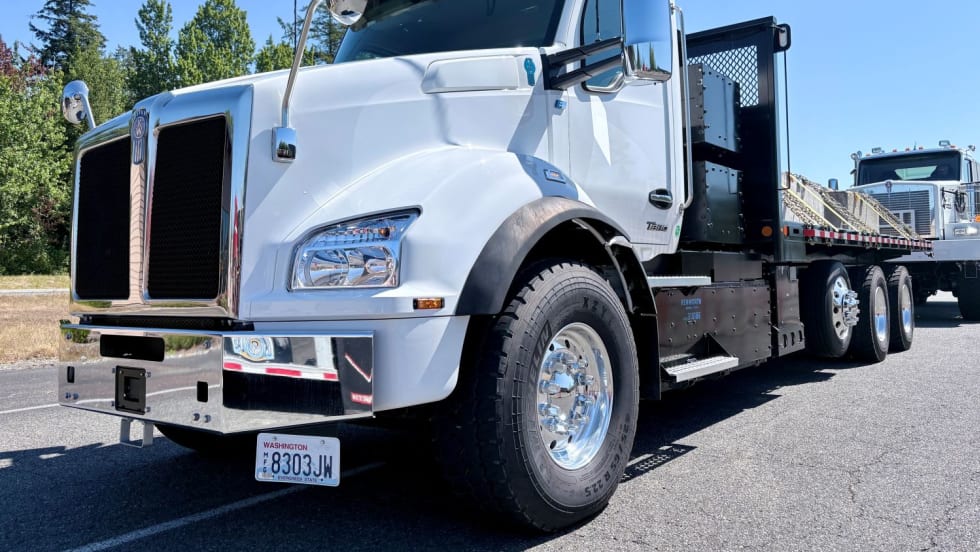
Kenworth T880E Brings EV Power to Vocational Trucks
A closer look at the Kenworth T880E’s range, charging, powertrain and upfit options — and where fleets are showing the most interest.
Read More →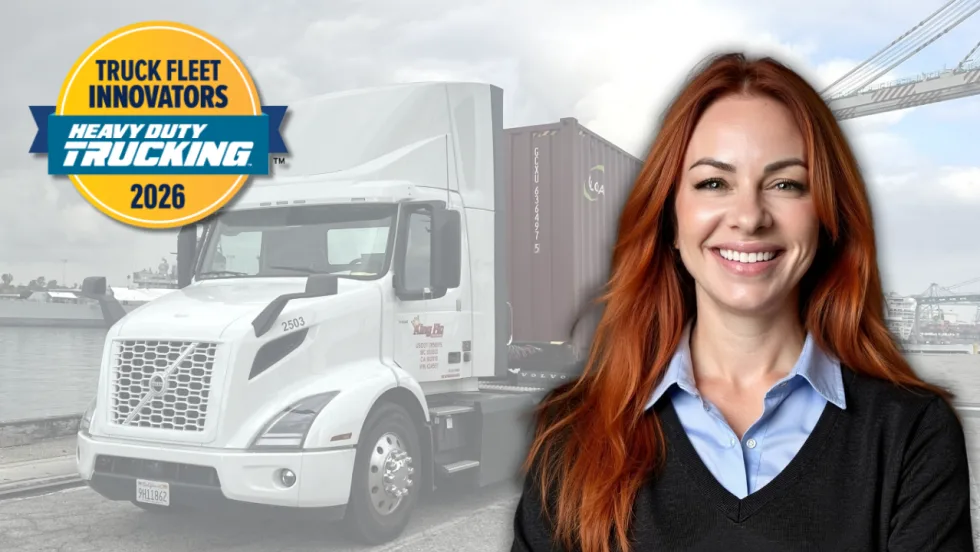
Jennie Abarca Is Proving Electric Trucks Can Do the Job
HDT Truck Fleet Innovator Jennie Abarca is building confidence in fleet electrification one load at a time while openly sharing the challenges she encounters along the way as a small-fleet owner.
Read More →
Cummins Adjusts 2027 Engine Rollout After EPA Proposal
The engine maker will gradually introduce its new Model Year 2027 diesel engines while continuing to offer current models during the transition, citing the EPA's proposed emissions rule changes.
Read More →
EPA Proposal Could Ease 2027 Truck Costs and Buying Uncertainty
The proposal doesn't change the tougher NOx standard, but it would revise key implementation requirements that manufacturers say have driven up costs and complicated fleet purchasing decisions.
Read More →