




Related: Seven Drivers Aim for Top Fuel Economy in Run on Less Roadshow
Fleet Fuel Economy Increases 1% in Latest NACFE Study
The North American Council for Freight Efficiency released its 2017 Annual Fleet Fuel Study, finding that overall fuel economy rose 1% in 2016, the ninth year in a row trucking fleets in the study have recorded an increase.
by Staff
August 22, 2017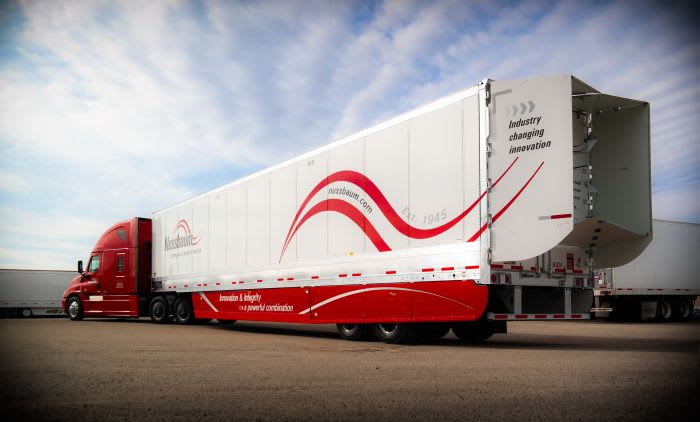
Photo: Nussbaum Transportation
3 min to read
Photo: Nussbaum Transportation
The North American Council for Freight Efficiency released its 2017 Annual Fleet Fuel Study, finding that overall fuel economy rose 1% in 2016, the ninth year in a row trucking fleets in the study have recorded an increase.
NACFE’s study covered 19 fleets operating more than 71,000 tractors and 234,000 trailers, with two new fleets being added for this sixth annual report: Mesilla Valley Transportation and U.S. Xpress. Combined, these fleets reached an average fleet-wide fuel economy of 7.11 mpg. While this represents only a slight increase from the previous year’s study, the U.S. fleet average is only 5.89 mpg. The fleets in the study are also mixed with new and old vehicles. According to NACFE, some 2017 model trucks achieved 7.8-9.2 mpg, with some reportedly approaching 10 mpg.
“We are thrilled to see that fleets are still seeing fuel economy improvements from their investments,” said Mike Roeth, executive director of NACFE and operation lead of Trucking Efficiency, NACFE's partnership with the Carbon War Room. “While gains are smaller than in the past, any improvement in fuel economy curbs the fleet’s expenses.”
In recent studies, the year-over-year gains have been greater than in the latest report. Average fleet fuel economy rose 3% between 2014 and 2015. NACFE gave a variety of reasons for the flatter curve, including fleets eliminating some technologies that improved fuel efficiency, a reduced focus on fuel efficiency due to lower fuel prices, increased speed, older trucks, and even a hotter than average summer in 2016.
NACFE noted a slight drop in 11L and 13L engine adoption in favor of larger displacement engines. At the same time, fleets increased adoption of fuel-efficient specs such as tandem drive fairings, wheel covers, and predictive cruise. Automated transmissions, tire pressure systems, two-speed fan clutches, and low viscosity oil control all saw increased adoption by fleets. Trailer skirt technology had the quickest ramp up to widespread adoption, according to NACFE.
In a call to introduce the 2017 Fleet Fuel Study, NACFE representatives were asked if the results were an indication that fleet fuel gains were flattening out. It was pointed out that since these fleets have already adopted several fuel efficiency-improving technologies, the gains of any single technology would be less significant. However, as fleets retire older trucks and continue to replace them with newer, more efficient vehicles, fleets could still see substantial fuel economy increases in the future.
In total, NACFE identified 85 currently available technologies for fleets to increase fuel economy in this study, though no truck could be equipped with all 85 as some technologies were either/or additions.
The 19 fleets included in the study achieved this high level of fuel efficiency by adopting a combination of the currently available technologies and engaging the resources and guidance of Trucking Efficiency, a joint effort of NACFE and Carbon War Room. The fleets provided their purchasing experience for the 85 technologies for tractors and trailers they procured from 2003 to 2016, providing over 21,000 data points to the NACFE team.
In the report, those adoption curves are expanded into the future, comparing uptake rates to the ones contributed by the Environmental Protection Agency’s Regulatory Impact Analysis provided with the final Greenhouse Gas Phase 2 Rule. This gives a unique idea of history for these fuel economy technologies and a potential forecast into the future, showing nearly 30 years of data, according to NACFE.
NACFE has a more comprehensive analysis and breakdown of its findings in the full 2017 Annual Fleet Fuel Study, which is now available and can be purchased here.
More Fuel Smarts

Fleet Economics Shape Electric Truck Outlook
ACT Research expects costs, charging infrastructure, and technology improvements to drive zero-emission commercial vehicle adoption as federal regulations and incentives retreat.
Read More →
Wex Adds Cardless Fuel Payments for Over-the-Road Customers
A new fuel card feature for Wex customers offers convenience and security.
Read More →
New California Law Could Shed Light on Electric Truck Prices
Why do battery-electric Class 8 trucks remain so expensive? A California bill signed by Gov. Gavin Newsom would give fleets and state agencies more visibility into what manufacturers charge.
Read More →

How Volvo Updated Its D13 for EPA 2027 [Watch]
Volvo’s updated D13 promises lower emissions without sacrificing performance or fuel economy. Take a closer look at what changed inside the engine in this HDT Spotlight video.
Read More →
Diesel Price Spike Shortens Payback for Natural Gas Trucks, Report Says
Energy Vision estimates fleets could recover the higher purchase price of an RNG-fueled Class 8 tractor in 1.3 to 2.8 years under current fuel-price scenarios.
Read More →
Calstart Becomes Catalyst Mobility, Reflecting Broader Focus
Calstart is now Catalyst Mobility, reflecting the nonprofit’s growing national role in clean transportation, including zero-emission trucks, infrastructure and incentive programs.
Read More →
Record Diesel Prices Squeeze Trucking Fleets
Average U.S. diesel prices have climbed to nearly $6 a gallon, surpassing the 2022 record as tight refinery capacity and Middle East disruptions keep fuel costs elevated.
Read More →
Sponsored•September 9, 2026
How Fuel Delivery Shapes Engine Performance
Fuel delivery depends on more than what happens at the injector. For fleet, maintenance and technical professionals, looking at the full path from pump to injector can provide useful context for understanding engine performance.
Read More →
East Coast Port Launches $45M Electric Truck Push
The Port Authority of New York and New Jersey announced millions in incentives for zero-emission drayage trucks, yard tractors, and new charging hubs near the port.
Read More →
Detroit Opens Orders for EPA 2027 Engines
Detroit isn’t starting from scratch to meet EPA 2027 diesel emissions standards. Its Gen 6 DD13 and DD15 engines keep much of today’s platform while updating the fuel and aftertreatment systems.
Read More →