




Related: Fuel Economy at Any Size
Weekly Diesel Prices Show Little Change
The price of diesel fuel in the U.S. was essentially flat last week, falling less than a cent, according to the latest numbers from the Energy Department.
by Staff
August 15, 2016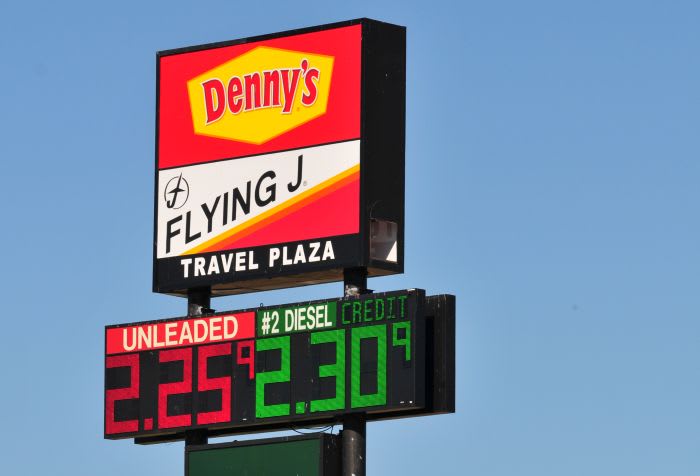
2 min to read

The price of diesel fuel in the U.S. was essentially flat last week, falling less than a cent, according to the latest numbers from the Energy Department.
The average price of on-highway diesel fuel fell by 0.6 cents last week, settling at $2.31 per gallon. While the gap is closing, the price is more than 30 cents cheaper than it was in the same week a year ago.
Prices were relatively flat in all major regions of the U.S., with the most significant drop coming to the West Coast at 1.2 cents per gallon. The smallest change was in the Midwest, where diesel prices decreased by only 0.2 cents.
The average price of regular gasoline was also basically unchanged from the previous week, falling 0.1 cents to $2.149 per gallon. The average price is nearly 57 cents cheaper than it was in the same week of 2015.
The largest decrease in gas prices was on the West Coast, where the price dropped by 3.9 cents. The largest increase in prices was in the Lower Atlantic region where gasoline jumped 2.5 cents for the week.
Crude oil prices seem to be turning around, hitting some monthly highs as several OPEC member countries have indicated that they may finally reduce production to counteract lower global demand, according to a Wall Street Journal report.
Crude oil prices had been dropping, attributed to OPEC inaction to curb high production levels despite the fact that demand in large markets like China has been low. However, analysts have been speculating that OPEC may finally adjust production levels. The Saudi Arabia energy minister indicated last week that his country could finally back an effort to adjust, according to the report.
More Fuel Smarts

EPA Proposal Could Ease 2027 Truck Costs and Buying Uncertainty
The proposal doesn't change the tougher NOx standard, but it would revise key implementation requirements that manufacturers say have driven up costs and complicated fleet purchasing decisions.
Read More →
Cummins, Paccar Ease DEF Derates After EPA Guidance
Updated diesel engine software gives truck operators more time to address emissions-system issues while staying compliant with EPA emissions standards.
Read More →
Maintenance in the Messy Middle Part 3: Biodiesel
Biodiesel can reduce emissions, improve fuel-system lubricity and use existing diesel infrastructure. But NACFE’s Messy Middle maintenance report says fleets must actively manage storage, cold-weather operation, filters and oil drain intervals to avoid problems.
Read More →
Sponsored•July 1, 2026
Enhance Fleet Performance with High-Efficiency Auxiliary Power Units
Drive sustainable cost savings while increasing driver comfort during short- and long-haul logistics operations.
Read More →
Maintenance in the ‘Messy Middle’ Part 2: Renewable Diesel Fuel
NACFE's latest Messy Middle Powertrain Service & Maintenance report says renewable diesel gives fleets an opportunity to reduce carbon emissions without changing trucks, fueling infrastructure or maintenance practices. But technicians still need to understand several important operational differences.
Read More →
The Diesel Engine Enters NACFE’s ‘Messy Middle’
NACFE’s new Messy Middle Powertrain Service & Maintenance report says keeping modern diesel engines running now depends as much on software, diagnostics and data as traditional mechanical service.
Read More →
DTNA Software Update Gives Truckers More Time Before DEF Derates Take Effect
The changes reflect EPA guidance aimed at reducing downtime caused by emissions-system faults while maintaining compliance requirements.
Read More →
New Agentic Predictive Maintenance Report Demonstrates How Degraded Aftertreatment Systems Waste Fuel
Questar analyzed a large mixed-class fleet and discovered it was wasting as much as $30 in fuel per vehicle, per day, because of mechanically degraded aftertreatment systems.
Read More →
New York City's Microhub Project is Delivering Results
Trucking, last-mile delivery companies, and environmental advocates like what they are seeing so far with New York's microhub program.
Read More →
Lessons Learned About Alternative Fuels: Start Small, Stay Flexible
Practical advice on adopting alternative fuels and ZEVs from HDT's 2026 Top Green Fleets, from renewable diesel and natural gas to electric trucks.
Read More →