




“Clearly, truckers are entering 2018 in the best negotiating position in many years.”
Trucking Capacity Crunch Leading to Record Freight Rates
There is increasing evidence that the supply of trucks available to move freight is outpacing demand, based on a flurry of recently released reports – but it’s also helping push freight rates higher. What's behind the capacity crunch?

Evan Lockridge・Former Business Contributing Editor
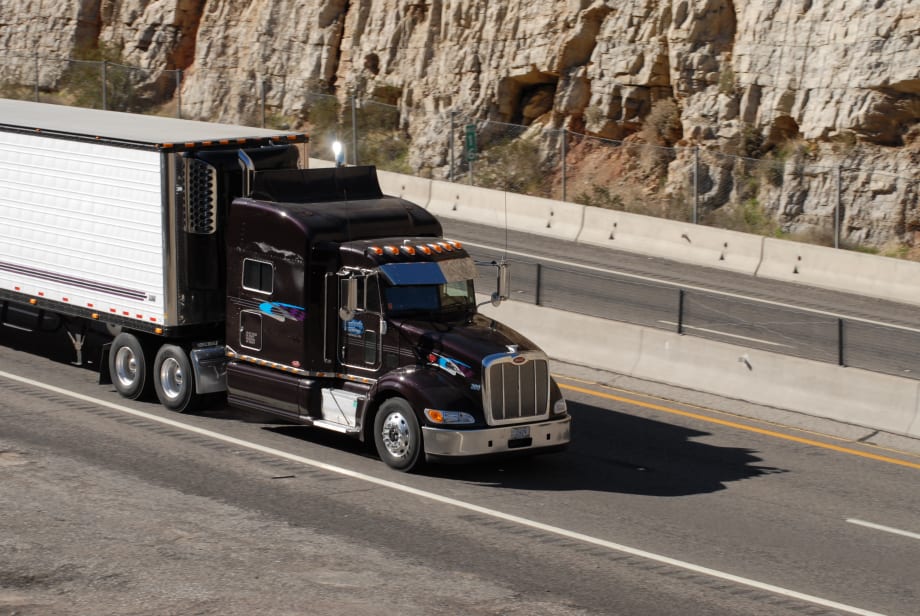
Competition for truck drivers is fierce and one reason for tight capacity. Photo: Jim Park
3 min to read
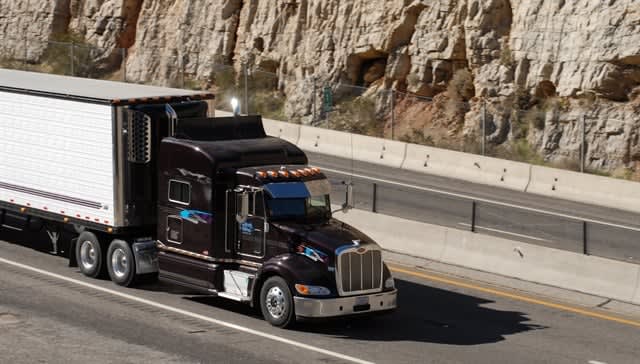
Competition for truck drivers is fierce and one reason for tight capacity. Photo: Jim Park
There is increasing evidence that the supply of trucks available to move freight is outpacing demand, based on a flurry of recently released reports – but it’s also helping push freight rates higher.
ACT Research reported this week that its For-Hire Trucking Index rose faster than the capacity index in each of the last 12 months, allowing the supply-demand balance to climb to the highest reading this index has ever recorded.
“The wide spread between freight and capacity additions bodes well for continued strength in freight rates into the new year,” said Tim Denoyer, ACT vice president and senior analyst at the truck market research firm. “Clearly, truckers are entering 2018 in the best negotiating position in many years.”
ACT’s survey of trucking companies also found a wide range of productivity effects from the recent severe weather. These centered on a 10% utilization hit in late December and early January for the fleets in the affected areas, but as one trucking executive noted, “the weather hasn’t affected the demand for capacity!” Moderate productivity impacts were felt even in the Southeast.
Shippers Feel the Pinch
Meantime, the Washington Post reported that more and more trucking operations are simply running out of capacity. As evidence, it cited a study that polled 1,600 shippers in late 2017. The big finding? Truck capacity is the trucking industry’s “primary hurdle” this year.
This 2018 State of the North America Supply Chain Survey from Averitt Express also found nearly 1 in 5 respondents had experienced issues with capacity last year. In comparison with 2016, capacity issues nearly doubled for shippers.
Much of the reason for the capacity crunch is the fact that 2017 was a good year for the U.S. economy, as it grew at least at a 3% annual rate in the second and third quarters following a lackluster 1.4% performance in the first quarter. Fourth quarter 2017 and full-year gross domestic product figures are set for release by the U.S. Commerce Department on Friday.
A better economy, however isn’t the only reason trucking capacity has tightened.
Is the ELD Mandate to Blame?
As Lawrence Gross, president of Gross Transportation Consulting, wrote in a piece for the Journal of Commerce this week, “The North American supply chain is now in the teeth of a substantial shortage of truck capacity.”
He said there are several reasons this is happening, following his attendance at a seminar at the University of Denver that brought together both trucking and intermodal executives.
Among the reasons, Gross observed, is the recent electronic logging device mandate that went into effect in December, which he said put the trucking industry “well on the road toward a level playing field where all truckers play by the same rules."
But that’s not the only reason.
Gross noted the capacity shortage has also been affected by the fierce competition among carriers for drivers, as well as more carriers willing to operate at higher levels of capacity utilization.
A separate story, also in the Journal of Commerce, looked at how shippers need to be prepared for what the publication called “record U.S. trucking rates,” due to not only a strong U.S. economy, but also increased global economic activity, according to Economist Donald Ratajczak.
Ratajczak is expecting global trade to grow 4.5% this year and that, he said, will result in one thing for the U.S. “Growth in global trade will fill more U.S. trucks.”
How much this will push freight rates higher this year remains to be seen, but if past performance is any indication, it will be significant.
The Cass Freight Index, which separately measures both shipment volumes and truckload linehaul rates (which is minus fuel surcharges), reported respective increases of 7.2% and 6.2% in December 2017 from a year earlier. On the spot market side of trucking, those rates have jumped too, including for truckload van freight, up some 30% earlier this month from the same time in 2016.
More Fleet Management

Does Your Trucking Fleet Need a New TMS?
Artificial intelligence and better integrations promise less busywork and more useful data. Can your TMS help your company solve problems? Do you need additional vendors or an upgrade? Or is it time to look for a new platform?
Read More →
Fleet Costs Shape ACT Expo 2027 Agenda
With diesel prices high and operating expenses under pressure, ACT Expo's 2027 agenda emphasizes fuel efficiency, AI, safety and the return on fleet technology investments.
Read More →
Does Your Trucking Fleet Need a New TMS? [Video]
Cloud technology, AI and new integrations are changing what transportation management systems can do. But does taking advantage of those advances mean replacing your existing TMS?
Read More →
Road Ready Becomes Saegic, Launches New Trailer Telematics Gateway
Clarience Technologies is rolling out new hardware and expanding its plans for connecting trailer telematics, maintenance data, and video.
Read More →
Give Your Trucking Fleet a Cybersecurity Walkaround
Your fleet's cybersecurity policies may look good on paper. These seven checks can help you find out whether they’re working.
Read More →
Kodiak Lines Up Fleets for Driverless Trucking
An agreement for 75 trucks, a new Texas freight lane, and progress on safety validation move Kodiak closer to its planned driverless highway launch.
Read More →
ITS Logistics Settles Religious Harassment Case
The Nevada-based logistics firm agreed to pay more than $396,000 to settle a religious harassment charge involving an employee's Jewish identity.
Read More →
Your Trucks Are Busy. That Doesn’t Mean They’re Winning.
High utilization doesn’t always mean strong margins. Looking beyond the current load can help fleets make better dispatch decisions and get more value from each truck’s time.
Read More →
Why This Trucking Recovery Is Different
Freight demand remains sluggish, but rising costs and tougher enforcement have taken enough capacity out of the market to change the outlook for motor carriers.
Read More →
Platform Science Adds Dispatch and Safety Tools
Four additions to PS Fleet help fleets monitor loads, manage driver coaching, share truck locations and adjust video system settings.
Read More →