




Court Battle Erupts over Truck Trailers and GHG/MPG Rule
Court filings have begun to pile up that may ultimately determine the fate of the trailer-related provision within the federal Phase 2 Greenhouse Gas Emissions and Fuel Efficiency Standards.

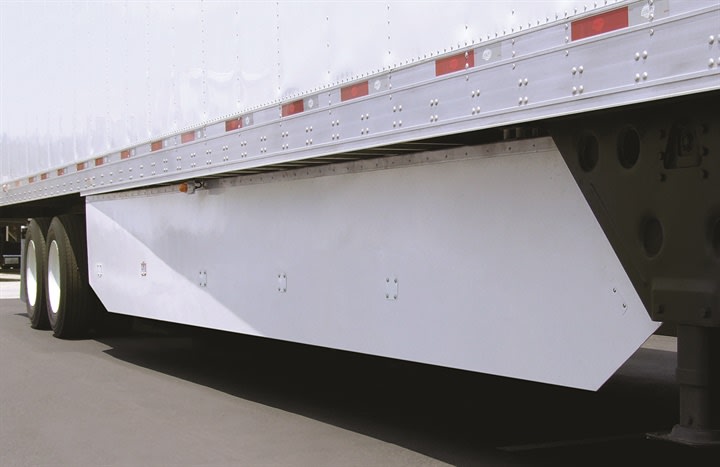
Trailer aerodynamic device include side skirts, pictured here. Photo: Utility Trailer Mfg.
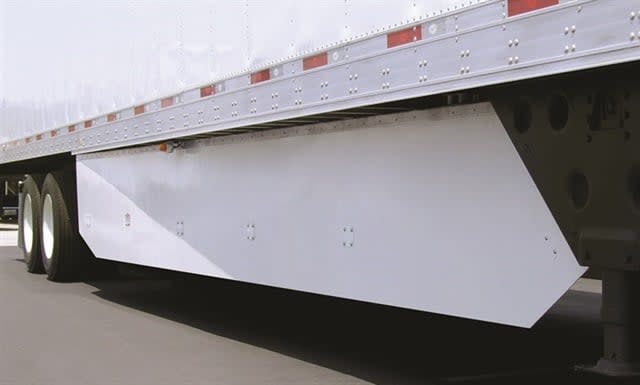
Trailer aerodynamic device include side skirts, pictured here. Photo: Utility Trailer Mfg.
Court filings have begun to pile up that may ultimately determine the fate of the trailer-related provision within the federal Phase 2 Greenhouse Gas Emissions and Fuel Efficiency Standards.
On Oct. 12, the Environmental Defense Fund and a coalition of other environmental and public health groups formally requested that the U.S. Court of Appeals for the District of Columbia Circuit reject what they regard as the “eleventh-hour stay” of the trailer provisions filed as a motion with the court by the Truck Trailer Manufacturers Association on the 25th of last month.
In its statement of intervenor opposition asking the court to deny TTMA’s motion for stay of the Phase 2 trailer provision, EDF argues in part that “TTMA attempts to artificially divide the tractor from the trailer to claim that TTMA’s members cannot be regulated directly because they are not manufacturers of motor vehicles.”
In addition, EDF contends in its brief that “TTMA has likewise failed to demonstrate that its members will be irreparably harmed absent a stay of standards that simply require manufacturers to equip more of their trailers with widely used technologies that deliver fuel savings.” It also argues that TTMA’s motion is “littered with contradictions and belied by its remarkable eleven-month delay in seeking a judicial stay.”
The Phase 2 GHG/MPG rules are set to require compliance starting in Jan. 2018, which explains TTMA’s desire to secure a stay of the trailer provision. In addition, TTMA filed a lawsuit back in Dec. 2016 asking the D.C. Circuit to overturn the trailer portion of the Phase 2 rule. EDF and a coalition of public health and environmental groups are also intervenors in that case, along with the California Air Resources Board and a group of seven states (Connecticut, Iowa, Massachusetts, Oregon, Rhode Island, Vermont, and Washington). A three-judge panel of the D.C. Circuit will hear that case.
According to EDF, a stay of the trailer rule— if granted-- would “delay these critical health and environmental protections for the duration of the litigation, which could last for years.” HDT contacted TTMA on Oct. 13 for comment on its motion for stay and EDF’s counter filing, but no reply has been received.
“The trailer provisions of the [Phase 2] Clean Truck Standards are based on cost-effective and widely available measures that have long been used by industry leaders, and have been effectively incorporated into state standards for the past decade,” said EDF Attorney Alice Henderson in a statement. “It is critical that these common sense protections remain in place to reduce the dangerous pollution that causes climate change and save money for American families by reducing the costs for shipping goods.”
Meanwhile, TTMA has also been working the regulatory relief track as well in hopes of rolling back entirely or at least weakening the trailer provision. Both the Environmental Protection Agency and the National Highway Traffic Safety Administration, the joint promulgators of the GHG rules, advised TTMA on Aug. 17 that they reviewed TTMA’s petitions for reconsideration of the trailer provision and “agree that further rulemaking is needed.” However, neither agency has taken any further action.
Related: GHG Rule Review Pleases Trailer Makers, Concerns Some Stakeholders
More Fleet Management

Color Match Smarter: Tools That Restore & Perform
For fleet managers and collision repair professionals keeping heavy-duty trucks on the road, getting the color right the first time isn't just about appearance — it's about efficiency, turnaround time, and bottom-line results. Discover how today's digital color tools are transforming the repair process from guesswork to precision.
Read More →
FMCSA Pauses Biennial-Update Enforcement Amid Motus Transition
Carriers whose updates were due on or after June 1 have more time, while FMCSA works to stabilize its new registration system and warns of phishing sites impersonating its new carrier registration system, Motus.
Read More →
2026 Blueprint for Countering Smarter Supply Chain Theft
Cargo theft is no longer just the cost of doing business. It's a multi-billion-dollar criminal enterprise exploiting vulnerabilities across your fleet, drivers, and supply chain.
Read More →


How Telematics Improves Visibility, Control, and Performance in Refrigerated Fleets
Explore how telematics help refrigerated fleets improve visibility, uptime, efficiency, compliance, and cargo protection across connected cold chain operations.
Read More →
What the U.S.-Canada Trade War Means for Trucking
Escalating U.S.-Canada tariffs could disrupt cross-border freight, reduce truck volumes, raise costs, and create new uncertainty for carriers on both sides of the border.
Read More →
What Are Trucking’s Top Concerns for 2026?
The American Transportation Research Institute wants to know what's worrying trucking fleet managers, drivers, and other stakeholders in its annual Industry Issues survey.
Read More →
American Trucking Associations Looks for a New Leader
ATA President and CEO Chris Spear abruptly left his job at the association on August 21, at a pivotal time for the trucking industry.
Read More →
Public Wi-Fi Cybersecurity Risks: How Truck Drivers and Fleets Can Protect Their Data
Public Wi-Fi can expose truck drivers and fleets to credential theft, malware, and other cyber threats. Here’s how to reduce the risk on the road.
Read More →
For Nicky Cupp, Fleet Innovation Starts With Frustration
HDT Truck Fleet Innovator Nicky Cupp turns everyday pain points at Fraley & Schilling into opportunities for better technology and smarter processes.
Read More →
Adam Buttgenbach’s Approach to Electric Trucks: Start With Where They Fit
HDT Truck Fleet Innovator Adam Buttgenbach helped PepsiCo build one of North America’s largest EV fleets by focusing on where electric trucks make operational sense.
Read More →