




Related: Trucking Gives Generously to Help Houston Recover from Harvey
Hundreds of Chassis Sent to Houston as Replacements
Chassis provider CIMC Intermodal Equipment is sending up to 600 40-foot gooseneck chassis to the Houston area this week as replacements for equipment damaged by Hurricane Harvey flooding.
by Staff
September 5, 2017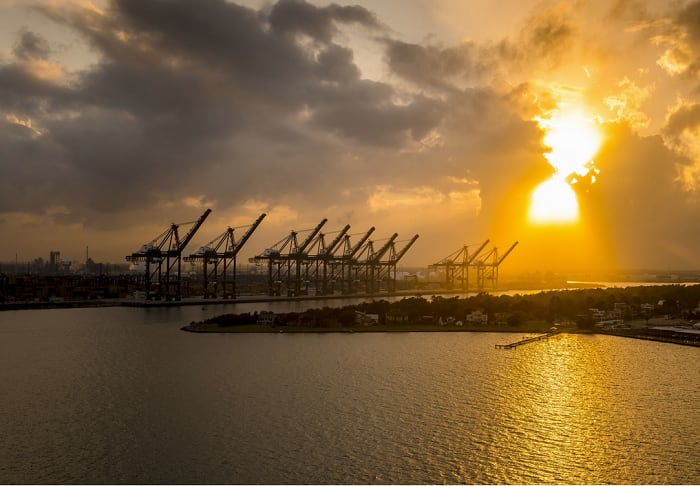
Photo: Port Houston
2 min to read

Photo: Port Houston
Chassis provider CIMC Intermodal Equipment is sending up to 600 40-foot gooseneck chassis to the Houston area this week as replacements for equipment damaged by Hurricane Harvey flooding.
The Port of Houston opened last Friday, but current chassis being operated in the Houston area to unload shipping containers could be out of service for weeks due to flood damage to electrical, brake, wheel-end and other components. Replacement parts to fix these chassis will likely be delayed for some time, as parts availability is expected to be curtailed.
CIMC IE has been receiving requests from intermodal fleets to help replace damaged chassis since Hurricane Harvey hit the Texas coast last week, according to the company. The chassis being sent to Houston will be available to these operators at standard pricing, according to the company.
Port Houston late last week announced it was largely undamaged by Hurricane Harvey and would reopen Sept. 1. Strong currents in the area last week placed restrictions on vessel movements into the port; however, the Port Commission felt that it was important to restart operations as soon as possible.
Until floods completely recede, the Houston area will likely need some time to return to normal, and the storm's effects on transportation have been far-reaching.
“Employees are on site, facilities are back online, and we are ready to operate,” added Roger Guenther, Port Houston executive director. “We are restarting this economic engine again to power the region, state, and nation.”
Meanwhile, the effects of Harvey continue to be wide-reaching and the Southeast U.S. is bracing for potentially another record-setting storm.
In the latest pricing numbers from the Energy Department, average diesel fuel prices in the U.S. jumped over 15 cents last week to nearly $2.76 per gallon, its highest average price since July 2015. While the price increases were highest in the Gulf Coast and Lower Atlantic regions closest to the storm, prices increased by more than 10 cents per gallon in every major region except the Rocky Mountains.
Congress is expected to vote on a $7.9 billion aid package for Hurricane Harvey recovery as it ends its five-week recess, according to the Washington Post.
And hot on the heels of Hurricane Harvey is Hurricane Irma, which reached Category 5 strength on Tuesday, with sustained winds of up to 185 mph. It is currently one of the most powerful storms ever observed in the Atlantic and is expected to make landfall in Southern Florida by the end of the week.
The storm could fluctuate in strength or change course before making landfall, but officials in the state of Florida have already ordered evacuations in preparation.
More Fleet Management

How MFA Helps Protect Trucking Fleets
Multi-factor authentication adds protection when passwords are stolen. Here’s how it works and where fleets should start.
Read More →
How Better Freight Data Helps Trucking Teams Get Ahead of Disruption
Trucking and logistics teams have plenty of data. The problem is getting the right information in front of the right people soon enough to act. Better-connected data can help teams spot trouble earlier and make smarter decisions before small problems become big ones.
Read More →
Trimble: Taking Artificial Intelligence in Trucking Beyond Faster Tasks
At Insight 2026, Trimble executives argued that fleets may need to redesign workflows to get more from AI as it introduced new products and enhancements. AI’s value will depend on how fleets combine automation with their people's knowledge.
Read More →

Nominations Open for HDT Emerging Leaders
Heavy Duty Trucking is looking for accomplished trucking fleet professionals under 40 who are making an impact and helping lead the industry forward.
Read More →
Why Private Fleets Are Taking More Freight
Private fleets are putting their own trucks on demanding customers and high-cost lanes as companies seek greater control over service, costs, and capacity.
Read More →
Sponsored•September 16, 2026
Color Match Smarter: Tools That Restore & Perform
For fleet managers and collision repair professionals keeping heavy-duty trucks on the road, getting the color right the first time isn't just about appearance — it's about efficiency, turnaround time, and bottom-line results. Discover how today's digital color tools are transforming the repair process from guesswork to precision.
Read More →
FMCSA Pauses Biennial-Update Enforcement Amid Motus Transition
Carriers whose updates were due on or after June 1 have more time, while FMCSA works to stabilize its new registration system and warns of phishing sites impersonating its new carrier registration system, Motus.
Read More →
Sponsored•September 14, 2026
2026 Blueprint for Countering Smarter Supply Chain Theft
Cargo theft is no longer just the cost of doing business. It's a multi-billion-dollar criminal enterprise exploiting vulnerabilities across your fleet, drivers, and supply chain.
Read More →
What the U.S.-Canada Trade War Means for Trucking
Escalating U.S.-Canada tariffs could disrupt cross-border freight, reduce truck volumes, raise costs, and create new uncertainty for carriers on both sides of the border.
Read More →
What Are Trucking’s Top Concerns for 2026?
The American Transportation Research Institute wants to know what's worrying trucking fleet managers, drivers, and other stakeholders in its annual Industry Issues survey.
Read More →