




Navistar’s Sass Surveys the Road Ahead for HDTX Attendees
As Navistar works to move past the mistakes of the past and looks ahead to the future, International Trucks’ Jeff Sass opened HDT’s inaugural Heavy Duty Trucking eXchange fleet networking conference in Phoenix this week with a peek at the future, from electric trucks to autonomous vehicles

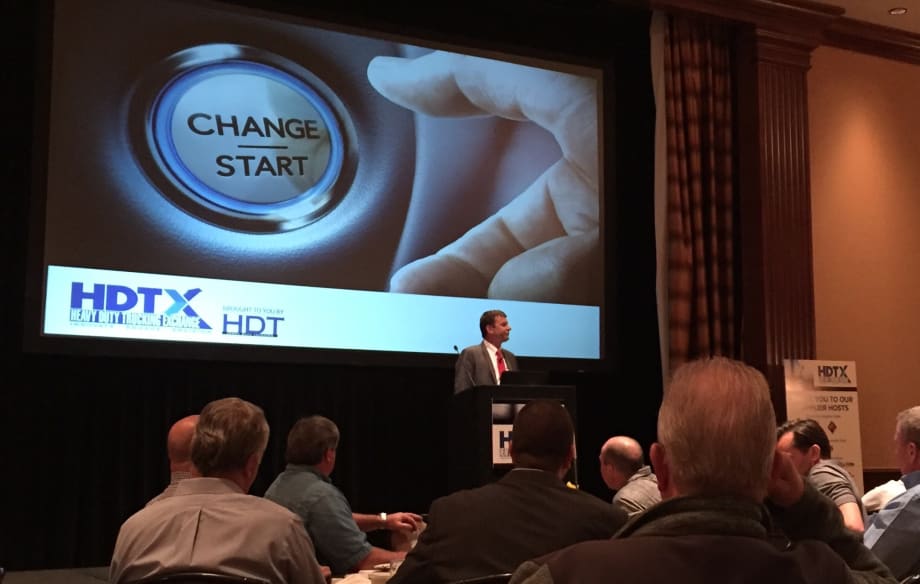
Jeff Sass addressing attendees of first HDTX fleet networking conference.
Jeff Sass addressing attendees of first HDTX fleet networking conference.
As Navistar works to move past the mistakes of the past and looks ahead to the future, International Trucks’ Jeff Sass opened HDT’s inaugural Heavy Duty Trucking eXchange fleet networking conference in Phoenix this week with a peek at the future, from electric trucks to autonomous vehicles. HDTX is a new invitation-only event for select truck fleet executives co-hosted by an array of suppliers.
Sass, senior vice president, North America Truck Sales and Marketing, was up front about how the company’s failed emissions compliance strategy is still affecting customers plagued with reliability issues, but forthrightly dealt with customer questions and complaints. And he pointed out that Navistar has an all-new engine, the A26, introduced at the American Trucking Associations’ Technology & Maintenance Council meeting earlier this year.
“All the people involved in the MaxxForce program are gone,” he said. The 12.4-liter A26 is the first product of Navistar’s Project Alpha and was designed with drivers and uptime in mind, he said.
“But connected trucks is really where the industry is headed,” Sass said. Trucks will talk to each other, to the infrastructure around them, and to their owners. Reprogramming trucks remotely and being able to do advanced prognosis on trucks, he said, are “another aspect of making it easier to drive the trucks. Because we have a significant driver shortage.
“We as an industry have adopted advances in automated connected vehicle technology,” he continued, noting that advanced driver assistance systems, such as lane departure warning, collision mitigation and cameras, are making truck driving easier and safer — and, he said, “will lead at some point to autonomous, driverless trucks.
“Now, do I believe that on I-10 out here at 3 o’clock in the afternoon as my wife is driving my two daughters to soccer practice that there will be a truck with no driver in it? No. But there are short-term applications where driverless will make sense.”
He then offered a couple of examples:
Congested intermodal ports. At the Port of Long Beach, there’s a 4-mile-long line as drivers wait to pick up containers. “Every minute that driver is in that truck goes against their hours of service,” he said. “Why can’t that line be completely autonomous, driverless, inching forward minute by minute, and as it gets to be fourth in line the driver gets an alert, hops in the truck, and saves all that time and productivity?
In fleet yards. While visiting a fleet recently, he observed a driver checking in at the guard shack, then going to the fueling bay, to the wash bay, parking the trailer, then parking the truck, a process that took some 17 minutes. “Why couldn’t that driver get out at the guard desk and go to the locker room and then autonomously have that truck go to the fuel bay, go to the wash bay, park the trailer, park the truck?” Sass suggested. “No one is going to have a problem with a truck on private property operating by itself.”
He said another technology on the way is electric trucks. The cost of battery storage is rapidly diminishing, he said, and right now it’s about $185 per kilowatt hour. “If we can get it down to about $100 per kilowatt hour, you will find the inflection point where electric and diesel cross. So, at 100ish dollars per kilowatt hour that’s where it will make economic sense. Elon Musk [of Tesla] says it’s going to be in three years. Most people are saying around 2025.”
Platooning is a reality as far as technology goes, Sass said, but he’s not sure the commercial model is there yet. “I’ve seen it happen at our test track in New Carlisle, Indiana. Two trucks 30 feet apart from each other going at 60 mph. Doesn’t sound like that big of a deal until you’re in that trail truck. It’s really close. Really close. If it brakes or has to veer, they talk to each other, the trucks know, and it’s been very safe for us.”
However, he said, “can you imagine two fleets that are competitors with one another, both on I-10 right here in Phoenix at 2 in the morning, debating who goes in front? Because the trail truck is the one that gets 90% of the benefit. So, until there’s some sort of legislation, or tax credit, or something that provides a commercial aspect to it,” that’s unlikely to happen, he contended.
Looking further down the road, he said that maybe there will be cabless autonomous electric vehicles — “kind of just a battery on wheels that pulls a trailer.” Perhaps there will be remote dispatching, where autonomous trucks that go from hub to hub and autodock at hubs will be controlled by someone pushing buttons on a screen — or a hologram.
But in the nearer future, he said, there’s still a role for drivers, a very important one.
“With all the increases of electronics on the truck … the role of a driver is becoming more like a pilot,” he said — the pilot handles takeoff and landing, with autopilot used in between, with pilots still right there in case there’s a problem. “I was on my 47th American Airlines flight this year this morning, and I’ll tell you, I feel very comfortable walking in and seeing that there’s pilots sitting in the cockpit. I don't know that I would actually get on a plane without a pilot. There will be drivers in our trucks for a long period of time.”
Stay tuned for more information on the Work Truck Exchange, which will be connecting a select group of commercial fleet managers responsible for light and medium-duty truck and van fleets with industry suppliers at the Pointe Hilton Tapatio Cliffs Resort in Phoenix, Arizona, November 6-8, 2017.
More Fleet Management

How to Modernize Your TMS Without Replacing It [Podcast]
Before investing in a new transportation management system, take a closer look at what you've already got. AI, cloud technology and better integrations may offer ways to improve your trucking operations without starting over.
Read More →
Could Your Truck's Connected Devices Be a Cybersecurity Risk?
ELDs, telematics systems and driver tablets help fleets operate more efficiently. But every connected device needs protection against cyberattacks.
Read More →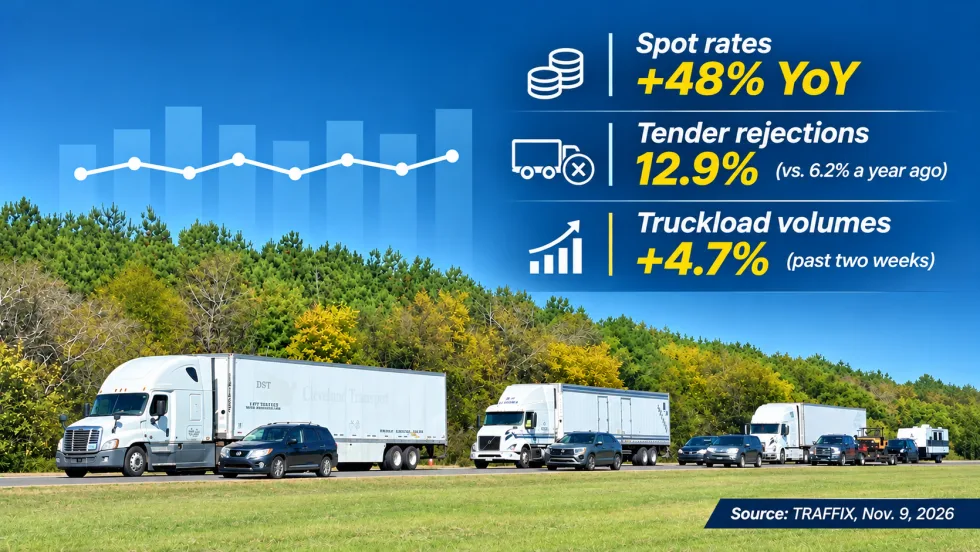
Holiday Freight Meets a Tight Trucking Market
There's no freight boom, but truckload carriers are finding themselves in a stronger position to negotiate rates. And holiday shipping demand could tighten the market further.
Read More →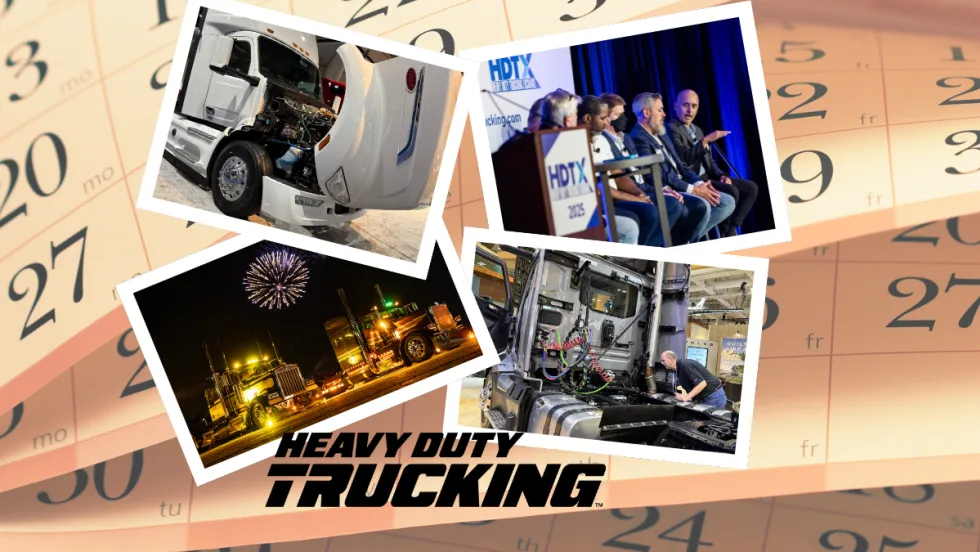
What Trucking Events are Happening in 2027?
Looking for trucking-related conventions, expos, and other events? Heavy Duty Trucking has developed this list of national and larger regional trucking shows and events.
Read More →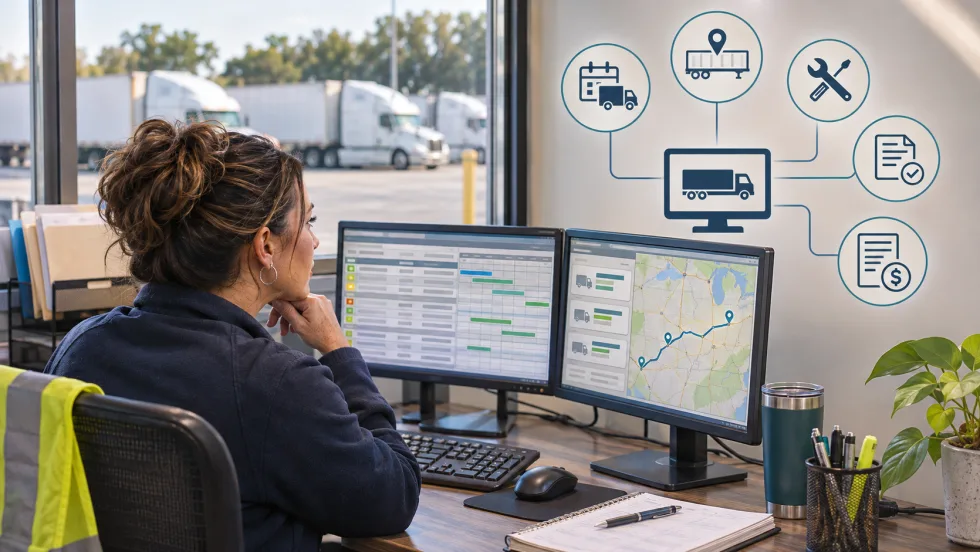
Does Your Trucking Fleet Need a New TMS?
Artificial intelligence and better integrations promise less busywork and more useful data. Can your TMS help your company solve problems? Do you need additional vendors or an upgrade? Or is it time to look for a new platform?
Read More →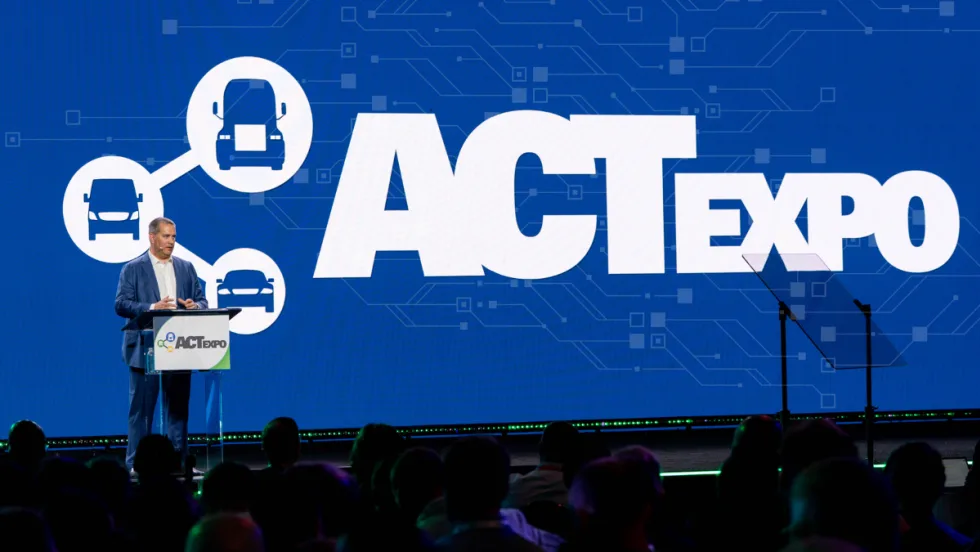
Fleet Costs Shape ACT Expo 2027 Agenda
With diesel prices high and operating expenses under pressure, ACT Expo's 2027 agenda emphasizes fuel efficiency, AI, safety and the return on fleet technology investments.
Read More →
Does Your Trucking Fleet Need a New TMS? [Video]
Cloud technology, AI and new integrations are changing what transportation management systems can do. But does taking advantage of those advances mean replacing your existing TMS?
Read More →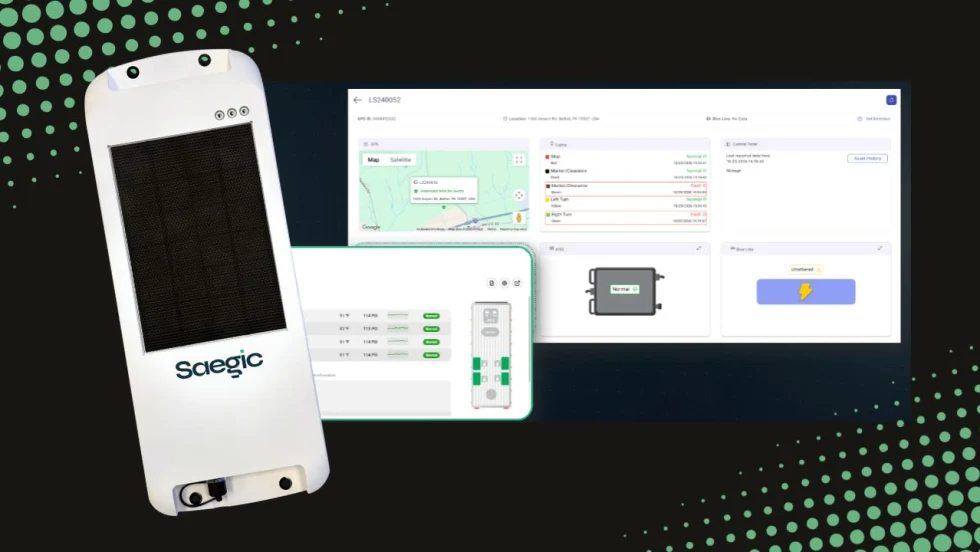
Road Ready Becomes Saegic, Launches New Trailer Telematics Gateway
Clarience Technologies is rolling out new hardware and expanding its plans for connecting trailer telematics, maintenance data, and video.
Read More →
Give Your Trucking Fleet a Cybersecurity Walkaround
Your fleet's cybersecurity policies may look good on paper. These seven checks can help you find out whether they’re working.
Read More →
Kodiak Lines Up Fleets for Driverless Trucking
An agreement for 75 trucks, a new Texas freight lane, and progress on safety validation move Kodiak closer to its planned driverless highway launch.
Read More →