




Commentary: Off-Peak Deliveries Can Make a Difference
By scheduling shipments at times when there is less traffic on the road, Off-peak deliveries as a route planning strategy can deliver significant savings.
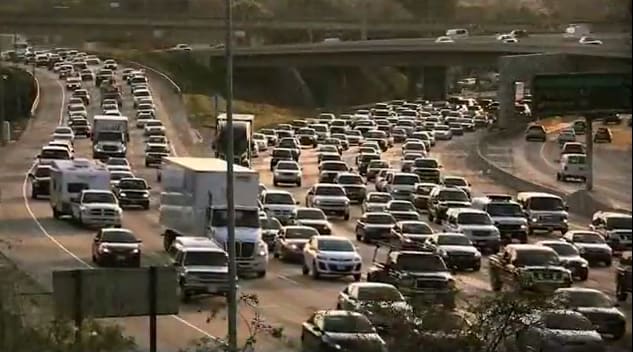
Photo: U.S. DOT

Photo: U.S. DOT
Suppose they had a rush hour and nobody came.
As strange as the concept sounds, this essentially describes the ultimate goal of off-peak deliveries – the route planning strategy that schedules shipments at times when there is less traffic on the road.
There are significant savings to be realized by those who embrace the idea. Fuel economy improves because of reduced idling in traffic; equipment is better utilized because of shorter transit times; Human Resources budgets can be eased when employees are not paid just to sit in traffic or wait for freight. Shippers, for their part, potentially realize savings through lower delivery costs. If enough companies embraced the strategy, congestion during other time periods would improve. The rush hours would ease.
Ontario’s Peel Region wants to measure exactly how extensive the savings can be, and is in the midst of recruiting carriers and shippers to participate in a related six-month research project.
Carriers have a lot to gain by participating in the study. The battle against congestion is particularly relevant in this locale. Indeed, calling the region a transportation hub would be an understatement. Peel roads and highways handled 24.2 million truck trips in 2012, and four out of every nine jobs in the region are linked to industries that depend on moving goods. This is the home of Pearson International Airport, two intermodal yards, and some of the busiest highways in the nation.
The results of Peel’s research will likely be positive, too, because off-peak deliveries have proven their worth before.
In 2009 and 2010, 25 New York City businesses and eight fleets embraced deliveries between 10 p.m. and 8 a.m. Trips during that period were twice as fast as those completed between 10 a.m. and 10 p.m. Trucks that traditionally faced $1,000 in parking fines per month were left without any penalties at all. Participating drivers reported lower traffic and reduced stress, and carriers were able to adopt smaller fleets because of improved schedules.
The experience is not limited to the U.S. Truck volumes in Vancouver’s downtown core dropped 37% during the 2010 Winter Olympics, while trips between midnight and 6 a.m. doubled. And more than 100 businesses participated in Off-Peak Deliveries during the 2015 Pan Am Games in Ontario, when 18,000 shipments were made during off-peak hours. Benefits were not limited to quicker deliveries during the off hours, the Ontario Ministry of Transportation says. Highways 401, 404 and 427 all reported better travel times than the previous summer.
So why haven’t off-peak deliveries become the norm? Quite simply, customers want their goods when they want them, and when staff are on hand to receive the goods. The concept only works when shippers and carriers are both willing to embrace the different schedules. There can be other potential barriers such as increased noise complaints during the off-hour shipments, and fatigue-related issues can be more common in early-morning hours.
But it’s worth a try. There are only so many ways to fight congestion. Peel has already re-timed traffic signals, developed a strategy to speed up clean ups after collisions, and pre-approved arterial roads for Long Combination Vehicles. Local highways are wide, and there are limits to how much more concrete can be poured.
Whether in Peel or elsewhere, it makes sense for carriers to explore whether off-peak deliveries would work for their business.
Let the others sit and wait in traffic.
John G. Smith is the editor of the award-winning Canadian publication Today's Trucking. This article was used under a cooperative editorial sharing agreement between HDT and its Canadian counterpart.
More Fleet Management

Color Match Smarter: Tools That Restore & Perform
For fleet managers and collision repair professionals keeping heavy-duty trucks on the road, getting the color right the first time isn't just about appearance — it's about efficiency, turnaround time, and bottom-line results. Discover how today's digital color tools are transforming the repair process from guesswork to precision.
Read More →
FMCSA Pauses Biennial-Update Enforcement Amid Motus Transition
Carriers whose updates were due on or after June 1 have more time, while FMCSA works to stabilize its new registration system and warns of phishing sites impersonating its new carrier registration system, Motus.
Read More →
2026 Blueprint for Countering Smarter Supply Chain Theft
Cargo theft is no longer just the cost of doing business. It's a multi-billion-dollar criminal enterprise exploiting vulnerabilities across your fleet, drivers, and supply chain.
Read More →


How Telematics Improves Visibility, Control, and Performance in Refrigerated Fleets
Explore how telematics help refrigerated fleets improve visibility, uptime, efficiency, compliance, and cargo protection across connected cold chain operations.
Read More →
What the U.S.-Canada Trade War Means for Trucking
Escalating U.S.-Canada tariffs could disrupt cross-border freight, reduce truck volumes, raise costs, and create new uncertainty for carriers on both sides of the border.
Read More →
What Are Trucking’s Top Concerns for 2026?
The American Transportation Research Institute wants to know what's worrying trucking fleet managers, drivers, and other stakeholders in its annual Industry Issues survey.
Read More →
American Trucking Associations Looks for a New Leader
ATA President and CEO Chris Spear abruptly left his job at the association on August 21, at a pivotal time for the trucking industry.
Read More →
Public Wi-Fi Cybersecurity Risks: How Truck Drivers and Fleets Can Protect Their Data
Public Wi-Fi can expose truck drivers and fleets to credential theft, malware, and other cyber threats. Here’s how to reduce the risk on the road.
Read More →
For Nicky Cupp, Fleet Innovation Starts With Frustration
HDT Truck Fleet Innovator Nicky Cupp turns everyday pain points at Fraley & Schilling into opportunities for better technology and smarter processes.
Read More →
Adam Buttgenbach’s Approach to Electric Trucks: Start With Where They Fit
HDT Truck Fleet Innovator Adam Buttgenbach helped PepsiCo build one of North America’s largest EV fleets by focusing on where electric trucks make operational sense.
Read More →