




Related: Congestion, Distracted Driving, HOS Top ATRI's Research Priorities
Congestion Costing Trucking $63.4 Billion a Year
Traffic congestion added more than $63.4 billion in operational costs to the trucking industry in 2015, according to the American Transportation Research Institute's 2017 Cost of Congestion update.

Steven Martinez・Web Editor

Photo: U.S. Department of Transportaion
2 min to read
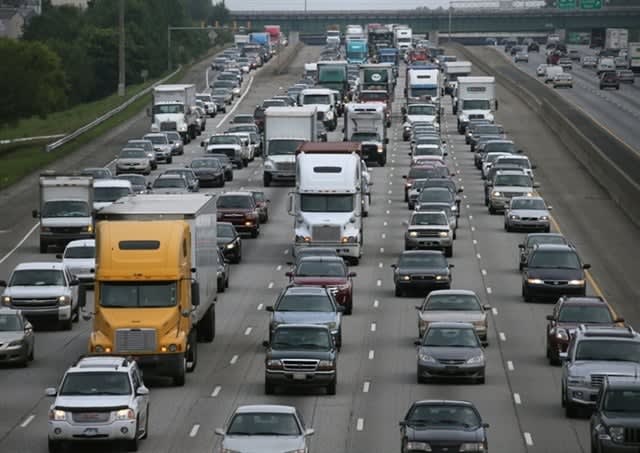
Photo: U.S. Department of Transportaion
Traffic congestion added more than $63.4 billion in operational costs to the trucking industry in 2015, according to the American Transportation Research Institute's 2017 Cost of Congestion update.
This number represents a significant jump from ATRI’s 2016 report, which quantified added operational costs at $49.6 billion in 2014. In 2015, the trucking industry experienced more than 996 million hours of delays on the national highway system, up from 728 million hours the year before. To put it in perspective, this lost productivity is equivalent to 362,243 truck drivers sitting idle for an entire working year, according to ATRI.
As much as 91% of congestion is in urban areas. This problem is made worse by increased e-commerce, which translates into more trucks on roads in urban areas.
“We are getting to a point where there is high consumer demand,” said Rebecca Brewster, president and chief operating officer of ATRI. “When the infrastructure can’t handle the increased traffic, we have the situation that we have now.”
Urban area infrastructure is at the core of congestion-related costs. Urban congestion made up 76% of the $13.9 billion increase in congestion costs from 2014-2015. The Miami-Fort Lauderdale-West Palm Beach metropolitan area in Florida was accountable for over $2 billion in congestion costs alone, more than the entire rest of the state combined. Focusing on congestion in bottleneck areas around metropolitan areas may be able to significantly improve the situation, according to ATRI.
Florida, Texas, and California were the top three states by total cost of congestion, unchanged from 2014. Much of the top 10 remained the same, except for Ohio and Tennessee, which joined the top 10 for the first time. Ohio made the most significant leap to make the list, jumping from 21st to 8th. The state saw a total cost increase of $1.5 billion in a year, which ATRI said was likely attributed to over 80 roadway construction projects that took place in 2015.
The ATRI report focused on the operational costs to trucking caused by congestion, but in a media call about the findings, the group emphasized the burden it placed on the entire U.S. economy. The increased costs to trucking trickle down to other parts of the supply chain, eventually hitting consumers in the wallet.
“This is not the trucking industry’s cost alone to bear,” said Brewster. “It really starts to play itself out through the cost of goods on those trucks.”
To access the full ATRI report, click here.
More Fleet Management

Sponsored•September 16, 2026
Color Match Smarter: Tools That Restore & Perform
For fleet managers and collision repair professionals keeping heavy-duty trucks on the road, getting the color right the first time isn't just about appearance — it's about efficiency, turnaround time, and bottom-line results. Discover how today's digital color tools are transforming the repair process from guesswork to precision.
Read More →
FMCSA Pauses Biennial-Update Enforcement Amid Motus Transition
Carriers whose updates were due on or after June 1 have more time, while FMCSA works to stabilize its new registration system and warns of phishing sites impersonating its new carrier registration system, Motus.
Read More →
Sponsored•September 14, 2026
2026 Blueprint for Countering Smarter Supply Chain Theft
Cargo theft is no longer just the cost of doing business. It's a multi-billion-dollar criminal enterprise exploiting vulnerabilities across your fleet, drivers, and supply chain.
Read More →


Sponsored•September 1, 2026
How Telematics Improves Visibility, Control, and Performance in Refrigerated Fleets
Explore how telematics help refrigerated fleets improve visibility, uptime, efficiency, compliance, and cargo protection across connected cold chain operations.
Read More →
What the U.S.-Canada Trade War Means for Trucking
Escalating U.S.-Canada tariffs could disrupt cross-border freight, reduce truck volumes, raise costs, and create new uncertainty for carriers on both sides of the border.
Read More →
What Are Trucking’s Top Concerns for 2026?
The American Transportation Research Institute wants to know what's worrying trucking fleet managers, drivers, and other stakeholders in its annual Industry Issues survey.
Read More →
American Trucking Associations Looks for a New Leader
ATA President and CEO Chris Spear abruptly left his job at the association on August 21, at a pivotal time for the trucking industry.
Read More →
Public Wi-Fi Cybersecurity Risks: How Truck Drivers and Fleets Can Protect Their Data
Public Wi-Fi can expose truck drivers and fleets to credential theft, malware, and other cyber threats. Here’s how to reduce the risk on the road.
Read More →
For Nicky Cupp, Fleet Innovation Starts With Frustration
HDT Truck Fleet Innovator Nicky Cupp turns everyday pain points at Fraley & Schilling into opportunities for better technology and smarter processes.
Read More →
Adam Buttgenbach’s Approach to Electric Trucks: Start With Where They Fit
HDT Truck Fleet Innovator Adam Buttgenbach helped PepsiCo build one of North America’s largest EV fleets by focusing on where electric trucks make operational sense.
Read More →