





Related: Carriers Want Support, Customization From Software Vendors
Should You Own Your Software?
Most trucking software in daily use is provided by Software-as-a-Service subscription-based delivery model.
February 19, 2016
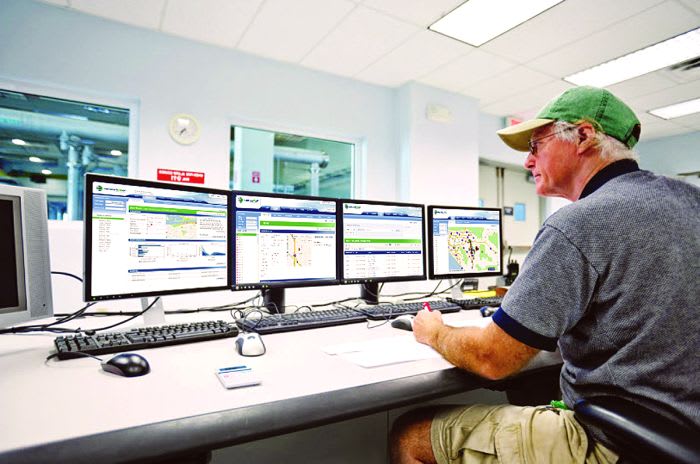
The majority of software products offered in the telematics, mobile communication and GPS tracking space are SaaS models. Photo: NetworkFleet
5 min to read

Much of the software trucking companies now use daily, including for telematics and fleet management, is delivered via the Software-as-a-Service method. Exceptions include high-end customizable enterprise or trucking management systems and proprietary software that some companies develop in-house.
“It has become the norm,” says Brian McLaughlin, president of PeopleNet, Minnetonka, Minn. He notes his company was one of the first to offer a SaaS model when they started in 1996. “Back then, it was kind of a risky bet. The majority of the industry had on-premises software they would load and maintain. I think we’ve seen tremendous adoption of the SaaS model.”
SaaS generally refers to software that’s “located in a centralized area and delivered remotely to the client,” says Dan Speicher, chief technology officer, Omnitracs. That means a company does not “load” software from disks or other media onto its on-premises server, desktops or laptops. Instead, the software and the data generated by it remain in a central location — either on the vendor’s own servers or on third-party servers linked via cloud-computing.
What’s also different is how a company pays for such software. Instead of buying it outright, companies pay a monthly fee based on the number of users. In many ways, SaaS is similar to leasing power units or trailers.
In the traditional model, “you bought a version of the software once, and only bought another version when the first became so obsolete you had to replace it,” says Ken Weinberg, vice president and co-founder, Carrier Logistics Inc. “The vendors only got money from you when you bought new software. Now, they get money from you every month.”
Pros and cons
Over time, the amount the end user pays may end up being higher than buying new versions of software, since the subscriber can always opt to skip a couple of versions. On the other hand, there are numerous benefits for the end user with the SaaS model. Key among them is always getting to run the latest version, with little effort. You have “instantaneous updates and access to new features,” McLaughlin says.
Staying current with the latest version of software can be “a pain for customers,” Weinberg says, and that’s why many fleets put off upgrading. The SaaS model takes care of that issue.
And since the software is managed remotely, it relieves the trucking company of a host of headaches that can develop when maintaining their own software. As Weinberg notes, a number of companies are moving away from in-house IT staffs, similar to how they have embraced outsourced vehicle maintenance. “It allows them to focus on trucking.”
SaaS also provides trucking companies with a consistent cost — they know what to budget each month for their software since it’s a relatively fixed cost spread over the term of the subscription (which typically run three to five years).
There are some downsides. Potentially higher cost over time would be one. The other is that, since the vendor is pushing out upgrades or new features on a regular basis, there is a chance for users to be overwhelmed. With SaaS “changes come more rapidly and a lot of fleets don’t like rapid change,” McLaughlin notes. Some upgrades may require training for dispatchers, drivers and other users, which can be disruptive and costly for a fleet.
To alleviate that problem, SaaS providers alert users to updates that will require such training so they can prepare for that need. Some SaaS products allow uses to turn on or off automatic updates.
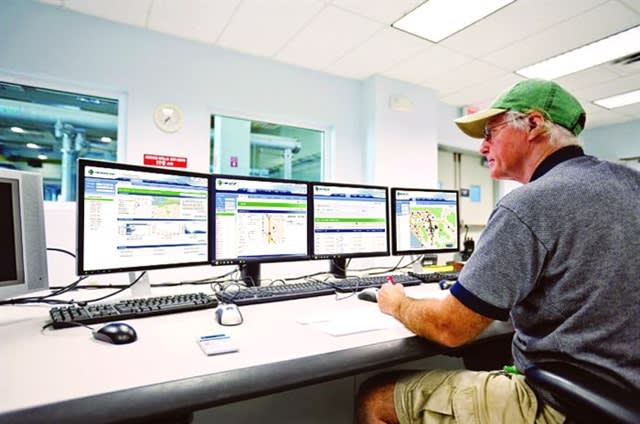
The majority of software products offered in the telematics, mobile communication and GPS tracking space are SaaS models.Photo: NetworkFleet
To tweak or not
Many users may tweak or customize their software to their liking. But that can also create some problems with updates. It’s important that fleets work with vendors that can accommodate that. As Weinberg says, users want to be sure that after an upgrade, anything they “did yesterday will be there today and that the upgrade does not eliminate functionality they are accustomed to or unique to them.”
While SaaS providers no longer get the full price upfront for their products (although a number of fleets do pay a full subscription up front), the model offers a host of benefits. These include lower development, deployment and support costs.
“The most significant benefit to us is the efficiency” of product development and distribution, McLaughlin says. “I don’t miss the days of having to distribute software to thousands of users … it could take years.”
Speicher agrees, saying that “time to market can be less” with the SaaS model. “With an on-premises solution, you are limited to how often you can update.”
Supporting customers is easier with the SaaS model, notes Weinberg. Since all customers are relatively current with the latest version, “when you call in for support, I know your system is up to date,” he says. Having to maintain several levels of software increases development costs for software providers and slows down the pace of deploying new versions.
Most SaaS offerings used in trucking share the same basic attributes, but there may be differences in how they are accessed by the user. Many use the web to access the software, whether through a web-services web page or thin-client software, that is housed in a central server.
Mobile apps, on the other hand, allow the application and data reside on the mobile device — smartphone, tablet or navigation device — or on a computer.
And with some systems, the application and data can reside in both the central location and on desktops or tablet computers at the client’s location. McLaughlin refers to this as an “in between or hybrid approach. There is a local app you download that allows you to work offline and store your most essential data, but the majority of the data and horsepower will happen back on the remote computer. I think that is where the world is going with SaaS.”
What’s up with the cloud?
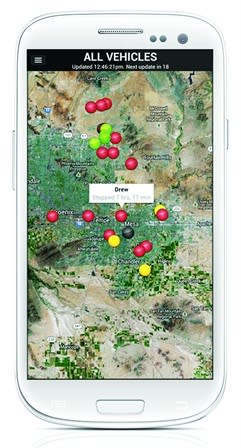
Many SaaS fleet tracking applications, such as those from GPS Insight can be run on mobile devices as well in the office.Photo: GPS Insight
Cloud-based refers to a method of delivery for SaaS products. “Usually when people talk could-based… that is usually a term for people who are developing things for other people to use,” McLaughlin says. “The definition of SaaS is offering service that is hosted somewhere else.”
That could be a physical space the vendor maintains or a third-party server in the cloud. The cloud, then, is an option for software providers to use in managing and storing the application and data that runs and feeds into its SaaS products.
Weinberg calls the cloud “just a way of getting data from our facility to someplace that’s going to process it for you.”
A bottom-line consideration is that a number of trucking companies use software products that are not compatible with the SaaS model. These especially include ERP and TMS products. But for other applications, SaaS has indeed become the norm.
Subscribe to Our Newsletter
More Fleet Management

Sponsored•September 16, 2026
Color Match Smarter: Tools That Restore & Perform
For fleet managers and collision repair professionals keeping heavy-duty trucks on the road, getting the color right the first time isn't just about appearance — it's about efficiency, turnaround time, and bottom-line results. Discover how today's digital color tools are transforming the repair process from guesswork to precision.
Read More →
FMCSA Pauses Biennial-Update Enforcement Amid Motus Transition
Carriers whose updates were due on or after June 1 have more time, while FMCSA works to stabilize its new registration system and warns of phishing sites impersonating its new carrier registration system, Motus.
Read More →
Sponsored•September 14, 2026
2026 Blueprint for Countering Smarter Supply Chain Theft
Cargo theft is no longer just the cost of doing business. It's a multi-billion-dollar criminal enterprise exploiting vulnerabilities across your fleet, drivers, and supply chain.
Read More →


Sponsored•September 1, 2026
How Telematics Improves Visibility, Control, and Performance in Refrigerated Fleets
Explore how telematics help refrigerated fleets improve visibility, uptime, efficiency, compliance, and cargo protection across connected cold chain operations.
Read More →
What the U.S.-Canada Trade War Means for Trucking
Escalating U.S.-Canada tariffs could disrupt cross-border freight, reduce truck volumes, raise costs, and create new uncertainty for carriers on both sides of the border.
Read More →
What Are Trucking’s Top Concerns for 2026?
The American Transportation Research Institute wants to know what's worrying trucking fleet managers, drivers, and other stakeholders in its annual Industry Issues survey.
Read More →
American Trucking Associations Looks for a New Leader
ATA President and CEO Chris Spear abruptly left his job at the association on August 21, at a pivotal time for the trucking industry.
Read More →
Public Wi-Fi Cybersecurity Risks: How Truck Drivers and Fleets Can Protect Their Data
Public Wi-Fi can expose truck drivers and fleets to credential theft, malware, and other cyber threats. Here’s how to reduce the risk on the road.
Read More →
For Nicky Cupp, Fleet Innovation Starts With Frustration
HDT Truck Fleet Innovator Nicky Cupp turns everyday pain points at Fraley & Schilling into opportunities for better technology and smarter processes.
Read More →
Adam Buttgenbach’s Approach to Electric Trucks: Start With Where They Fit
HDT Truck Fleet Innovator Adam Buttgenbach helped PepsiCo build one of North America’s largest EV fleets by focusing on where electric trucks make operational sense.
Read More →