




Using Technology to Manage Trucks in Stormy Weather
Transport America is able to keep trucks moving in stormy weather using the Weather Alerts feature of ALK Maps.

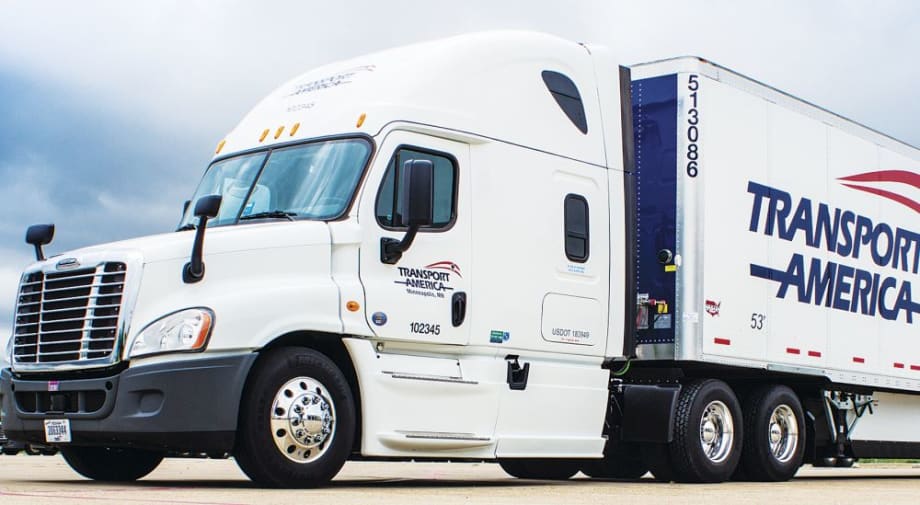
Transport America integrates severe weather alerts from ALK Maps with its internal alerting system to better manage its fleet during weather events. Photo via Transport America
Transport America integrates severe weather alerts from ALK Maps with its internal alerting system to better manage its fleet during weather events. Photo via Transport America
Among the hallmarks of a successful trucking operation is outstanding planning and scheduling – having trucks where they are supposed to be as often as possible. But bad weather can disrupt even the best plans, especially when it brings adverse driving conditions and road closures. Trucking companies operating in areas with a history of adverse weather plan for such things.
Transport America, Eagan, Minn., had been using a manual system for the task until it deployed ALK Maps with Weather Alerts earlier this year. With the manual system, managers periodically reviewed weather information, analyzed which trucks might be affected by the bad weather and then relayed that information to fleet leaders and drivers.
“We would send out a message with weather hot spots around the country. Then it was up to the driver to use that information,” says Tom Benusa, chief information officer. “It was very manual, it was labor intensive, there were certainly missed opportunities there.”
Since implementing the Weather Alerts system, “the bottom line is we were able to keep trucks moving when they might have otherwise been unaware that the roads were closed, keep the truck moving around the storm.” Benusa noted that was on a “limited basis. If the storm is big and broad, it’s hard for us to drive around that.” In such cases, drivers are told to wait until the storm passes before continuing. For isolated storms, however, “we now have tools to be proactive,” he says.
The Weather Alerts system allows the company to integrate severe weather alerts from the National Weather Service with Transport America’s internal alert system. Now a fleet-wide macro is sent to fleet leaders and drivers identifying potential weather events, updating information every 20 minutes.
The company has fine-tuned the system since deploying it in January. “We’ve learned which weather events we need to worry about and those we don’t,” Benusa says. They have also learned that the National Weather Service is not always consistent. As summer approaches, the system will be used to better manage summertime weather, such as severe thunderstorm warning or tornado warnings. “We can do something with that information.”
Benusa expects additional learning and tweaking between now and next winter. “By the time we get to next winter, we’ll be using the product in new and more effective ways than we did this year,” he says.
One of the projects is to create truck-specific weather maps rather than a weather macro for the entire fleet. “If there is no weather near (a particular truck), we won’t send out a weather macro.”
More Fleet Management

Color Match Smarter: Tools That Restore & Perform
For fleet managers and collision repair professionals keeping heavy-duty trucks on the road, getting the color right the first time isn't just about appearance — it's about efficiency, turnaround time, and bottom-line results. Discover how today's digital color tools are transforming the repair process from guesswork to precision.
Read More →
FMCSA Pauses Biennial-Update Enforcement Amid Motus Transition
Carriers whose updates were due on or after June 1 have more time, while FMCSA works to stabilize its new registration system and warns of phishing sites impersonating its new carrier registration system, Motus.
Read More →
2026 Blueprint for Countering Smarter Supply Chain Theft
Cargo theft is no longer just the cost of doing business. It's a multi-billion-dollar criminal enterprise exploiting vulnerabilities across your fleet, drivers, and supply chain.
Read More →


How Telematics Improves Visibility, Control, and Performance in Refrigerated Fleets
Explore how telematics help refrigerated fleets improve visibility, uptime, efficiency, compliance, and cargo protection across connected cold chain operations.
Read More →
What the U.S.-Canada Trade War Means for Trucking
Escalating U.S.-Canada tariffs could disrupt cross-border freight, reduce truck volumes, raise costs, and create new uncertainty for carriers on both sides of the border.
Read More →
What Are Trucking’s Top Concerns for 2026?
The American Transportation Research Institute wants to know what's worrying trucking fleet managers, drivers, and other stakeholders in its annual Industry Issues survey.
Read More →
American Trucking Associations Looks for a New Leader
ATA President and CEO Chris Spear abruptly left his job at the association on August 21, at a pivotal time for the trucking industry.
Read More →
Public Wi-Fi Cybersecurity Risks: How Truck Drivers and Fleets Can Protect Their Data
Public Wi-Fi can expose truck drivers and fleets to credential theft, malware, and other cyber threats. Here’s how to reduce the risk on the road.
Read More →
For Nicky Cupp, Fleet Innovation Starts With Frustration
HDT Truck Fleet Innovator Nicky Cupp turns everyday pain points at Fraley & Schilling into opportunities for better technology and smarter processes.
Read More →
Adam Buttgenbach’s Approach to Electric Trucks: Start With Where They Fit
HDT Truck Fleet Innovator Adam Buttgenbach helped PepsiCo build one of North America’s largest EV fleets by focusing on where electric trucks make operational sense.
Read More →