




Freight Factoring Goes Beyond Cash Flow
Freight-factoring providers are going beyond merely easing cash flow for fleets.


Freight-factoring providers are going beyond merely easing cash flow for fleets.

Freight-factoring providers are going beyond merely easing cash flow for fleets.
Fleet managers who haven’t given much thought lately to freight factoring may be missing out on new ways that have emerged to leverage this financial instrument to boost operational efficiency.
Mike Thrasher, director of sales and underwriting for Apex Capital Corp. defines freight factoring as “money advanced on accounts receivable from a trucking company for a fee.” He explains that “because smaller or newer trucking companies may be unable to initially obtain a bank line of credit, factoring provides them with fast and reliable operating cash flow through the purchase of freight bills.”
“Factoring has always played a role in trucking due to the need for operating cash flow,” says Mary Ann Hudson, executive vice president of operations for Bibby Financial Services, which operates the Bibby Transportation Finance and FreightCheck factoring firms.
“We’ve seen freight factoring grow substantially over the past year because truck tonnage has picked up so much,” she continues. “With freight levels up, fleets want to buy more trucks so they can get into more traffic lanes. Many fleets are finding they can tap their cash flow to grow their business. For them, it’s a new way to look at factoring.”
At its most basic, freight factoring is all about speeding up cash flow, says Jason Mullican, vice president of channel marketing for Triumph Business Capital. “Because we pay fleets for their accounts receivables the same day they complete the deliveries, they get the cash flow they need to get to the next load. We’re making a purchase — the receivable itself—and we do handle all the back office processing for that. In effect, we work as an extension of the fleet.”
Beyond the basics
In addition, Mullican says, Triumph goes beyond providing basic recourse and non-recourse factoring by offering other financial services to fleets, including load-matching via DAT Solutions, fuel purchasing, obtaining equipment financing, asset-based lending and trucking insurance through its Triumph Insurance Group.
Apex’s Thrasher says freight-factoring firms have grown to become full-service providers that not only offer clients a crucial solution for managing cash flow, but also provide other business tools that can help a trucking company run more efficiently over the long haul.
“The standard factoring of accounts receivables is being enhanced by numerous other financial services, that together offer trucking customers ‘one-stop shopping,’” says Bibby’s Hudson.
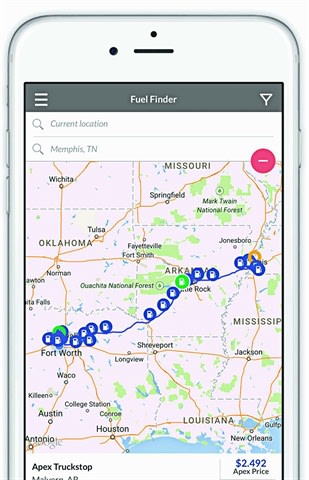
Apex Capital says its new value-added Mobile Factoring invoicing app “will help trucking companies run their business straight from their mobile device.”
Bibby/FreightCheck customers, she explains, can also opt for such offerings as free Comdata fuel cards; funding via free Comcheks; fuel discounts; invoicing and collections services; and online credit-history checks of potential customers that advise whether companies are approved for factoring as well as their payment history, etc. In addition, Bibby provides factoring on a recourse or non-recourse as well as on a spot basis.
“Trucking companies get additional benefits from factoring with Apex,” Thrasher points out, “such as our back office support, which audits their invoices and collects on them. In addition, fuel discounts, free credit checks and other discounts, such as for tires, repair services and maintenance, help clients save money and operate successfully.”
The list of added services Apex makes available includes free credit checks on brokers and shippers; a free fuel card with discounts on fuel and services at truck stops nationwide; access to its free NextLoad.com load board; an account management portal for 24/7 access, and use of its new Mobile Factoring app.
“On NextLoad.com, our clients can find loads and run free credit checks on brokers or shippers to make better decisions about the loads they haul,” says Thrasher. “They can also use our fuel finder on our portal or on NextLoad.com or the Mobile Factoring app to see the best discounts on fuel along any route. NextLoad and our Mobile Factoring app seamlessly integrate with our account management portal to make planning and factoring freight much faster and easier for our clients.”
Considered a value-added offering, the Mobile Factoring app is available exclusively and free of charge to Apex customers so that they “receive the fastest funding possible,” Thrasher says. “Drivers can take photos of their load’s paperwork with their mobile device, allowing owners to then quickly create and submit invoices to get paid faster.”
Triumph’s Mullican points to the company’s exclusive partnership with DAT Solutions as a key differentiator. He says that under the agreement, “all DAT’s load-matching services are fully integrated with our proprietary Online Broker Credit program. That means our customers can search for loads and see which ones are credit-approved. The green ‘check’ on DAT’s load boards indicate which loads are factorable through Triumph Business Capital.”
He notes that Triumph promotes the DAT arrangement by offering its clients free load-board trials. Owner-operators and small carriers can use DAT’s TruckersEdge for 30 days free while brokers can access DAT Express for 15 days free.
As for providing insurance, Mullican says that its Triumph Insurance Group stands out because it accepts as little as a 25% to 30% down payment on a policy and thee premiums can be divided equally over 12 payments.
Tech talk
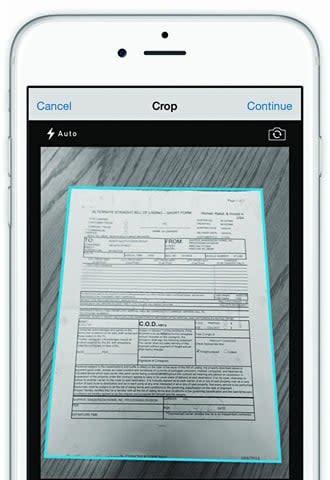
Many freight-factoring firms are becoming “full-service providers” of business tools and financial services that extend well beyond offering a crucial solution for managing cash flow.
“Just as in any industry, the technology to support factoring is getting more advanced,” says Bibby’s Hudson. “Everybody wants the paperwork to move faster. That’s why we’re looking into rolling out a load board specifically for our customers” this spring. “Our Bibby Load Board will show customers loads that we have already approved for factoring.”
On March 1, the company launched a different technology-driven innovation, Bibby Breakdown Service. It provides emergency road service through 36,000 vendors in the U.S. and Canada and can be accessed 24/7 with a toll-free phone call. There is no monthly subscription charge, only transactional fees. “There’s a real need for this service given the number of aging trucks on the road as well as the impact of maintenance-related CSA scoring,” she says.
“Factoring firms are as much technology firms as anything else,” says Triumph’s Mullican. “All our transactions can be transmitted electronically within a minute. The thing about factoring is that it eliminates both the lag time [in getting paid] and the uncertainty trucking companies may have about potential customers. And factoring is a great way to finance fleet growth— with cash instead of borrowing for a capital expenditure.”
Bibby’s Hudson contends that factoring has swiftly adapted to the changing needs of customers. “Factoring 15 years ago was considered an option for companies with poor cash flow. Now, it is a norm of operation for fleets of all sizes.”
More Fleet Management

Color Match Smarter: Tools That Restore & Perform
For fleet managers and collision repair professionals keeping heavy-duty trucks on the road, getting the color right the first time isn't just about appearance — it's about efficiency, turnaround time, and bottom-line results. Discover how today's digital color tools are transforming the repair process from guesswork to precision.
Read More →
FMCSA Pauses Biennial-Update Enforcement Amid Motus Transition
Carriers whose updates were due on or after June 1 have more time, while FMCSA works to stabilize its new registration system and warns of phishing sites impersonating its new carrier registration system, Motus.
Read More →
2026 Blueprint for Countering Smarter Supply Chain Theft
Cargo theft is no longer just the cost of doing business. It's a multi-billion-dollar criminal enterprise exploiting vulnerabilities across your fleet, drivers, and supply chain.
Read More →


How Telematics Improves Visibility, Control, and Performance in Refrigerated Fleets
Explore how telematics help refrigerated fleets improve visibility, uptime, efficiency, compliance, and cargo protection across connected cold chain operations.
Read More →
What the U.S.-Canada Trade War Means for Trucking
Escalating U.S.-Canada tariffs could disrupt cross-border freight, reduce truck volumes, raise costs, and create new uncertainty for carriers on both sides of the border.
Read More →
What Are Trucking’s Top Concerns for 2026?
The American Transportation Research Institute wants to know what's worrying trucking fleet managers, drivers, and other stakeholders in its annual Industry Issues survey.
Read More →
American Trucking Associations Looks for a New Leader
ATA President and CEO Chris Spear abruptly left his job at the association on August 21, at a pivotal time for the trucking industry.
Read More →
Public Wi-Fi Cybersecurity Risks: How Truck Drivers and Fleets Can Protect Their Data
Public Wi-Fi can expose truck drivers and fleets to credential theft, malware, and other cyber threats. Here’s how to reduce the risk on the road.
Read More →
For Nicky Cupp, Fleet Innovation Starts With Frustration
HDT Truck Fleet Innovator Nicky Cupp turns everyday pain points at Fraley & Schilling into opportunities for better technology and smarter processes.
Read More →
Adam Buttgenbach’s Approach to Electric Trucks: Start With Where They Fit
HDT Truck Fleet Innovator Adam Buttgenbach helped PepsiCo build one of North America’s largest EV fleets by focusing on where electric trucks make operational sense.
Read More →