




Brakes: Shorter Stopping Distances, Again
Coming up: another “non-event” for brakes? That’s what Phase Two of new federal stopping-distance requirements will be for truck operators, according to people we talked with. Stronger, higher-performance brakes on certain vehicles won’t even cost much more in most cases. But like Phase One two years ago, which was hardly noticed by truckers, Phase Two represents a lot of work for brake makers and truck builders.

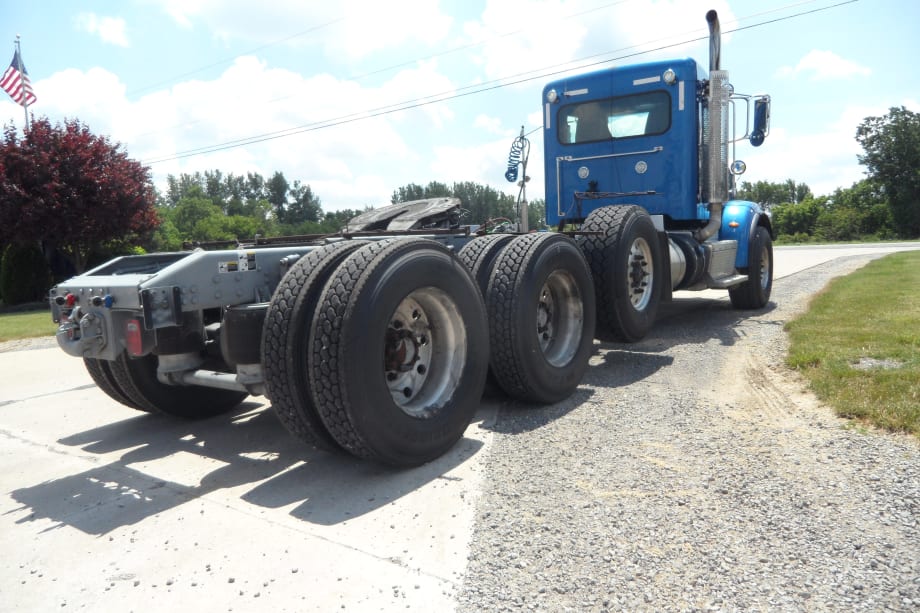
Tractors with gross-weight ratings of over 59,600 pounds, like this heavy haul model, are among those affected by FMVSS 121’s requirements for shorter stopping distances.
Coming up: another “non-event” for brakes? That’s what Phase Two of new federal stopping-distance requirements will be for truck operators, according to people we talked with. Stronger, higher-performance brakes on certain vehicles won’t even cost much more in most cases. But like Phase One two years ago, which was hardly noticed by truckers, Phase Two represents a lot of work for brake makers and truck builders.
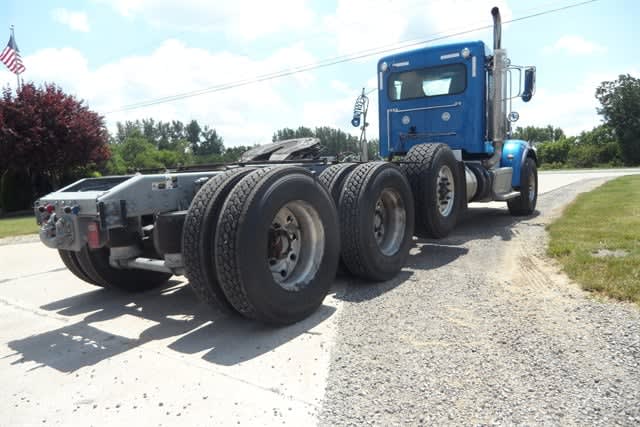
Tractors with gross-weight ratings of over 59,600 pounds, like this heavy haul model, are among those affected by FMVSS 121’s requirements for shorter stopping distances.
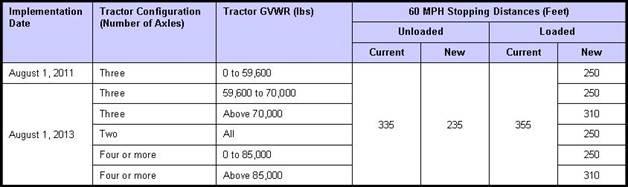
Effective Aug. 1, tandem-rear-axle road tractors with gross weight ratings over 59,600 pounds and all single-rear-axle tractors will have to stop quicker than they do now. The heavier tractor’s maximum stopping distance from 60 mph will be 250 or 310 feet, depending on gross weight and number of axles (see chart above). All two-axle tractors will have to stop in 250 feet. The current limit for these tractors is 355 feet when loaded.
Phase One, which went into effect in 2011, affected road tractors grossing up to 59,600 pounds. They make up the great majority of those on the road, and are the ones usually involved in accidents. Thus they were chosen for the first round of performance improvements. When loaded they must stop within 250 feet from 60 mph.
These requirements are in updates to Federal Motor Vehicle Safety Standard 121, published in 2009 by the National Highway Traffic Safety Administration. FMVSS 121 goes back many years and governs design and performance of air-braked vehicles. Over the years it has been modified to mandate better performance in commercial trucks and trailers. Anti-lock braking systems for heavy trucks, first in 1975 and then finally in the mid-1990s, are part of FMVSS 121.
Reduced stopping distances are the latest effort to make heavy combination vehicles more compatible with autos and light trucks on our increasingly crowded highways, NHTSA says. Trailers are not affected because regulators assume that their brakes do their fair share of stopping. In panic situations, which the 60-mph requirements simulate, vehicle weight shifts forward, putting more load on tractor brakes.
Heavy straight trucks are also not covered in the new requirements, because they generally run at lower speeds and have powerful enough brakes to be safe.
Won’t be noticed
“It’ll be another non-event,” says Darry Stuart, a contract fleet manager and consultant, of next month’s implementation of Phase Two. He is a former general chairman of the Technology & Maintenance Council of the American Trucking Associations.
“Most fleets won’t even notice it,” he says, because brake behavior stays the same under many conditions. All truck builders must comply with the regulation and buyers have little choice in the matter, except whether to stay with standard drum brakes or convert to air discs.
However, “I would say that drivers, if asked, will say that they do notice when a truck stops better,” Stuart adds. “They can tell if it stops even a few feet faster.”
Upcharges for Phase One were built into a truck’s list price, which go up almost every year anyway. Prices for the better brakes varied among the builders, but ranged from a couple of hundred dollars for larger drum brakes to perhaps $2,000 if a buyer elected to take air disc brakes. That will be the case this time, too.
Original equipment manufacturers say Phase One brakes have worked well. Some of the Phase Two trucks might be in service already, as truck builders began installing higher-performance brakes as early as late May. By law, all Phase Two trucks must have the better brakes starting Aug. 1.
“The changes have been pretty transparent to most customers, with the main effect being improved brake performance in everyday driving,” says Erik Franklin, on-highway marketing manager at Kenworth Truck, of customers’ experience with Phase One.
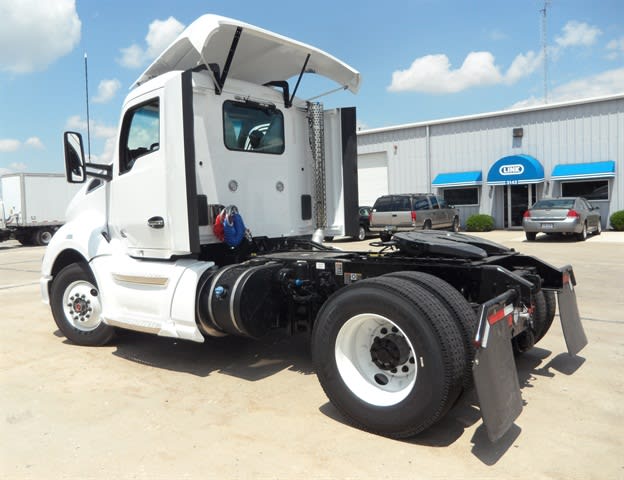
Single-rear-axle tractors, like this one set up to pull doubles, are the other type that need to stop in 250 feet while loaded instead of the
current 335 feet.
Drums still dominate
Performance sufficient to meet the regulation can usually be attained by using larger S-cam drum brakes with more aggressive linings, along with discs in some cases, say representatives at suppliers and original equipment manufacturers. A big majority of buyers will continue using drums because they are familiar items, cost less to buy, sometimes weigh less than discs and still do a proper job. Also, shoes and linings for drum brakes are relatively inexpensive.
But air disc brakes will be used in some vehicles.
“There will be a trend, just like in Phase One vehicles, where we increase brake size on steer axles from 15 inches by 4 inches to 16.5 inches by 5 inches, or from 16.5 inches by 5 inches to a 16.5 inches by 6 inches, or move to an air disc brake,” explains Joseph Kay, director of engineering for brake systems at Meritor. The drive axle drum brakes will also increase in width from 7 inches to 8.625 inches in many cases.
“Moving to a wider brake shoe allows for better energy distribution across the area, which reduces in stop fade,” Kay says. “The drum is larger, and with a larger mass drum, it can manage the energy better and operate at lower temperatures. The benefit of the wider brake’s heavier drums and optimized brake friction materials is increased brake life.”
Exact equipment varies among the OEMs, says Gary Ganaway, director of marketing and global customer solutions for Bendix Spicer Foundation Brake.
“Each OEM is choosing to take a slightly different approach, but the new regulation will be addressed by a combination of larger, higher performing drum brakes as well as air disc brakes. The technology deployed will be dependent on vehicle manufacturer and vehicle configuration, including axle weight rating, tire size, height of the center of gravity and wheelbase.”
A lot of testing
Engineers at Meritor, Bendix-Spicer, Haldex and other brake makers worked for several years to prepare for Phase One in 2011, and they did similar work in preparation for Phase Two. So did the truck builders, which have to certify braking performance for all their vehicle configurations. Extensive testing had to be done to ensure that the many parts that make up a braking system work well together.
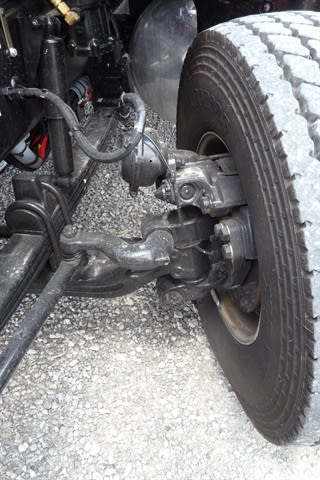
Most trucks will meet the new requirements with larger drum brakes, but some will need disc brakes, like this one. Several trucks builders have made discs standard in all Class 8 models.
Phase Two tractors have heavier axle, suspension and tire-wheel ratings, and sometimes use lift axles, so are more complex than the common 6x4s targeted in Phase One. And single-rear-axle tractors are more touchy under hard braking than tandems. So vehicle dynamics play a bigger role, says Meritor’s Kay. Factors include wheelbase, axle loadings, suspension type and the number of wheel ends monitored by ABS sensors.
“The engineers have been challenged with certain axles ‘locking up’ the brakes, and once this happens, the ABS cycles, which is reducing the air pressure to the wheels in an effort to find the right amount of brake torque where the tire is not slipping on the road,” Kay says.
“The rear axle suspensions can shift as the vehicle brakes are applied in a panic condition, which then dynamically transfers the weight distribution off the rear axles and puts it on the steer axles.
OEM approaches
Although early on there was speculation that new stopping distance requirements would require air disc brakes, truck makers are still offering drums, albeit a “high-performance” version.
“The majority of tractors affected by the new requirements will have drum brakes,” says Jerry Warmkessel, on-highway marketing manager product at Mack Trucks. For a tractor with a steer axle gross weight rating between 18,000 and 20,000 pounds, air disc brakes will be necessary.
“Where possible, we offer high-performance drum brakes with air disc as an option,” says Thomas MacMenemy, brakes manager at Daimler Trucks North America, builder of Freightliner and Western Star trucks.
The company only requires disc brakes on steer axles with gross axle weight ratings greater than 13,300 pounds on 4x2s, and greater than 16,000 pounds GAWR on 6x4, 8x4, and 8x6 configurations.
“In general, brake changes will be similar to those done in August 2011,” says Frank Bio, product manager for Volvo Trucks North America. “The brake linings will become a little more aggressive and brake components will be checked for durability. Drivers may feel the effects of the more aggressive lining but only minimally, if at all. There is no expected change in the performance or handling of the vehicle.”
Bendix Spicer and Meritor produce both drum and air disc brakes and are officially happy to sell either. Haldex makes discs and parts for drum brakes.
Brake specialists note that discs have advantages.
For instance, they are self-adjusting without outside mechanisms, and pads can be changed quicker than shoes.
A few truck builders have made discs standard on steer axles, and a number of fleets have adopted air disc brakes because they provide more stopping power and better stability, and drivers say they “feel” better.
Recruiters from those fleets sometimes use disc brakes as a selling point to prospective drivers.
Replacement parts are critical
More exacting standards make the choice of replacement parts more critical, say suppliers and truck builders.
“Because today’s brake systems are more technologically advanced and more closely matched to the vehicle specification, it is more important than ever to replace with the right service parts,” says Gary Ganaway at Bendix Spicer. “Our very strong advice to all end users is to always replace all brakes, and particularly reduced-stopping-distance brakes, with exactly the same linings and service parts.”
Ganaway says high-performance drum and disc brakes use specially formulated, higher-performing friction materials. “We have received many reports from our end users of friction suppliers and distributors who are falsely claiming that their materials meet the new requirements. We recently evaluated some of the most popular lining materials and found that they increased stopping distances by as much as 96 feet, or five car lengths.”
Bendix is including warning labels in product packaging, and has created a computer desktop animation tool to demonstrate the impact of non-compliant parts, Ganaway says.
Joe Kay agrees: “Meritor recommends replacing with genuine materials. However, we also know the end user needs options when replacing worn components, so we recommend contacting a representative or looking at our website literature on demand.”
Partly to save money, not everyone buys original-equipment parts. But “don’t let price get in the way of a buying decision,” says contract fleet manager Stuart.
Quality and performance should be the top reasons, and reputable aftermarket suppliers submit their products to third-party testing.
Many of them are listed in TMC’s Recommended Practice 628b, Aftermarket Brake Lining Classification. This publication helps managers in the selection of products that meet government performance criteria.
Finally, some good news and some non-news: Larger brakes mean more material, and, as Meritor’s Kay noted, that usually converts to longer life for linings, pads and other parts. As the saying goes, your results may vary.
Have brakes meeting the shorter stopping distance requirements resulted in fewer accidents, deaths and injuries, as NHTSA predicted when it published the updates to FMVSS 121?
That’s not yet known. A NHSTA spokesperson says it usually takes more than two years for data to be assembled, compiled and interpreted, and it’s only been two years since Phase One went into effect. So we’ll have to stay tuned.
More Drivers

EEOC Sues Texas Trucking Company Over Driver Age Limits
The agency says Trancasa USA rejected applicants over 65 and applied tougher driving-record standards to those over 60.
Read More →
Nussbaum, Roehl Announce Second Driver Pay Increase This Year
This year has seen a swath of major truck driver pay increases as freight capacity has tightened.
Read More →
From One Generation to the Next: How Mentorship Builds Safer Truck Drivers
After three decades in trucking, Harold Perry shares what he's learned about driver safety, mentorship, and helping the next generation build confidence behind the wheel.
Read More →
Truck Drivers Need More Than Another Alert
Fleets have more visibility into truck health, safety events, and driver activity than ever. The next challenge is turning all that information into useful guidance for the person who has to decide what to do next.
Read More →
FMCSA Removes 110 Truck Driver Training Schools from Certified ELDT List
Federal regulators also are targeting more than 160 additional training providers and launching a nationwide audit of third-party CDL skills testers as part of a broader crackdown on trucking fraud.
Read More →
Hours of Service Pilot Programs: FMCSA Readies for 2027 Rollout
Two pilot programs could eventually reshape hours-of-service rules, giving truck drivers options to pause their 14-hour clock or use longer split sleeper rest periods.
Read More →
Medical Cards, English Proficiency Reshape Roadcheck Violations
Medical-card violations jumped to the top of the driver out-of-service list during CVSA’s 2026 International Roadcheck, while English-language proficiency violations appeared among the leading violations for the first time.
Read More →
Driver Trust Can Make or Break the Success of Fleet Safety Technology
New Teletrac Navman research suggests that onboarding, transparency about driver data, and positive feedback can play a significant role in how commercial drivers respond to safety and coaching technology.
Read More →
EEOC Sues KLLM Over Alleged Sex Discrimination in Driver Training
KLLM is facing a federal sex-discrimination lawsuit over policies the EEOC alleges put female truck driver trainees at a disadvantage.
Read More →
FMCSA Moves to Codify English Language Requirements for Commercial Drivers
By changing regulations on English-language proficiency requirements for commercial drivers, rather than relying on a guidance memo, the FMCSA said future administrations won't be able to walk back the Trump administration's stricter enforcement with just a memo.
Read More →