




CA Goes Aero: CARB's New Aerodynamic Rules
Not many owners of semitrailers have bought aerodynamic fairings and low-rolling-resistance tires to save fuel, but a lot of them will have to under new rules from California's Air Resources Board

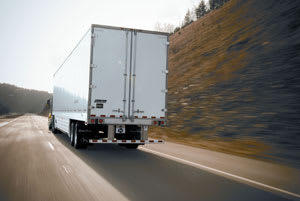
SmartWay-certified trailers with side skirts and low-rolling-resistance tires should meet the upcoming CARB rules. These tires are wide-base singles, but some standard-size duals also qualify. Photo from Great Dane Trailers
Not many owners of semitrailers have bought aerodynamic fairings and low-rolling-resistance tires to save fuel, but a lot of them will have to under new rules from California's Air Resources Board.
CARB says it will begin enforcing previously published regulations affecting box-type trailers and road tractors starting January 2010. The rules affect certain vehicles whether they're based in California or running into the state from elsewhere.
The rules stem from the passage of California Assembly Bill 32, which demands reduction of pollutants and gases blamed for global warming. Reducing the burning of fuel by heavy trucks automatically cuts harmful gases, lawmakers reasoned when passing the law several years ago. The law tasked CARB to implement rules that would cut greenhouse gases to 1990 levels by 2020. By that time it will also have saved 750 million gallons of diesel fuel in California and 5 billion gallons of diesel fuel across the nation, the agency claims.
The rules
CARB explains the rules in detail on its web site at http://www.arb.ca.gov/cc/hdghg/hdghg.htm. Here are the essentials:
* Effective this Jan. 1, 2011-model 53-foot or longer dry van and refrigerated trailers must be equipped with aerodynamic improvers and low-rolling-resistance tires. So must 2011-model sleeper-cab tractors that pull them.
* Many pre-2011-model trailers must be modified with EPA SmartWay-approved fairings and low-rolling-resistance tires by Dec. 31, 2012. Or owners can choose a compliance schedule based on fleet size and prepare and submit the appropriate compliance plan that phases in compliant equipment over time.
* Pre-2011 tractors pulling affected trailers must get low-rolling-resistance tires by Jan. 1, 2012. Most of the targeted tractors already use air fairings, because owners know they save money on fuel, but many don't currently have low-rolling resistance tires and will need them added in about 30 months.
CARB exempts many types of trailers and tractors, including box-type trailers shorter than 53 feet and drayage-type daycab tractors that run within a 100-mile radius of a home base. Often these make local pick-ups and deliveries or haul cargo containers from and to seaports and rail yards. Container chassis are exempt, along with curtain-sided vans, solid-waste and emergency vehicles, and military tactical vehicles.
Also exempt are 2003- to 2008-model reefer trailers with 2003 or later transport refrigeration units. These have a compliance phase-in between 2017 and 2019. Complying with TRU emission regulations will be expensive enough, apparently, so CARB left them out of the rules.
The agency targeted long dry-van and reefer trailers because they usually operate on highways where sustained high speeds make the fuel-saving equipment worthwhile. Trailers shorter than 53 feet are exempt because they often make numerous pick-ups and deliveries where this type of equipment doesn't help.
The equipment
CARB specifies fuel-saving equipment certified under the Environmental Protection Agency's SmartWay Transport Partnership program. SmartWay-approved tractor equipment includes a full aerodynamics package, including fairings on the roof and over fuel tanks, cab-side extenders, and low-rolling resistance tires. SmartWay-approved trailer equipment includes low-rolling-resistance tires plus side skirts, nose fairings and rear-end fairings. EPA has a list of certified products by name at its web site, www.epa.gov/smartway.
For trailers, a pair of approved side skirts and a set of low-rolling-resistance tires will usually meet CARB's requirements, because their makers have certified them to be capable of cutting fuel use by minimum percentages - 5 percent for the fairings and 1.5 percent for the tires - according to Great Dane Trailers. So they are what Great Dane uses on its SmartWay-certified trailers. So do others. Many trailer and tractor manufacturers have certified certain vehicles with SmartWay, so buying them, and having proper documentation, will almost certainly satisfy CARB.
Nose-mounted fairings - gap reducers, in CARB parlance - and rear aero improvers, including boat tails and devices that mimic boat tails, have also been certified by SmartWay. But a gap reducer or read-end device alone usually won't save enough to meet CARB requirements. That's acknowledged by Nose Cone Manufacturing, but it counters that its trailer-nose device makes up for the long tractor-trailer gaps that most rigs have, and nicely complements a set of comparatively high trailer side skirts.
Many available side skirts are too close to the pavement and thus too easily damaged when a trailer high-centers on dock or driveway aprons or railroad crossings, Nose Cone says. It has partnered with Solus, a designer of skirts and other aero devices, to offer a package of nose and side fairings. The skirts are high enough from the pavement to avoid being damaged. However, Great Dane notes that some skirt panels and brackets are now built of flexible materials that "give" when scraping by obstacles.
Low-rolling-resistance tires can be wide-base singles or duals, SmartWay and CARB say. Big singles save more fuel at highway speeds - 9 percent or more, according to some formal fleet-sponsored tests - and reduce tare weight by about 200 pounds per axle compared to standard duals. But some fleets prefer duals, believing they offer greater operational reliability because a single flat allows the rig to still limp along, if its driver cares enough to reduce speed, while a flattened big single stops the rig in its tracks.
Delays and dollars
The AB 32 deadlines might be pushed back if industry groups pressure CARB enough to make authorities relent. CARB has delayed its reefer-emissions rules several times, most recently last month when it pushed back the deadline for fitting diesel particulate filters to many transport refrigeration units from July 14 to Dec. 31.
A major complaint against CARB's AB 32 rules is the cost of the special equipment. Side skirts cost $2,000 to $4,000 when added to a bare trailer, and other fairings carry similar price tags. Any reasonable payback from fuel savings will take years for all but high-mileage trailers.
Low-rolling-resistance tires cost little or nothing more than standard radials when a new trailer is ordered. But installing them on existing trailers will involve downtime and labor, and fleets having to transport still-roadworthy non-low-rolling-resistance tires to where they can be used. One possible trend stemming from this is more leasing and renting of CARB-compliant trailers by cash-strapped truckers.
Galling to many operators is that so many trailers spend a lot of time parked at loading docks, customers' yards or terminals, where the special fairings and tires do no good and are in most danger of being damaged. This is especially true of drop-and-hook operations where trailers sit awaiting loading or unloading. Owners will probably have to rethink such operating schemes, particularly where customers are accustomed to using trailers for loading on their schedules or even storage. SmartWay trailers may become too expensive to sustain such courtesies without extra per diem charges.
One refreshing aspect of the CARB rules is that shippers as well as truckers can be held accountable for meeting the regulations. And the agency says grant money will be available to purchase equipment that meets the rules. More information on all this is at CARB's website: http://www.arb.ca.gov/cc/hdghg/hdghg.htm. Trailer and tractor dealers also have info, or will if they're savvy.
From the August 2009 issue of Heavy Duty Trucking.
More Equipment
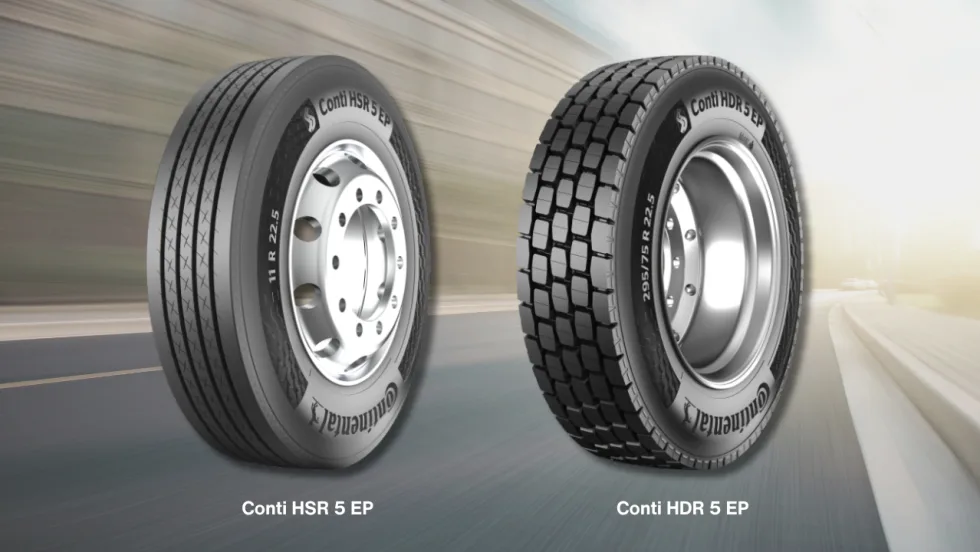
Continental Introduces New Regional Truck Tires
Continental says its new Generation 5 steer and drive tires for regional operations offer longer tread life, with estimated mileage gains of 22% and 19%, respectively.
Read More →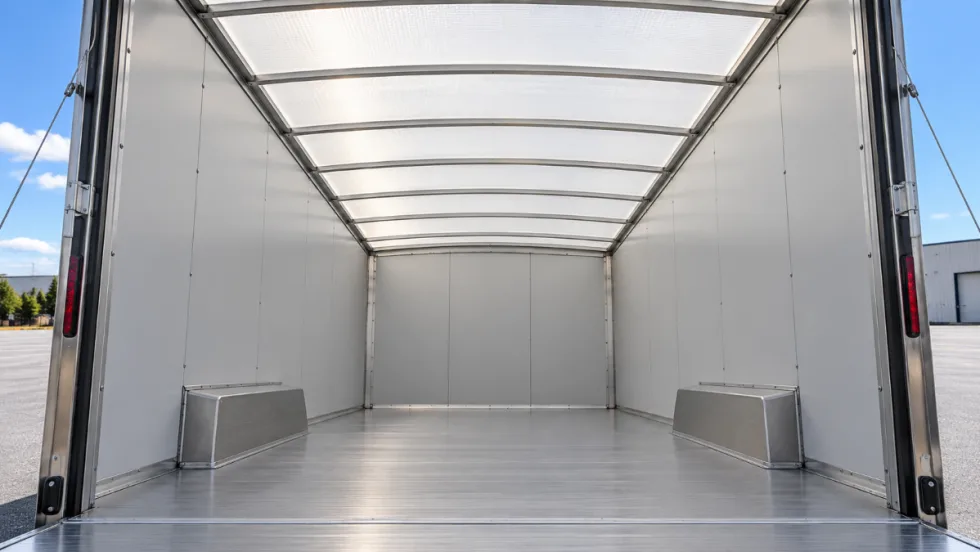
Tekmodo Introduces CargoBright Brand for Translucent Trailer Roofs
CargoBright is designed to diffuse daylight across the cargo area while performing as a working vehicle roof.
Read More →
Fleet Economics Shape Electric Truck Outlook
ACT Research expects costs, charging infrastructure, and technology improvements to drive zero-emission commercial vehicle adoption as federal regulations and incentives retreat.
Read More →
Kodiak Targets Dallas–Houston for Driverless Trucks
The company says its autonomous trucks are completing the I-45 run without a safety observer taking control. It plans to remove the observer by the end of 2026.
Read More →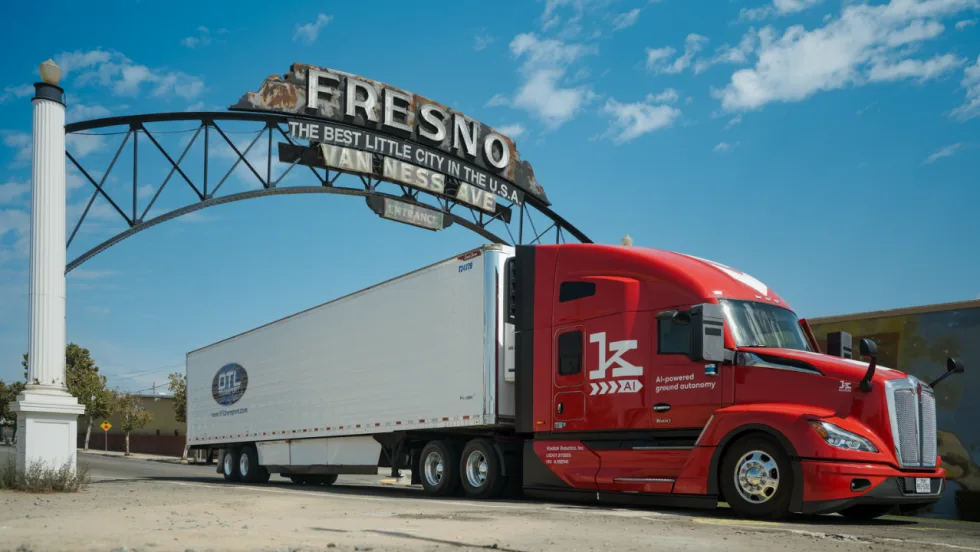
Kodiak Hauls Produce in California Autonomous Truck Pilot
Kodiak AI and DTL Transport have begun hauling produce between Fresno and Los Angeles under California’s new rules for testing heavy-duty autonomous trucks. A safety driver remains behind the wheel.
Read More →
Used-Truck Remarketing Math Is Changing
Used-truck value is no longer just a concern at trade-in. Decisions made throughout a truck’s first life can influence what it’s worth years later.
Read More →
How Volvo Updated Its D13 for EPA 2027 [Watch]
Volvo’s updated D13 promises lower emissions without sacrificing performance or fuel economy. Take a closer look at what changed inside the engine in this HDT Spotlight video.
Read More →
Michelin Tire Improves Efficiency and Durability for Regional Fleets
The Michelin X Multi Energy D2 is a regional haul drive tire engineered to help fleets improve fuel efficiency, durability and traction in demanding stop-and-go operations.
Read More →
ZF Expands Commercial Vehicle Push in North America
ZF is expanding its North American commercial-vehicle presence with new transmission applications, electrification, trailer technology and autonomous-driving systems.
Read More →
Tesla Wants a Self-Driving Semi. Are Cameras Enough?
Could Tesla’s camera-only autonomous driving technology work on an 80,000-pound Semi? In this commentary, HDT's Deborah Lockridge takes a look at Tesla, Cybercab, and how autonomous trucks see the road.
Read More →