




Related: FMCSA Not Doing Enough to Keep Unsafe Operators Off Highways, NTSB Says
USA Today Finds Drivers Being Overworked at Ports
Drivers may be working shifts of up to 20 hours per day for six days a week at two major Southern California ports, sometimes contributing to fatal accidents, according to a report in USA Today – but port trucking companies say the story is misleading.

Steven Martinez・Web Editor
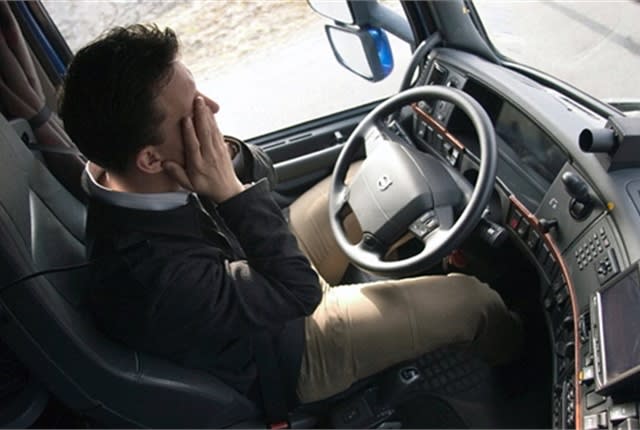
Photo: Volvo Group
3 min to read
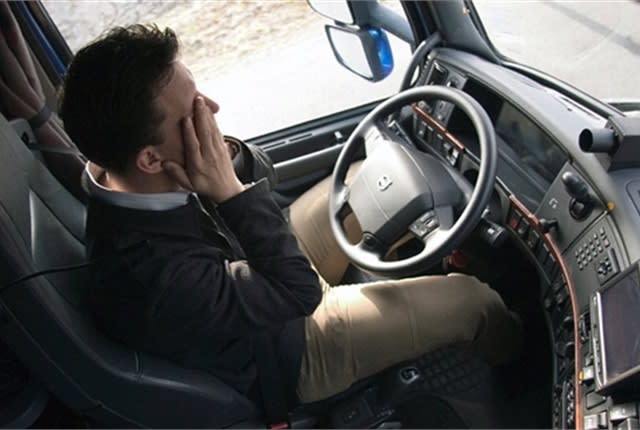
Photo: Volvo Group
Drivers may be working shifts of up to 20 hours per day for six days a week at two major Southern California ports, sometimes contributing to fatal accidents, according to a report in USA Today.
The report paints a picture of overworked drivers, underhanded dealings by port trucking companies, and fatigue leading to fatal consequences. However, these findings have been challenged by port companies and the Harbor Trucking Association as misleading and a sensationalization of the facts.
Reporters traced the movements of trucks in and out of the ports using publicly available data collected from the entry points at the ports. This identified the vehicle and showed how often it was in operation in and around the port area. The data showed 580,000 times, or about 8% of total port traffic from 2013 to 2016, where a truck potentially violated hours of service rules for taking a break after 14 hours on the road, according to USA Today.
The report tied this work load to fatigue-related accidents that occurred over a three-year period in the region surrounding the Ports of Los Angeles and Long Beach. In one instance, a driver killed a pedestrian after working 45 hours in a three-day stretch for Pacific 9 Transportation.
The driver said he didn’t fall asleep at the wheel and didn’t feel tired when the accident happened. The officer who investigated the accident never checked the logs because he wasn’t trained in commercial enforcement. The driver was charged with a misdemeanor hit and run.
Another driver told USA Today that he regularly worked 16-hour shifts and kept a bucket of ice with him in the cab that he would use to keep himself from falling asleep.
Port trucking companies disputed the findings, telling USA Today that the data was misleading because a truck could be driven by multiple drivers. However, drivers told USA Today that they were encouraged to regularly work long hours by their employers and that many companies didn’t allow drivers to share a truck. The Pacific 9 driver who struck the pedestrian said that dispatchers would tell him to change his logbooks to appear compliant.
When reached for comment, HTA Executive Director Weston LaBar characterized the story as misleading and called it "essentially a narrative on the author's own opinions."
“The latest story by USA Today is another example of sensationalized information, with a complete lack for understanding of how the industry works and a willful ignorance of the facts," said LaBar. "The data looks at trucks, not drivers, and there is little to no acknowledgement of basic industry practices such as slip-seating.
"While it will sell newspapers, it is a gross manipulation of truth and irresponsible at the very least.”
The latest report was the fourth part of USA Today's series on working conditions for truck drivers at America's ports. The first installment examined contract drivers who were working long hours and taking home next to no pay as they paid off truck leases. In one reported case, a driver brought home only 67 cents from a week's worth of work.
More Drivers

Truck Drivers Need More Than Another Alert
Fleets have more visibility into truck health, safety events, and driver activity than ever. The next challenge is turning all that information into useful guidance for the person who has to decide what to do next.
Read More →
FMCSA Removes 110 Truck Driver Training Schools from Certified ELDT List
Federal regulators also are targeting more than 160 additional training providers and launching a nationwide audit of third-party CDL skills testers as part of a broader crackdown on trucking fraud.
Read More →
Hours of Service Pilot Programs: FMCSA Readies for 2027 Rollout
Two pilot programs could eventually reshape hours-of-service rules, giving truck drivers options to pause their 14-hour clock or use longer split sleeper rest periods.
Read More →
Medical Cards, English Proficiency Reshape Roadcheck Violations
Medical-card violations jumped to the top of the driver out-of-service list during CVSA’s 2026 International Roadcheck, while English-language proficiency violations appeared among the leading violations for the first time.
Read More →
Driver Trust Can Make or Break the Success of Fleet Safety Technology
New Teletrac Navman research suggests that onboarding, transparency about driver data, and positive feedback can play a significant role in how commercial drivers respond to safety and coaching technology.
Read More →
EEOC Sues KLLM Over Alleged Sex Discrimination in Driver Training
KLLM is facing a federal sex-discrimination lawsuit over policies the EEOC alleges put female truck driver trainees at a disadvantage.
Read More →
FMCSA Moves to Codify English Language Requirements for Commercial Drivers
By changing regulations on English-language proficiency requirements for commercial drivers, rather than relying on a guidance memo, the FMCSA said future administrations won't be able to walk back the Trump administration's stricter enforcement with just a memo.
Read More →
Drivers Put Western Star Trucks to the Test at Star Nation Experience
Watch to get an inside look at the Western Star trucks, technology, and community behind the Star Nation Experience 2026!
Read More →
Trump Administration Looks to Put More Veterans Behind the Wheel
The Freedom Haulers program pulls together existing and expanded programs at several federal agencies to recruit veterans to drive commercial heavy-duty trucks and cut the red tape for them to get a CDL, training, and employment.
Read More →
Putting Mack’s Command Steer to the Test
A test drive of Mack’s Command Steer active steering system evaluates how it can make truck driving easier and less tiring.
Read More →