




FMCSA Seeks Comment on Flexible Sleeper Berth Pilot
The Federal Motor Carrier Safety Administration is now seeking public comment on its proposed pilot program to make more flexible the sleeper-berth provision within its hours-of-service rule for truck drivers.


Photo: FMCSA

The Federal Motor Carrier Safety Administration is now seeking public comment on its proposed pilot program to make more flexible the sleeper-berth provision within its hours-of-service rule for truck drivers.
FMCSA said the pilot program, if approved by the White House Office of Management and Budget, would “allow temporary regulatory relief from the agency's sleeper berth regulation for a limited number of commercial drivers who have a valid commercial driver's license and who regularly use a sleeper berth to accumulate their required 10 hours of non-duty work status.”
The agency announced back in June its intention to launch the pilot. At that time, it said that during the study, participating truckers who regularly use a sleeper berth to accumulate their required 10 hours of non-duty work status would have the option to split their sleeper berth time within parameters specified by FMCSA. The agency also said that driver metrics would be collected for the duration of the study and that participants’ safety performance and fatigue levels would be analyzed.
FMCSA has pointed out that currently any interstate driver who operates a property-carrying vehicle equipped with a sleeper berth and who uses the sleeper berth provision must take at least 8 consecutive hours in the sleeper berth, plus a separate 2 consecutive hours either in the sleeper berth, off duty, or any combination of the two, before returning to on-duty status.
By contrast, the pilot program would give participating drivers a temporary exemption from this requirement for consolidated sleeper berth time. The agency said that for study purposes, drivers would be allowed to split their sleep into no more than two sleeper berth segments.
In its Federal Register notice of its information collection request, FMCSA noted that details of the data collection plan for this pilot program are subject to change based on comments to the docket and further review by analysts and that participating drivers will drive an instrumented vehicle for up to 3 consecutive months.
At a minimum, the agency said it will gather the following data during the study:
Electronic logging device data, to evaluate duty hours and timing, driving hours and timing, rest breaks, off-duty time, and restart breaks.
Onboard monitoring system (OBMS) data, to evaluate driving behaviors, safety-critical events (or SCEs, which include crashes, near crashes, and other safety-related events), reaction time, fatigue, lane deviations, and traffic density, road curvature, and speed variability.
Roadside violation data (from carriers and drivers), including vehicle, duty status, hazardous materials, and cargo-related violations (contingent upon inspections).
Wrist actigraphy data, to evaluate total sleep time, time of day sleep was taken, sleep latency, and intermittent wakefulness.
Psychomotor Vigilance Test (PVT) data, to evaluate drivers’ behavioral alertness based on reaction times.
Subjective sleepiness ratings, using the Karolinska Sleepiness Scale KSS to measure drivers’ perceptions of their fatigue levels.
Sleep logs, in which drivers will document when they are going to sleep, when they wake up, and whether they are using the sleeper berth. For split sleep days, drivers will record how and why they chose to split their sleep.
The agency added that “other information that may be needed, such as vehicle miles traveled (VMT), will also be collected through the participating carrier. Every effort will be made to reduce the burden on the carrier in collecting and reporting this data.”
FMCSA said the Office of Management and Budget must receive any comments on the agency’s proposed pilot by November 27, 2017, in order for OMB “to act quickly.”
All comments should reference Federal Docket Management System (FDMS) Docket Number FMCSA–2016–0394.
Comments should be submitted to the Office of Information and Regulatory Affairs, Office of Management and Budget and addressed to the attention of the Desk Officer, Department of Transportation/Federal Motor Carrier Safety Administration, and sent either via: 1) electronic mail to oira_submission@ omb.eop.gov; 2) faxed to (202) 395– 6974; 3) mailed to the Office of Information and Regulatory Affairs, Office of Management and Budget, Docket Library, Room 10102, 725 17th Street NW., Washington, DC 20503.
More Drivers
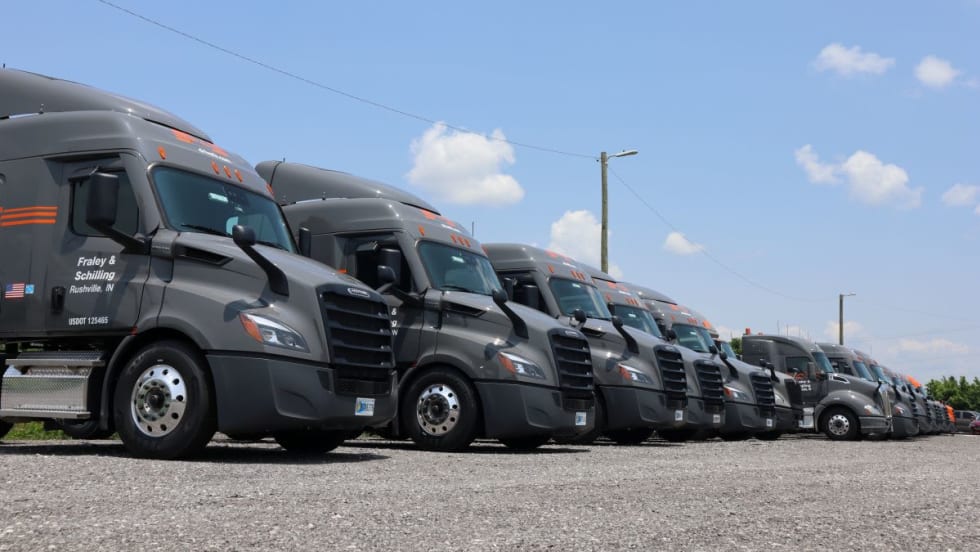
How Fraley & Schilling Improved Logbook Compliance by Over 50%
Fraley & Schilling needed a way to close a compliance workflow gap in its ELD system without adding more work from driver training, reminders, and back-office follow-ups. It found the answer in a custom driver app.
Read More →
Volvo Goes Gaming
Volvo has roared into American Truck Simulator with two new flagship trucks.
Read More →
What the Best Fleets to Drive For Teach About Driver Retention
Survey fatigue, AI-powered routing, owner-operator expectations, and the decline of social media all emerged as themes from this year's Best Fleets to Drive For program.
Read More →
Driver Retention Lessons From the Best Fleets to Drive For
What separates trucking's best workplaces from the rest? Jane Jazrawy shares the biggest lessons from this year's Best Fleets to Drive For program on driver retention, communication, AI, and workforce trends on the HDT Talks Trucking podcast.
Read More →
Farewell, CDL: Why I'm Giving Up My Commercial Driver's License
After more than 20 years as a CDL holder, HDT Executive Editor Jack Roberts is letting his commercial license expire. Not because he wants to — but because trucking's nuclear verdict crisis has made the risks of public-road test drives too great for editors, manufacturers, and everyone involved.
Read More →
How Top Trucking Fleets Improve Driver Retention [Video]
What do healthy snacks, optimized routing, and just picking up the phone have in common? They're all strategies the Best Fleets to Drive For are using to retain truck drivers.
Read More →
Trucker Path Adds Verisk CargoNet Theft Data to Navigation Platform
Trucker Path’s new cargo theft risk overlays give drivers and fleets visibility into high-risk areas, stolen commodity trends, and theft hotspots.
Read More →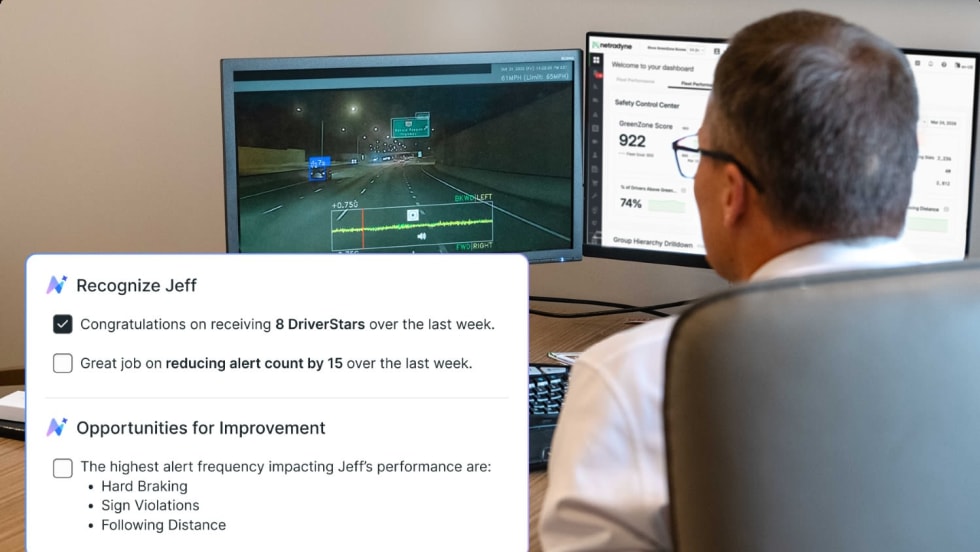
Netradyne Intelligence Uses New AI Agents to Automate Response to In-Cab Camera Data
The company called the next-generation in-cab camera safety platform "a fundamental shift from systems that report on what happened to systems that actively drive what should happen next."
Read More →
Why Truck Detention Keeps Costing Fleets Time and Money
A 2024 ATRI study found detention affects nearly 40% of truckload stops and costs the industry more than $15 billion annually. Despite the toll on drivers, fleets, and supply chains, the problem remains stubbornly persistent.
Read More →
Prime Inc. to Open $7.9M Flagship Used-Truck Dealership
A new driver-focused facility to sell Prime Inc's used trucks and trailers will be the first purpose-built location in the company's history.
Read More →