




Related: Christopher Burruss, Former TCA President, Joins Blue Tree Systems
Blue Tree’s Anticipation Feature Tracks Braking Efficiency
Blue Tree Systems introduced a new feature called Anticipation, which tracks and measures the gap between acceleration and brake usage in normal driving.
by Staff
September 7, 2017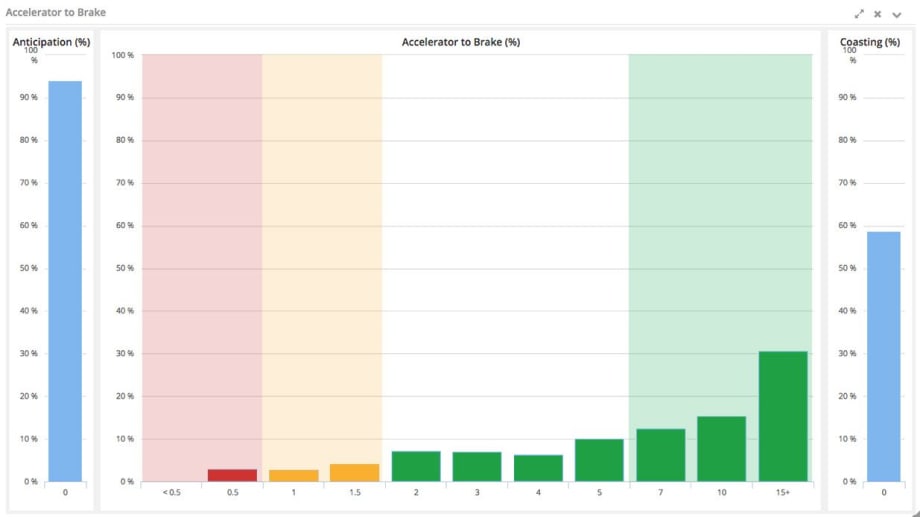
The Anticipation feature measures the gap in time between lifting off an accelerator and applying the brakes. Image via Blue Tree Systems
2 min to read
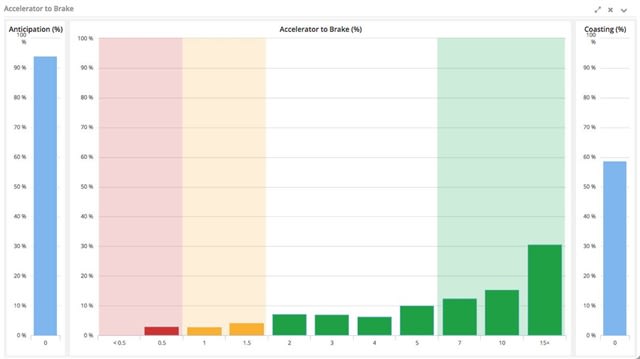
The Anticipation feature measures the gap in time between lifting off an accelerator and applying the brakes.Image via Blue Tree Systems
Blue Tree Systems introduced a new feature called Anticipation, which tracks and measures the gap between acceleration and brake usage in normal driving.
Released to coincide with the Commercial Vehicle Safety Alliance’s Brake Safety Day, the Anticipation feature measures how well a driver is anticipating the road ahead by monitoring his or her use of the accelerator and brake pedals. It measures the time taken before a brake is pressed after the driver lifts off of the accelerator.
Brake Safety Day on Sept. 7 is when law enforcement agencies in North America conduct roadside inspections on large trucks to identify out-of-adjustment brakes and brake system violations.
A good Anticipation score can indicate a more fuel-efficient driving style, because easing off the accelerator allows a vehicle to slow down naturally and any distance traveled while coasting in this state are considered “free miles.” It also reduces wear and tear on brakes.
“One of Blue Tree’s goals in introducing this new Anticipation feature is the same as the goal of Brake Safety Day: to reduce the number of crashes involving commercial vehicles,” said Mark Whitney, head of product development for Blue Tree Systems. “We are confident that this new measure – together with our other brake-related measurements such as brake presses per 100 miles, high-speed brake presses, short brake presses and coasting percentages – can lead to significant improvements for truck fleets in safety, mpg and maintenance costs.”
Anticipation can be a strong safety indicator, according to Blue Tree Systems, and it can highlight drivers who are more likely to have an accident. A poor anticipation score indicates that the driver is not anticipating that he may need to stop in a few seconds, instead of reacting too late to an event.
Blue Tree’s platform compares similar drivers to each other on their Anticipation scores. This feeds into Blue Tree’s Driver Performance scoring, which is visible in the cab. Full analysis and reporting are available in FleetManager.com, Blue Tree’s portal. Driver coaching can then be completed with information broken down across vehicles.
The new Anticipation features adds to Blue Tree’s ability to collect and report fault codes from all electronic braking systems. Maintenance managers can see this information both through text message or email and historically, using detailed reports. Issues can then be dealt with as soon as possible, instead of waiting for periodic safety checks or scheduled maintenance windows.
Blue Tree Systems is a global telematics provider offering solutions for hours of service compliance, fuel, safety and cargo on a single Android-based software and hardware platform. For more information, click here.
More Drivers

Truck Drivers Need More Than Another Alert
Fleets have more visibility into truck health, safety events, and driver activity than ever. The next challenge is turning all that information into useful guidance for the person who has to decide what to do next.
Read More →
FMCSA Removes 110 Truck Driver Training Schools from Certified ELDT List
Federal regulators also are targeting more than 160 additional training providers and launching a nationwide audit of third-party CDL skills testers as part of a broader crackdown on trucking fraud.
Read More →
Hours of Service Pilot Programs: FMCSA Readies for 2027 Rollout
Two pilot programs could eventually reshape hours-of-service rules, giving truck drivers options to pause their 14-hour clock or use longer split sleeper rest periods.
Read More →
Medical Cards, English Proficiency Reshape Roadcheck Violations
Medical-card violations jumped to the top of the driver out-of-service list during CVSA’s 2026 International Roadcheck, while English-language proficiency violations appeared among the leading violations for the first time.
Read More →
Driver Trust Can Make or Break the Success of Fleet Safety Technology
New Teletrac Navman research suggests that onboarding, transparency about driver data, and positive feedback can play a significant role in how commercial drivers respond to safety and coaching technology.
Read More →
EEOC Sues KLLM Over Alleged Sex Discrimination in Driver Training
KLLM is facing a federal sex-discrimination lawsuit over policies the EEOC alleges put female truck driver trainees at a disadvantage.
Read More →
FMCSA Moves to Codify English Language Requirements for Commercial Drivers
By changing regulations on English-language proficiency requirements for commercial drivers, rather than relying on a guidance memo, the FMCSA said future administrations won't be able to walk back the Trump administration's stricter enforcement with just a memo.
Read More →
Drivers Put Western Star Trucks to the Test at Star Nation Experience
Watch to get an inside look at the Western Star trucks, technology, and community behind the Star Nation Experience 2026!
Read More →
Trump Administration Looks to Put More Veterans Behind the Wheel
The Freedom Haulers program pulls together existing and expanded programs at several federal agencies to recruit veterans to drive commercial heavy-duty trucks and cut the red tape for them to get a CDL, training, and employment.
Read More →
Putting Mack’s Command Steer to the Test
A test drive of Mack’s Command Steer active steering system evaluates how it can make truck driving easier and less tiring.
Read More →