




FMCSA Defends ELD Rule Against OOIDA Court Challenge
The Federal Motor Carrier Safety Administration forcefully defended its Electronic Logging Device rule in a court brief filed June 15. The filing was in response to a lawsuit brought against the mandate by the Owner Operator Independent Driverws Association.

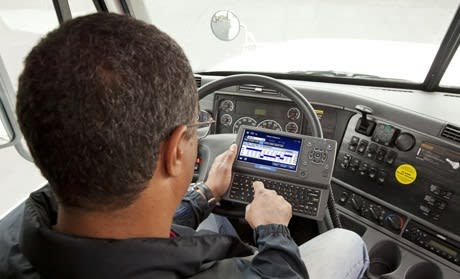
The Federal Motor Carrier Safety Administration forcefully defended its Electronic Logging Device rule in a court brief filed June 15.
The filing was in response to a lawsuit brought against the mandate by the Owner Operator Independent Drivers Association. The 60-page brief was filed in the U.S. Court of Appeals for the Seventh Circuit on the last due it was due, per a deadline set by the court.
FMCSA argued in its brief that, contrary to OOIDA’s legal challenge, the ELD rule is constitutional as it does not violate the Fourth Amendment prohibition of unreasonable searches.
The agency also said the mandate does not impinge on drivers’ rights to privacy and that its cost-benefit analysis “amply supports” the rulemaking.
OOIDA filed a Petition for Review of the ELD rule on Dec. 11, 2015 — the day after the mandate was announced.
Earlier this year, the association said it sought the judicial review because it contends: (A) The rule violates Fourth Amendment rights against reasonable searches and seizures; (B) The costs associated with compliance are not justified; and (C) The mandate fails to comply with a congressional statute requiring ELDs to accurately and automatically record changes in drivers’ duty status.
“This mandate means monitoring the movement and activities of real people for law enforcement purposes and is an outrageous intrusion of the privacy of professional truckers,” said OOIDA President and CEO Jim Johnston at the time. He also stated that there is “simply no proof that the costs, burdens and privacy infringements associated with this mandate are justified.”
Hitting back in its June 15 brief, FMCSA stated that the rule is consistent with instruction given the agency by Congress that it mandate ELDs “capable of recording a driver’s hours of service and duty status accurately and automatically. ELDs do automatically record when a driver is in on-duty driving status and for how many hours. That is all the statute requires on its face.”
FMCSA dismissed OOIDA’s argument that because ELDs require some manual inputs, they are no better at achieving compliance with hours-of-service regulations than paper Records of Duty that require all manual inputs.
“Congress has already determined that is incorrect,” the agency countered, “having directed the secretary [of transportation] to require electronic logging devices ‘to improve compliance by an operator of a vehicle with hours of service regulations.’ Common sense reinforces Congress’s conclusion: automatic, tamper-proof recording of driving data, location, engine hours and other information decreases the likelihood that driving time can be concealed or status information changed after the fact.”
Turning to OOIDA’s concern that carriers could leverage ELDs to harass drivers, FMCSA said that its requirement that harassment be linked to regulatory violations is “in harmony” with the statutory requirement that ELDs “improve compliance with hours of service regulations” but not be used to “harass” a driver. The agency noted that the rule requires ELDs to have security and editing controls to protect drivers from motor carriers changing their driving records, “both of which were included in response to specific complaints by drivers.”
FMCSA said it also included an “express prohibition” on driver harassment, with civil penalties for violations and a procedure for drivers to file written complaints of harassment by a carrier. “Again,” the agency added, “these provisions were included in response to specific comments from drivers.”
As to the cost of compliance, FMCSA declared that the challenge to the FMCSA’s cost-benefit analysis “fares no better.” The agency pointed out that “as an initial matter,” it was “not statutorily required to do a cost-benefit analysis at all, so any objection to that analysis provides no basis to vacate the rule.”
Nevertheless, FMCSA said its own analysis fully supports the rule. “The agency used real-world data from motor carriers already employing similar monitoring devices to determine that monitoring devices dramatically improved compliance.” FMCSA found that ELDs would result in 1,844 fewer crashes, 26 lives saved, and 562 injuries avoided annually.
“Petitioners’ multiple objections to the cost-benefit analysis are meritless," FMCSA added. “Their claim that the agency did not study any monitoring devices already in use is flatly contradicted by the record.”
As for protecting the right to privacy, FMCSA said the rule “takes appropriate measures to preserve the confidentiality of personal data contained in ELDs, relying in part on existing regulations and federal law protecting the release of private information, as well as committing the agency to redact private information from the administrative record in an enforcement action, and further requiring motor carriers to protect private data consistent with sound business practices and requiring ELDs have secure access to data and use encryption methods while transferring data.”
FMCSA went on to state that the OOIDA brief “contains only vague assertions that the agency should have done more, without specifying exactly what additional procedures they desire or explaining why the provisions adopted are not ‘appropriate measures’ as Congress required.”
The agency also said that ELDs do not violate any reasonable expectation of privacy “because they do not precisely track vehicles in real-time, but only intermittently record location within a 1-mile radius.”
Last but not least, FMCSA flatly declared that “ELDs do not violate the Fourth Amendment. ELDs are neither a ‘search’ nor a ‘seizure’ under the Fourth Amendment. ELDs are not surreptitiously attached to a vehicle by the government, but are installed by a motor carrier openly and pursuant to regulation with the advanced knowledge of the carrier and driver, who effectively consent to their installation and use by voluntarily participating the commercial motor carrier industry.”
The agency added that even if there were a search or seizure, “ELDs would be a permissible warrantless inspection of a closely regulated industry… ELDs are precisely defined in the scope of the information they record and advise drivers and motor carriers that they will be installed pursuant to law.”
More Drivers
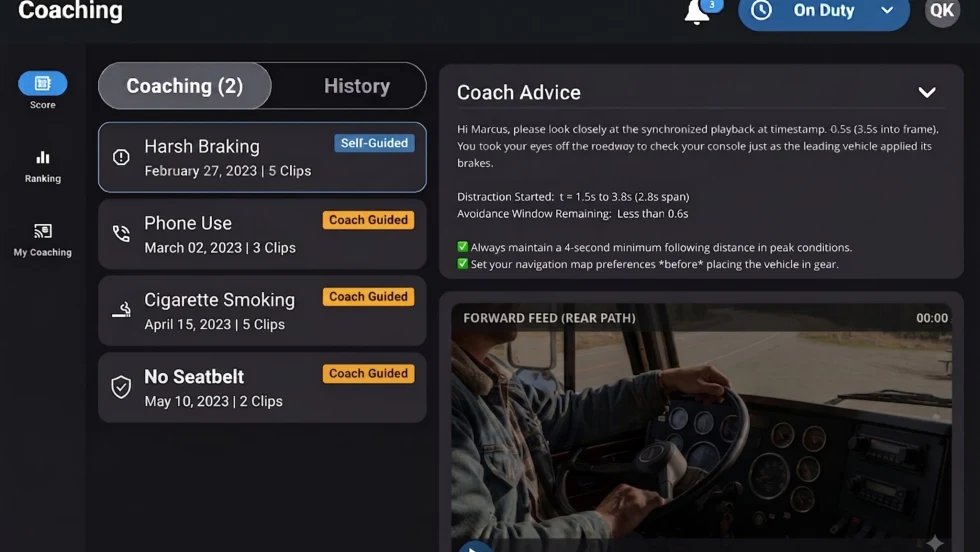
Platform Science Adds Dispatch and Safety Tools
Four additions to PS Fleet help fleets monitor loads, manage driver coaching, share truck locations and adjust video system settings.
Read More →
When Language Stops the Truck: The Return of ELP Out-of-Service Orders
English language proficiency rules for commercial drivers aren’t new, but renewed out-of-service enforcement has raised the stakes. Here’s what carriers need to know before a driver reaches a roadside inspection.
Read More →
Samsara Launches Custom AI Agent Builder
Agent Studio lets fleets create AI tools for hours-of-service monitoring, reporting and driver support, including agents that communicate by phone.
Read More →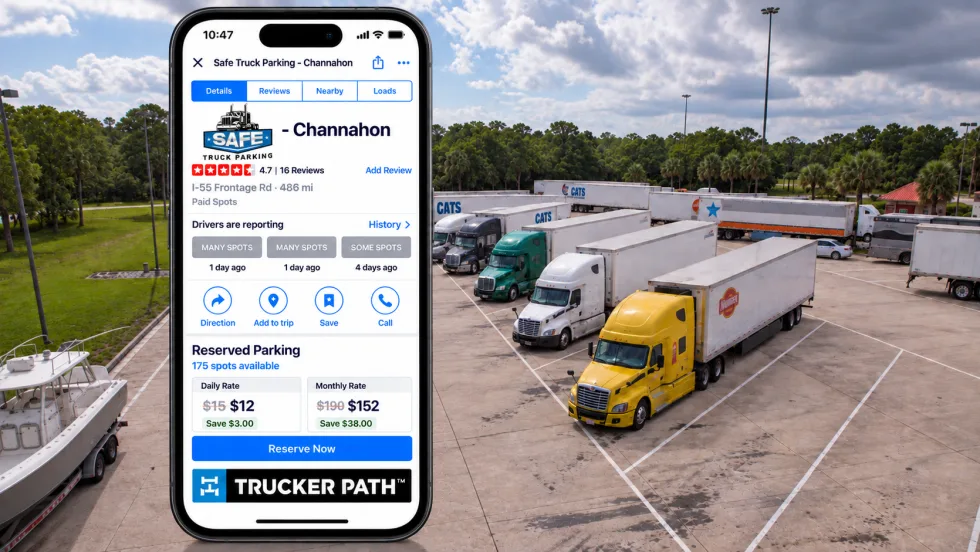
Trucker Path Expands Reserved Parking Network
Trucker Path has added close to 6,000 more truck parking spaces to its Trucker Path Reserved Parking Network with the addition of Safe Truck Parking.
Read More →
EEOC Sues Texas Trucking Company Over Driver Age Limits
The agency says Trancasa USA rejected applicants over 65 and applied tougher driving-record standards to those over 60.
Read More →
Nussbaum, Roehl Announce Second Driver Pay Increase This Year
This year has seen a swath of major truck driver pay increases as freight capacity has tightened.
Read More →
From One Generation to the Next: How Mentorship Builds Safer Truck Drivers
After three decades in trucking, Harold Perry shares what he's learned about driver safety, mentorship, and helping the next generation build confidence behind the wheel.
Read More →
Truck Drivers Need More Than Another Alert
Fleets have more visibility into truck health, safety events, and driver activity than ever. The next challenge is turning all that information into useful guidance for the person who has to decide what to do next.
Read More →
FMCSA Removes 110 Truck Driver Training Schools from Certified ELDT List
Federal regulators also are targeting more than 160 additional training providers and launching a nationwide audit of third-party CDL skills testers as part of a broader crackdown on trucking fraud.
Read More →
Hours of Service Pilot Programs: FMCSA Readies for 2027 Rollout
Two pilot programs could eventually reshape hours-of-service rules, giving truck drivers options to pause their 14-hour clock or use longer split sleeper rest periods.
Read More →