





How to Get More Out of Commercial Driver Vehicle Inspections
What Drivers Need to Know About Taking Care of Truck Tires
Drivers need to know more about their tires and be proactive when it comes to inspecting and maintaining them. But convincing drivers is never easy.
March 27, 2018
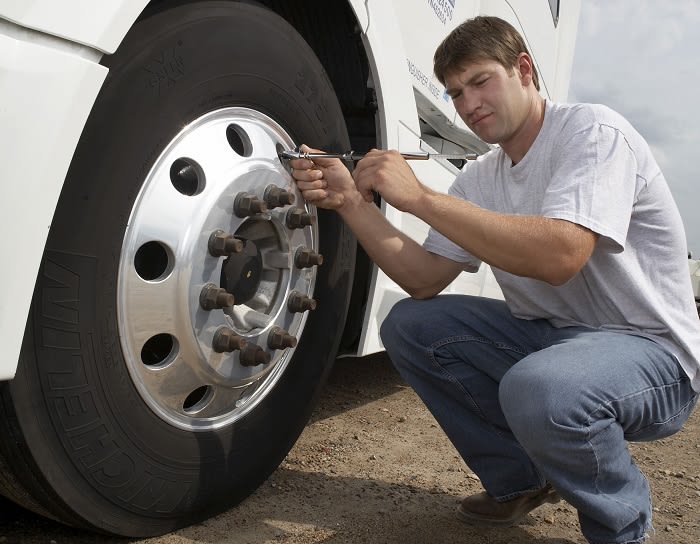
Drivers should perform weekly pressure checks on a truck they are familiar with. Daily checks should be done on any vehicle they don’t drive every day. Photo: Michelin
4 min to read
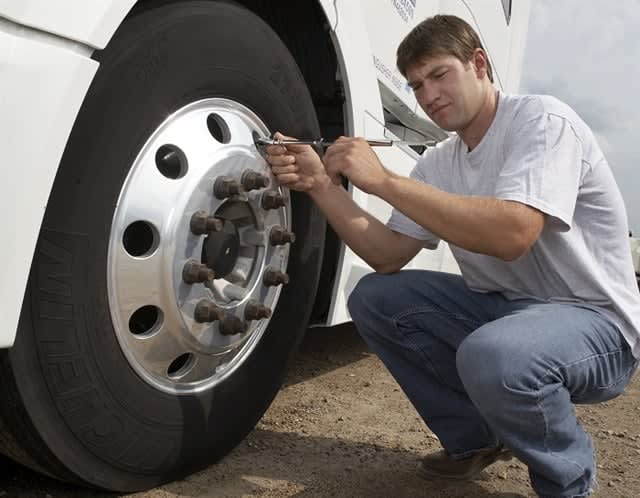
Drivers should perform weekly pressure checks on a truck they are familiar with. Daily checks should be done on any vehicle they don’t drive every day.Photo: Michelin
Round and black. Sometimes that’s the extent of what truck drivers know — or want to know — about tires. Unfortunately, drivers need to know more about their tires, and they really need to be proactive when it comes to inspecting and maintaining tires.
But it’s never easy convincing drivers to get up close and personal with those round black things.
An 18-wheel pressure check can easily eat up half an hour; more if the tires need to be topped up. It may help to remind them that investing 30 minutes once a week to closely inspect their tires could help prevent an on-road failure that could cost them several hours of downtime… but probably not.
Getting a little cooperation from drivers might be achieved by providing a lesson in how tires work and some of the perils of poor maintenance.
“It’s one thing to tell a driver that if they do this or don’t do that, something unpleasant might happen,” says Joe Puff, vice president of truck technology and maintenance at Downers Grove, Illinois-based NationaLease.
“But when they can understand the consequences of their actions, or inactions, they might be more predisposed to look after those assets. Or at least not intentionally do anything that might compromise tire life or safety.”
The Dangers of Re-Inflating an Under-Inflated Tire
For example, Puff says drivers should be taught the dangers of reinflating a tire that has been run 20% or more under-inflated.
“We remind them all the time to check their inflation pressure, but we send a possibly conflicting message to those that do it regularly if they aren’t made aware of the dangers of under-inflated tires,” he says.
The problem here is the potential for a zipper rupture, caused by metal fatigue in the sidewall from excessive flexing while running under load. If the driver simply re-inflates a tire found in a low-pressure condition, he or she risks personal injury or a blowout on the road.
“If a tire is run 20% low, casing degradation is a real risk,” cautions Puff. “It’s going to fail at some point. It should be pulled from service. In these cases, drivers really need to alert a supervisor to the problem rather than just topping up the pressure and moving on.”
Teaching Truck Drivers About Tire Inflation Pressure
Tire inflation pressure is a big issue, of course, and once again there are no easy solutions to getting drivers to check it.
While it might be useful to know a tire isn’t nearly completely flat, there’s little use in encouraging them to thump or kick their tires on a walk-around. For several years, the Tire Retread Information Bureau and the Tire Industry Association sponsored a Guess the Pressure contest at various truck shows, and famously, no driver has ever guessed the pressure within 5 psi over or under the actual inflated pressure.
Mike Elliott, safety and maintenance director at Nashville, Tennessee-based MS Logistics, makes a bit of a joke about checking inflation pressure during his orientation sessions. He presents the drivers with a tuning fork, saying it’s a new way of checking oil level in the engine. He tells them they no longer need to pull the dipstick.
“I tell them to strike the engine block with the tuning fork, and if it sounds right, the oil level is fine,” he says. “I get some odd looks, and then I announce it’s just the same as when you hit your tires with a thumper — and just about as useful. If nothing else, it’s a good way to open the discussion on tire inflation.”
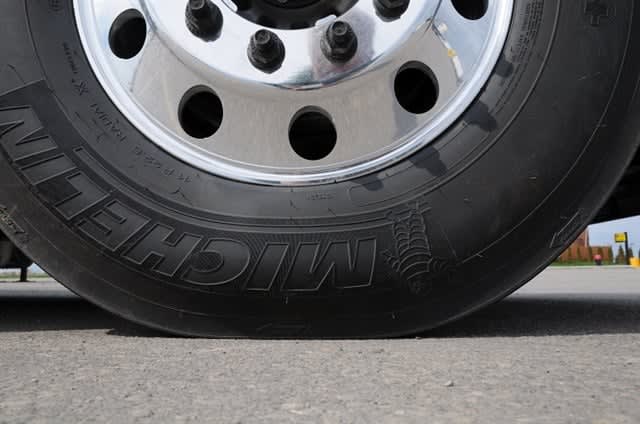
Dealing with Tire Retread Myths
Elliott runs a lot of retreads, and some drivers have strong opinions on retreads, many of them inaccurate. He tries to deal with all that up front, and then has regular meetings where the subject comes up repeatedly.
“I show them the DOT studies on tire debris and remind them that half the tires studied back then were not retreads,” Elliott says.
“From there we get into a discussion on the importance of inflation pressure and its effect on tires, both new and retreads. Then I tell them that all I expect them to do is check the pressure regularly and top it up when necessary.
"I finish by reminding them that downtime hurts them, too. If they are stuck on the side of the road for several hours waiting for tire service because they didn’t check their tires, they have nobody but themselves to blame in most cases.”
Kevin Tomlinson, director of maintenance at Milan, Ohio’s South Shore Transportation, has added automatic tire inflation systems to his trailing equipment and tire pressure monitoring systems to some of his power units. But he still relies on drivers to visually inspect the tires whenever they get out of the truck.
“It’s funny, we hardly ever have problems with steer tires or wide-base tires,” he says. “Needless to say, when we bring the trucks in for service we check all the tires and tread depth and inspect for issues.
"The best we can do is encourage the driver to keep an eye on their tires and hope it becomes a habit. Once they realize that vigilance will keep them on the road longer without problems, the better we’ll all be.”
Subscribe to Our Newsletter
More Drivers

Truck Drivers Need More Than Another Alert
Fleets have more visibility into truck health, safety events, and driver activity than ever. The next challenge is turning all that information into useful guidance for the person who has to decide what to do next.
Read More →
FMCSA Removes 110 Truck Driver Training Schools from Certified ELDT List
Federal regulators also are targeting more than 160 additional training providers and launching a nationwide audit of third-party CDL skills testers as part of a broader crackdown on trucking fraud.
Read More →
Hours of Service Pilot Programs: FMCSA Readies for 2027 Rollout
Two pilot programs could eventually reshape hours-of-service rules, giving truck drivers options to pause their 14-hour clock or use longer split sleeper rest periods.
Read More →
Medical Cards, English Proficiency Reshape Roadcheck Violations
Medical-card violations jumped to the top of the driver out-of-service list during CVSA’s 2026 International Roadcheck, while English-language proficiency violations appeared among the leading violations for the first time.
Read More →
Driver Trust Can Make or Break the Success of Fleet Safety Technology
New Teletrac Navman research suggests that onboarding, transparency about driver data, and positive feedback can play a significant role in how commercial drivers respond to safety and coaching technology.
Read More →
EEOC Sues KLLM Over Alleged Sex Discrimination in Driver Training
KLLM is facing a federal sex-discrimination lawsuit over policies the EEOC alleges put female truck driver trainees at a disadvantage.
Read More →
FMCSA Moves to Codify English Language Requirements for Commercial Drivers
By changing regulations on English-language proficiency requirements for commercial drivers, rather than relying on a guidance memo, the FMCSA said future administrations won't be able to walk back the Trump administration's stricter enforcement with just a memo.
Read More →
Drivers Put Western Star Trucks to the Test at Star Nation Experience
Watch to get an inside look at the Western Star trucks, technology, and community behind the Star Nation Experience 2026!
Read More →
Trump Administration Looks to Put More Veterans Behind the Wheel
The Freedom Haulers program pulls together existing and expanded programs at several federal agencies to recruit veterans to drive commercial heavy-duty trucks and cut the red tape for them to get a CDL, training, and employment.
Read More →
Putting Mack’s Command Steer to the Test
A test drive of Mack’s Command Steer active steering system evaluates how it can make truck driving easier and less tiring.
Read More →