




What Will the Class 8 Market Look Like in 2017?
The economy is currently on solid footing, but the Class 8 market has fallen dramatically this year. With the economy expected to grow slightly better in 2017, can we expect this to translate into a better environment for new equipment orders for the truck OEMs and their suppliers?
The economy is currently on solid footing, but the Class 8 market has fallen dramatically this year. With the economy expected to grow slightly better in 2017, can we expect this to translate into a better environment for new equipment orders for the truck OEMs and their suppliers? The answer is likely to be yes, but there are several risks that could change our expectations for 2017.
The Economy
The economy is currently on solid footing and GDP is expected to grow slightly over 2% in 2017. The real battles for the economy are likely to be for 2018 and beyond, although those battles will be fought in 2017. That’s when the new administration and Congress will make decisions on infrastructure stimulus, taxes, trade, and deficits.
How much stimulus is added to a full employment economy?
Will tax cuts affect the middle-class, as well as the wealthy?
How will all of this be paid for?
How will trade issues be handled?
These are important questions. Adding stimulus to a full-employment economy and importing inflation via trade tariffs leads to higher interest rates. This raises the probability of a recession down the road. It also could mean stronger growth in late 2017 and into 2018.
Trade is a wild card. The risk to economic growth could be minimal if the new administration targets specific industries. However, in the event of trade conflicts, the impact could be much larger and potentially dangerous to global growth.
Class 8 Trucks
Most of the risk for 2017 is centered on two key items: freight growth (which is tied to the economy) and implementation of the electronic logging devices (ELD) mandate.
Freight growth has been relatively modest over the last year and we expect that to continue into 2017. The good news is that we are finally seeing some positive data come out of the spot market. We are hopeful that this is an early indication of improved demand as we finish 2016 and start off 2017.
While the regulatory agenda is in the new administration’s bulls-eye, the likelihood that ELD implementation is removed or delayed significantly seems unlikely at this time. Non-finalized regulations will be quicker and easier targets to attack. The biggest question comes down to how fast small fleets implement this new device (actually, it’s mostly software) into their operations and how much it truly impacts their operations. Until now, we have only been able to estimate the impact based on their responses to surveys and our knowledge of their operations. Later this year we will start getting hard results as those operations finally implement ELDs en masse.
This does create a real upside potential for equipment demand if the productivity losses that we estimate do come to fruition. As long as freight growth continues, we should expect to see a significant tightening of capacity by the time the fall ordering season hits for new Class 8 trucks. Pay attention to September and October new truck orders; they will tell us a lot.
More Equipment

ZF Expands Commercial Vehicle Push in North America
ZF is expanding its North American commercial-vehicle presence with new transmission applications, electrification, trailer technology and autonomous-driving systems.
Read More →
Tesla Wants a Self-Driving Semi. Are Cameras Enough?
Could Tesla’s camera-only autonomous driving technology work on an 80,000-pound Semi? In this commentary, HDT's Deborah Lockridge takes a look at Tesla, Cybercab, and how autonomous trucks see the road.
Read More →
Kodiak: Driverless Long-Haul Truck Launch on Track for 2026
Kodiak AI says its driverless long-haul safety case is 93% complete and it remains on track to begin commercial operations by year-end 2026.
Read More →
What DOT’s Automated Vehicle Strategy Means for Trucking
The U.S. Department of Transportation issued a new automated-vehicle strategy that outlines plans for driverless-truck regulations, cross-state freight corridors, and federal safety standards.
Read More →
East Coast Port Launches $45M Electric Truck Push
The Port Authority of New York and New Jersey announced millions in incentives for zero-emission drayage trucks, yard tractors, and new charging hubs near the port.
Read More →
PlusAI Going Public to Fund Autonomous Truck Launch
A SPAC deal could provide PlusAI with up to $300 million as it works toward a 2027 commercial launch of factory-built autonomous trucks.
Read More →
NHTSA Moves to Rewrite Truck Fuel-Economy Rules
The National Highway Traffic Safety Administration says it lacks authority to regulate medium- and heavy-duty truck engines separately from complete vehicles, but the existing standards have not yet been eliminated.
Read More →
Detroit Opens Orders for EPA 2027 Engines
Detroit isn’t starting from scratch to meet EPA 2027 diesel emissions standards. Its Gen 6 DD13 and DD15 engines keep much of today’s platform while updating the fuel and aftertreatment systems.
Read More →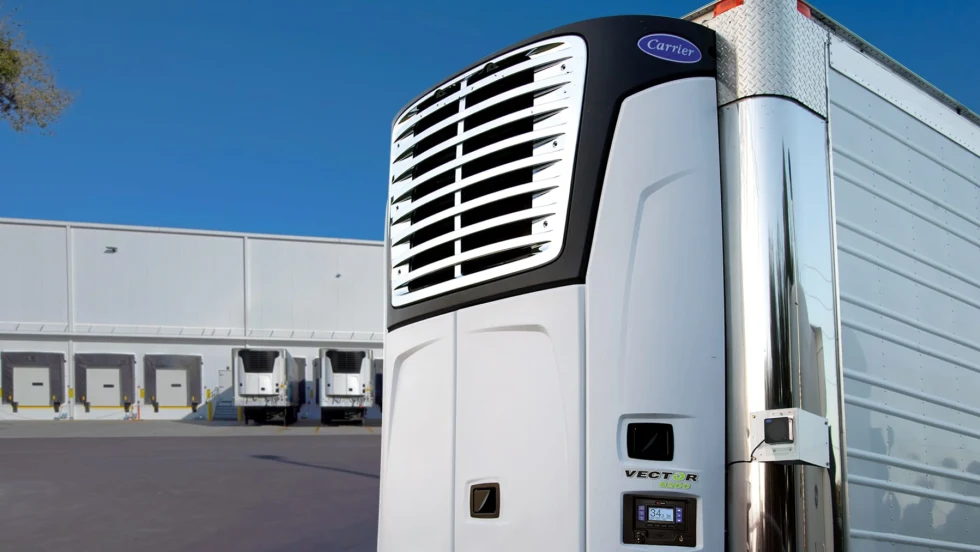
Carrier Transicold Adds All-Electric TRU for Stationary Cold Storage
Carrier Transicold’s new Vector 8200 all-electric transport refrigeration unit gives fleets a diesel-free option for temporary refrigerated and frozen trailer storage.
Read More →
A Closer Look at Kenworth’s Electric T880E Vocational Truck [Video]
Learn more about Kenworth's T880E battery-electric vocational truck at the Paccar Technical Center, including its range, applications, upfitting considerations, and PTO options, in this HDT Spotlight video.
Read More →