




Trading Diesel for Kilowatts
In California, electric vehicles’ zero tailpipe emissions are golden, that’s why Transportation Power Inc. has been designing and testing battery-electric heavy drayage and yard tractors.

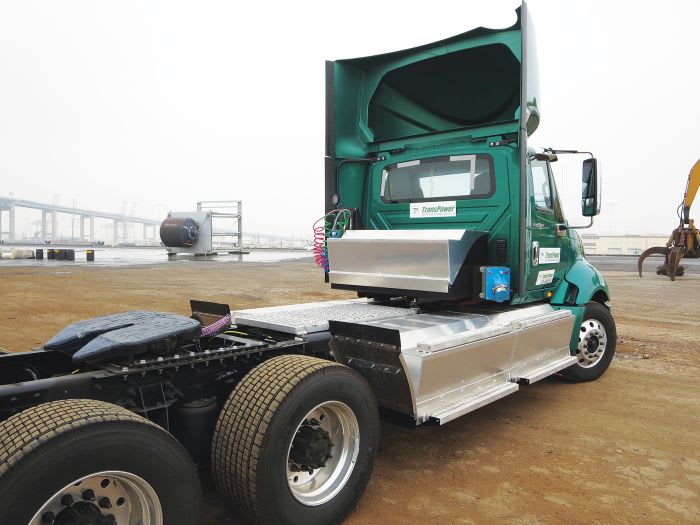
The third generation of TransPower’s ElecTruck powertrain includes four large battery boxes hung from frame rails and another mounted behind the cab.
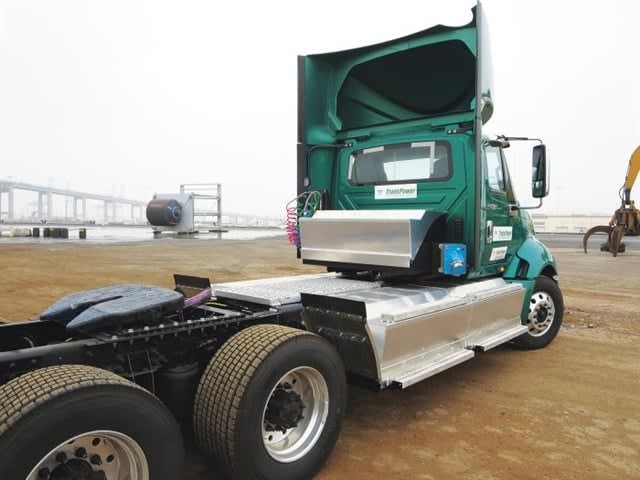
The third generation of TransPower’s ElecTruck powertrain includes four large battery boxes hung from frame rails and another mounted behind the cab.
If trucks “burn” electricity instead of diesel or gasoline, the air stays clean and fuel bills are lower.
In California, electric vehicles’ zero tailpipe emissions are golden because a fight against smog has been under way for many years. That’s why Transportation Power Inc. has been designing and testing heavy drayage and yard tractors. Five of each are now at work, according to President Mike Simon, who hopes to have 1,000 or more electric trucks of various types running by the end of the decade.
TransPower battery-electric tractors are converted from International ProStar daycab models with diesel powertrains at the firm’s plant in Poway, north of San Diego. Engines and manual transmissions are pulled out and replaced with electric components: five large boxes containing lithium ion phosphate batteries; specially engineered electronic inverters and controls; and a pair of electric motors running through an Eaton Ultrashift 10-speed automated mechanical transmission, which multiplies the motors’ power and torque.
Engineers fashioned mounts for mechanical and electronic components, and integrated those with the ProStar’s instruments, which look stock. Much testing has proved out the concept, leading to the building of initial units.
California’s Clean Air authorities and others awarded the company about $25 million in grants and investment since the company’s inception in 2011. About $12 million is being spent on truck development.
One of the operational tractors is being put through the paces in everyday service with SA Recycling, a large scrap metal dealer with facilities on Terminal Island, adjacent to the Port of Long Beach. With a tare of roughly 22,000 pounds, the TransPower vehicle is about 5,500 pounds heavier than a standard diesel-powered daycab tractor. SA gets around this by assigning the electric unit to lighter loads, says David Thornburg, vice president of public affairs.
Victor Cebollos, a senior driver, likes the TransPower tractor, calling it “smooth and quiet.” He also appreciates its clean, fumeless operation. Thornburg explains that it’s part of a long-term emissions-reduction project being run by the Ports of Long Beach and Los Angeles.
The tractor has been very reliable, he says. And with no engine and associated subsystems, it requires little maintenance aside from tires, air brakes and such. Its range of 70-100 miles has been adequate, as it returns regularly for recharging. He expects that SA will lease the TransPower tractor when the trial is over. It’s also economical to run — costing about one-third of diesel.
Simon at Transportation Power says a drayage tractor uses 1.25 to a bit over 3 kilowatts per mile, depending on grades, loads and speeds. Energy cost depends on electricity rates; if it’s 12 cents per kilowatt-hour while charging overnight, the per-mile cost would be 30 cents. That’s less than a third of the $1 per mile with a diesel tractor, based on $4 per gallon and 4 mpg that’s typical in stop-and-go cycles with a lot of idling that drayage tractors see.
“There are situations when charging during the day costs 40 cents per kilowatt-hour, so the cost per mile would be about the same as diesel fuel,” Simon says. “So you have to be careful when you charge.”
Thornburg is aware of what appears to be a high per-truck cost, but understands what much of it represents. “Anything with new technology, you’re paying for the research and development,” he says. “It’s like the switch to 2007 and later-model trucks with DPFs. There was added cost and maintenance expense, and everybody was upset over it. But it was added to the freight rates, and everybody survived and here we are.”
Read Tom Berg's driving impressions of the TransPower truck.
More Fuel Smarts

California Bill Could Shed Light on Electric Truck Prices
Why do battery-electric Class 8 trucks remain so expensive? A California bill headed to Gov. Gavin Newsom would give fleets and state agencies more visibility into what manufacturers charge.
Read More →
Detroit Opens Orders for EPA 2027 Engines
Detroit isn’t starting from scratch to meet EPA 2027 diesel emissions standards. Its Gen 6 DD13 and DD15 engines keep much of today’s platform while updating the fuel and aftertreatment systems.
Read More →
Zero-Emission Truck Corridor Planned for West Coast
California, Oregon, Washington, British Columbia and Baja California are coordinating plans for truck charging and hydrogen fueling from Canada to Mexico.
Read More →
A Closer Look at Kenworth’s Electric T880E Vocational Truck [Video]
Learn more about Kenworth's T880E battery-electric vocational truck at the Paccar Technical Center, including its range, applications, upfitting considerations, and PTO options, in this HDT Spotlight video.
Read More →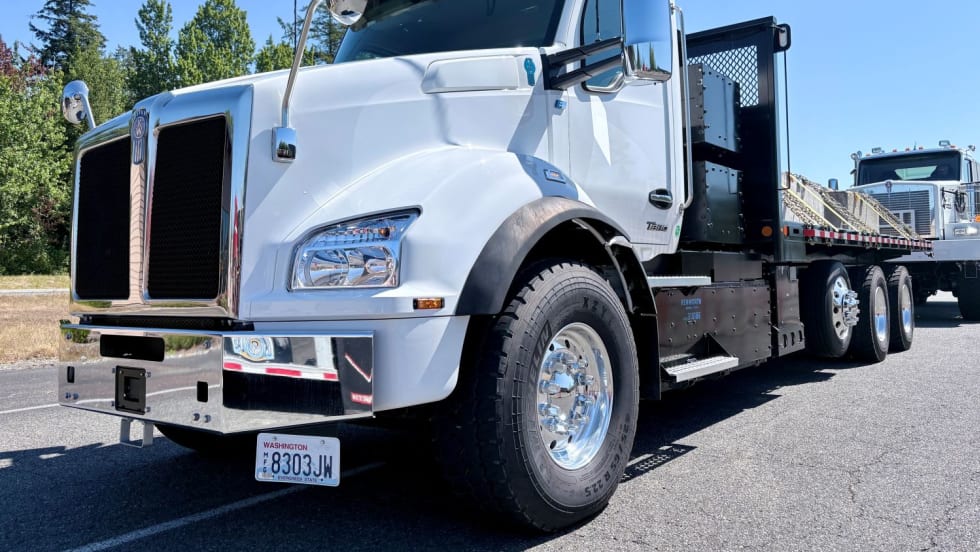
Kenworth T880E Brings EV Power to Vocational Trucks
A closer look at the Kenworth T880E’s range, charging, powertrain and upfit options — and where fleets are showing the most interest.
Read More →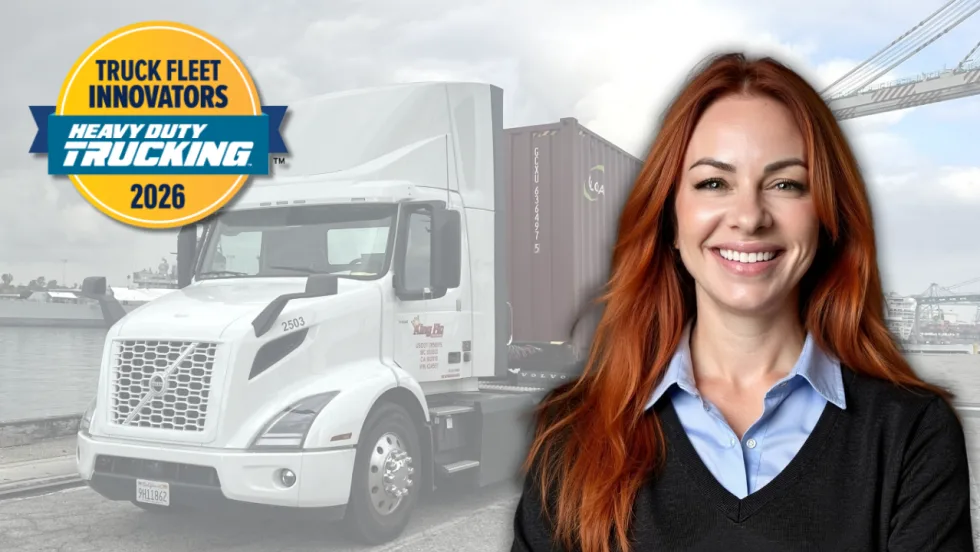
Jennie Abarca Is Proving Electric Trucks Can Do the Job
HDT Truck Fleet Innovator Jennie Abarca is building confidence in fleet electrification one load at a time while openly sharing the challenges she encounters along the way as a small-fleet owner.
Read More →
Cummins Adjusts 2027 Engine Rollout After EPA Proposal
The engine maker will gradually introduce its new Model Year 2027 diesel engines while continuing to offer current models during the transition, citing the EPA's proposed emissions rule changes.
Read More →
EPA Proposal Could Ease 2027 Truck Costs and Buying Uncertainty
The proposal doesn't change the tougher NOx standard, but it would revise key implementation requirements that manufacturers say have driven up costs and complicated fleet purchasing decisions.
Read More →
Cummins, Paccar Ease DEF Derates After EPA Guidance
Updated diesel engine software gives truck operators more time to address emissions-system issues while staying compliant with EPA emissions standards.
Read More →
Maintenance in the Messy Middle Part 3: Biodiesel
Biodiesel can reduce emissions, improve fuel-system lubricity and use existing diesel infrastructure. But NACFE’s Messy Middle maintenance report says fleets must actively manage storage, cold-weather operation, filters and oil drain intervals to avoid problems.
Read More →