




Washington State Files Lawsuit Against Trucker, Carrier Over Bridge Collapse
The Washington State Department of Transportation on Monday filed a $17 million lawsuit to recoup the costs of response and repair following the 2013 over-height truck collision that caused a portion of the Skagit River Bridge on Interstate 5 to collapse.
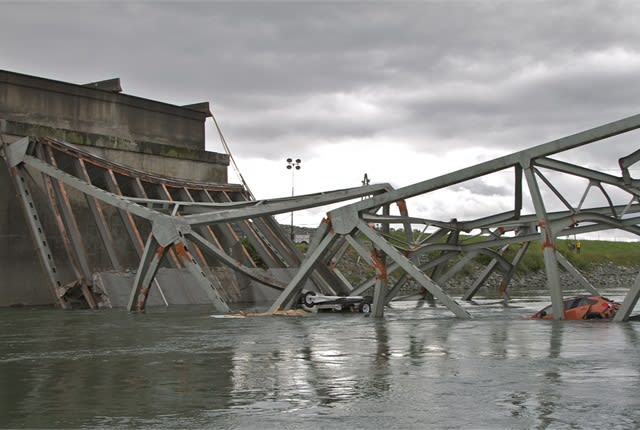
Water level view of the accident scene. Photo: NTSB

The Washington State Department of Transportation on Monday filed a $17 million lawsuit to recoup the costs of response and repair following the 2013 over-height truck collision that caused a portion of the Skagit River Bridge on Interstate 5 to collapse.
The suit, filed in Skagit County Superior Court, named as defendants: William Scott, the truck driver; his employer, Mullen Trucking LP; Tammy Detray, the pilot-car driver and her company, G&T Crawlers; and the owner of the metal shed being transported, Saxon Energy Services Inc.
On May 23, 2013, a large tractor trailer combination with an over-height load slammed into multiple overhead braces of the I-5 Skagit River Bridge, about 60 miles north of Seattle The force of those strikes severely damaged the bridge and forced its collapse into the river. Two vehicles also fell into the water. Three people suffered minor injuries while there were no deaths. The bridge has since been repaired.
The Washington State Patrol Major Accident Investigative Team cited the truck driver for “negligent driving, stating the bridge collapse resulted from a series of miscalculations, mistakes and errors by the truck driver and his employer,” according to a release from the Washington State DOT.
The investigative team also claimed the truck driver did not know the accurate height of his oversized load, and received a permit for a load two inches lower than the one he carried plus failed to research the route to ensure it could accommodate his over-height load.
“Had he taken the advanced safety steps required of all drivers who haul oversized loads, he would have known the left southbound lane of the bridge provided adequate vertical clearance for the load,” the department said.
The investigative team also determined pilot-car driver was on the phone as she crossed the bridge and did not notify the truck driver of the height clearance pole striking the bridge, while the truck driver was following the pilot car too closely and would not have been able to stop in time even if the pilot-car driver had notified him of the pole strikes.
According to the state DOT, the owner of the shed that struck the bridge, also is financially responsible for the catastrophic damage caused by this collision, under state law.
According to the Associated Press, Canada-based Mullen Trucking would not comment on the lawsuit, but did confirm the driver still works for the company, who is reportedly on assignment in the Arctic. He was also not available for comment. Attempts to get comments from the cargo owner and the pilot car driver were also unsuccessful.
Last July the National Transportation Safety Board issued a report blaming the bridge collapse multiple sources, including the truck driver, Mullen and the pilot car driver, but also found problems with the Washington State DOT and its permitting process for oversize loads.
In November, investigators from the Washington State Patrol issued their report that blamed the truck driver.
More Safety & Compliance
How Waste Connections is Using Data, Telematics, and AI
How do you manage and maintain more than 18,000 connected trucks? Data. Lots of it.
Read More →
Fleet Advantage: Top Logistics Fleets Outperform National Safety Benchmarks
Fleet Advantage's latest TRUST Safety Index found leading logistics fleets maintained significantly lower out-of-service rates and stronger safety scores than national averages, while highlighting persistent challenges related to tires, brakes, and unsafe driving behaviors.
Read More →
Why Fleet Data Matters More Than Ever at Waste Connections [Watch]
Waste Connections' Chuck Palmer explains how telematics, predictive maintenance, safety analytics, and AI help keep vehicles on the road and drivers safe in this episode of HDT Talks Trucking.
Read More →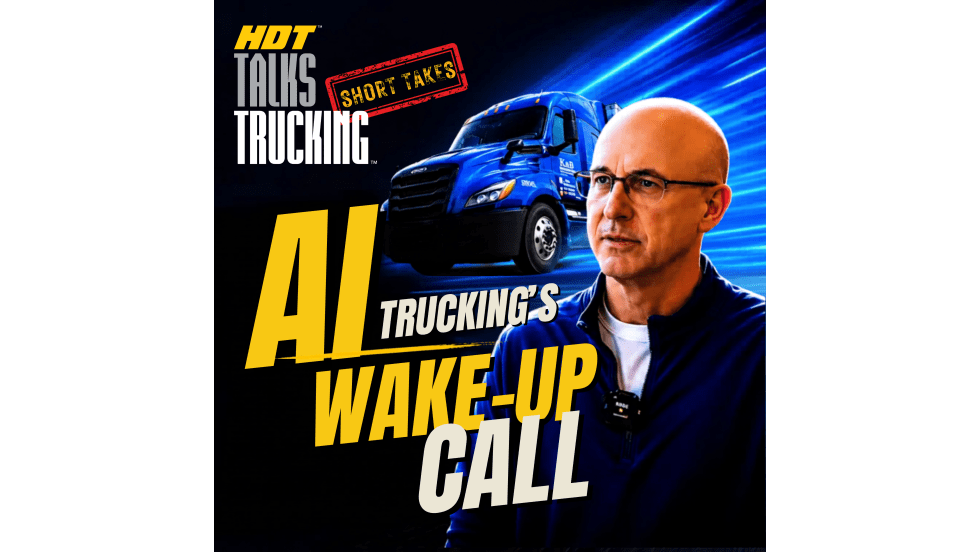
Short Takes: How K&B is Using AI
Fleets need to "get on board the train" with AI, says Lance Evans of K&B Transportation in this HDT Talks Trucking Short Takes episode.
Read More →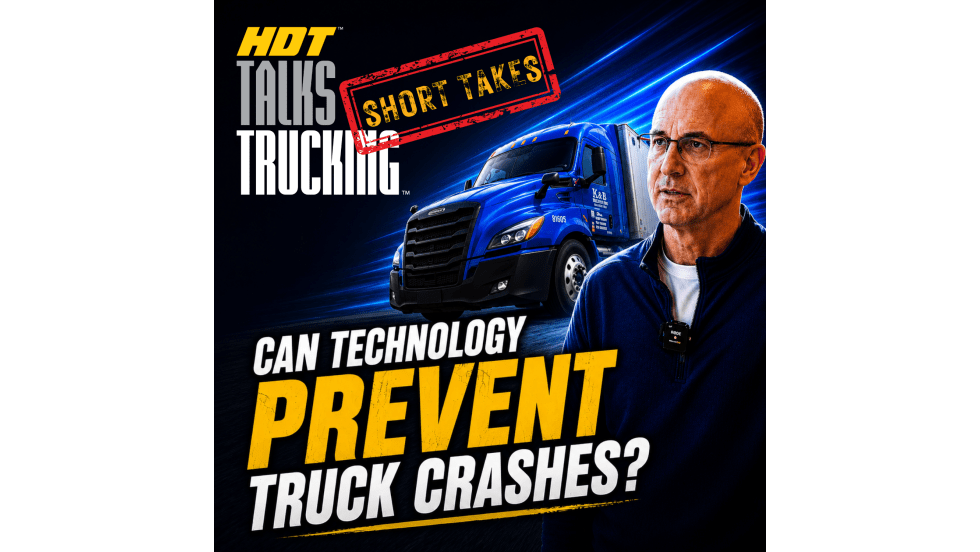
Short Takes: Inside K&B’s Truck Safety Tech
Listen to learn how K&B Transportation uses cellphone-blocking technology, speed management systems, weather geofencing, bridge avoidance tools, and more to improve driver safety.
Read More →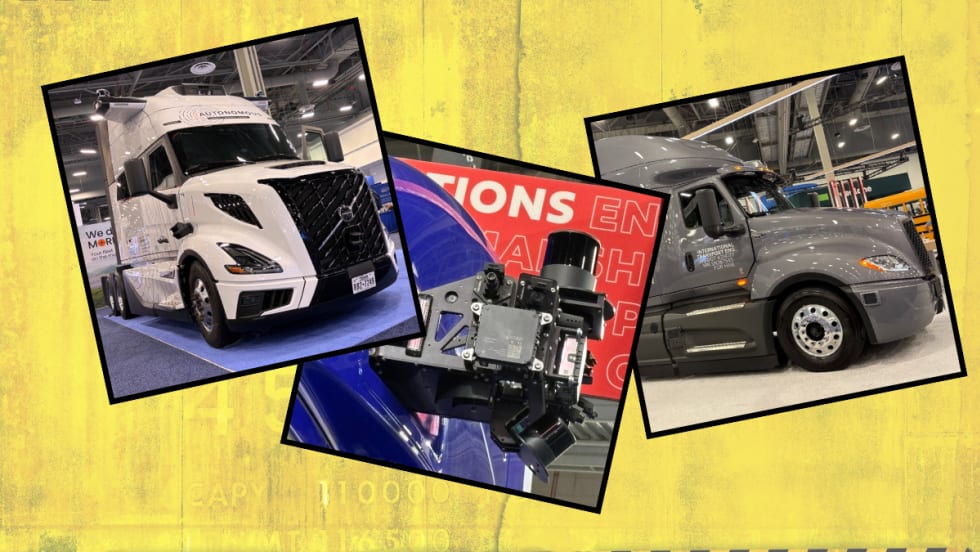
The Biggest Gap in Driverless Trucking Isn’t Tech. It’s Safety Validation
Nauto’s Stefan Heck says autonomous trucks are advancing quickly but proving they’re safe enough for large-scale deployment may be the industry’s hardest challenge.
Read More →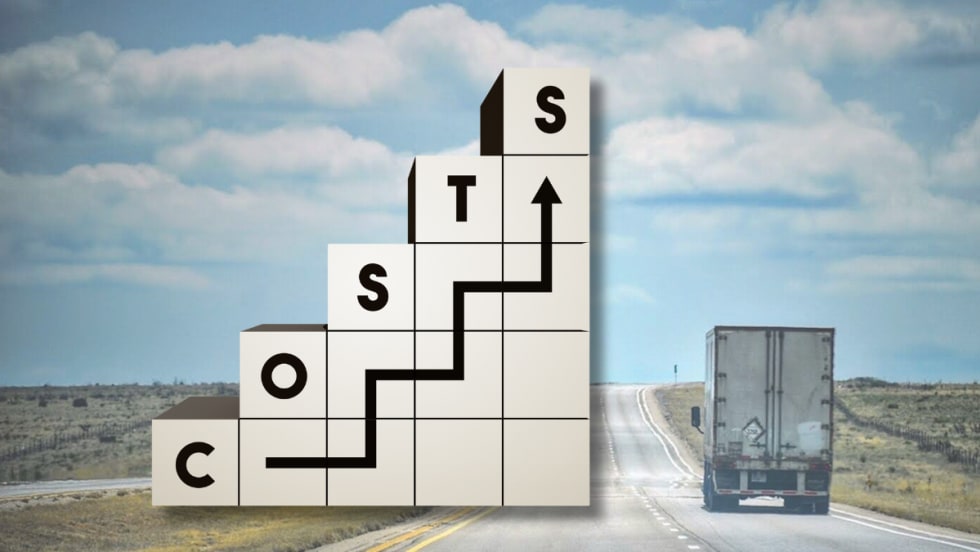
Truck Crash Rates Are Down. So Why Do Insurance Costs Keep Rising?
ATRI’s latest research points to litigation, social inflation, and soaring claims costs as key drivers behind record-high liability premiums for trucking fleets. But there are things motor carriers can do.
Read More →
FMCSA Removes More Than a Dozen ELDs from Registered List
The FMCSA continues its efforts to fight electronic logging devices that don't meet federal requirements, removing more than a dozen from the registered ELD list in May.
Read More →
How the Supreme Court Broker Liability Ruling Could Reshape Trucking’s Safety Landscape
The Supreme Court’s May 11 broker-liability ruling may not radically rewrite transportation law overnight. But industry experts say it will intensify pressure on brokers, carriers, and shippers to prove they are prioritizing safety.
Read More →
Recall of Fontaine Fusion Flatbeds Warns Owners Not to Use the Trailers
Some Fontaine Fusion flatbed trailer manufactured between February 2025, and March 2026 could have mainbeams weakened by hydrogen embrittlement because of a problem in the galvanizing process.
Read More →