




Why Quality Drivers and Safety Compliance are Key for Best Trucking Insurance Rates
Hiring quality drivers and focusing on safety compliance are key ways to reduce insurance costs for trucking companies.
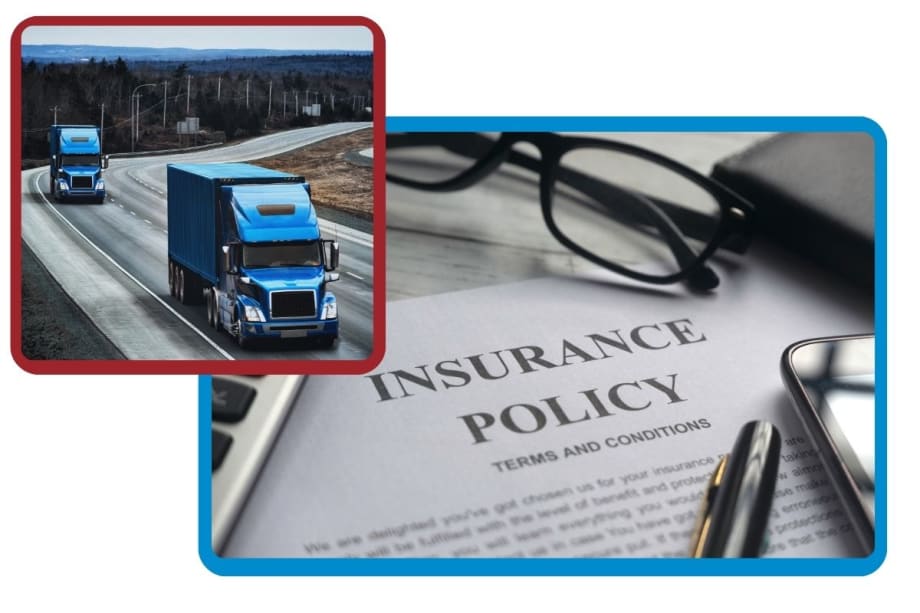
Employing safety-focused drivers is a way to keep FMCSA safety percentiles low and reduce insurance costs.
Photo: Canva/HDT Illustration
The driver shortage in the trucking industry has led some companies to lower applicant standards and hire more inexperienced drivers to fill open positions. These practices have the potential to increase risk exposures for companies and result in higher insurance premiums.
From a risk management perspective, quality drivers are important to keep Federal Motor Carrier Safety Administration safety score percentiles down. Lower percentiles mean lower premiums, so it’s important for trucking companies to ensure their fleet is staffed with experienced drivers, particularly amid insurance market conditions where rates are on the rise.
Hiring quality drivers and taking actionable steps to uphold high standards and performance are strategies carriers can take to control insurance costs and safeguard the financial health of their companies.
FMCSA’s Safety Measurement System
FMCSA is the U.S. Department of Transportation agency responsible for regulating and providing safety oversight of commercial motor vehicles. Its safety compliance and enforcement program, CSA (compliance, safety, and accountability), holds both motor carriers and their drivers responsible for their part in maintaining high safety standards.
It does this by using its Behavior Analysis and Safety Improvement Category (BASIC) percentile. The higher the percentile, the higher the cause for what FMCSA calls interventions, including warning letters and investigations.
The CSA program uses FMCSA’s Safety Measurement System (SMS), which quantifies the on-road safety performance of carriers and drivers. It analyzes data-related key factors that are organized into seven BASICs, such as unsafe driving, hours of service compliance, driver fitness, controlled substances, vehicle maintenance, and other indicators that aid in identifying candidates in need of interventions.
Trucking company safety data appears online in the SMS. It is updated once a month with data from roadside inspections, including driver and vehicle violations, crash reports from the last two years, and investigation results.
The data is organized by categories and assigned a percentile looking at the following factors:
The number of safety violations and inspections.
The severity of safety violations or crashes.
When the safety violations occurred, with recent events weighted more heavily.
The number of trucks/buses a carrier operates, and the number of vehicle miles traveled.
Acute and critical violations found during investigations.
At underwriting time, insurers use these percentiles to determine a trucking company’s premium. A high percentile means high risk and a significant impact on obtaining favorable insurance coverage and rates.
High percentiles not only lead to more costly premiums but also increased deductibles and even denial of coverage. Trucking companies that have focused on mitigating risk achieve low percentiles and are able to keep their insurance costs in check.
Hiring Quality Truck Drivers
Hiring quality drivers helps keep those SMS percentiles down, making trucking companies more attractive to underwriters.
Onboarding better drivers involves performing due diligence regarding past experience and prioritizing those with clean records and more years of incident-free time on the roads.
Motor vehicle records (MVRs) are an important part of vetting drivers. MVRs document a person’s driving history, including information about his or her traffic citations, accidents, and number of points on his or her driver’s license. For each applicant, trucking companies should look at MVRs for the previous five years to help weed out candidates with unsafe driving histories.
Insurance companies consider driver safety records in determining premiums, so hiring drivers with clean records will help to lower the cost of commercial trucking insurance. Trucking companies that prioritize hiring drivers with clean driving records — those with no accidents, moving violations, or license points — will qualify for lower insurance rates.
In addition to securing better insurance rates, experienced drivers also are key to reducing risk exposure overall. Drivers with at least two years of commercial driving experience are considered lower risk because of their ability to handle difficult driving conditions and other work challenges better than inexperienced drivers.
With more drivers looking for work today, trucking companies can be more selective in hiring to keep both FMCSA percentiles and insurance premiums down.
Improving Driver Performance and Ensuring Compliance
Hiring quality drivers is just the first step for ensuring elevated standards and making driver performance a priority to help lower insurance premiums.
Another step trucking companies can take is to hire a Department of Transportation consultant to oversee and manage FMCSA percentiles. This type of consultant can help carriers remain compliant with the latest regulations, provide training materials, organize driver qualification files and accident register files, and conduct annual driver reviews.
Technology also can play an important role in boosting driver performance and upholding standards to lower insurance rates.
Installing devices such as dashboard cameras helps keep drivers safe and improves their performance. These cameras can identify distracted driving behaviors such as speeding, using handheld devices, eating, and other safety issues. The data provided by these cameras can help in the development of coaching and training programs and encourage the safe driving behaviors that reduce risk.
Additionally, newer cameras with integrated artificial intelligence can process significant amounts of data in real time, detecting unsafe behaviors and notifying drivers on the spot. These alerts help prevent accidents that, in turn, reduce losses and lower insurance premiums. It should be clear when adopting this technology that the purpose of the cameras is not to question driver integrity but to provide feedback that encourages better driving habits and keeps vehicle operators safe.
Electronic logging devices ensure that drivers adhere to hours of service regulations and prevent driver fatigue. The FMCSA requires all carriers in the industry to use ELDs, which automatically record a driver’s time on the road, allowing easier and more accurate HOS recordkeeping. An ELD identifies the driver, vehicle, and motor carrier and monitors a vehicle’s engine power status, vehicle motion status, miles driven, engine hours, and duty status changes (driving, on duty, off duty). This technology improves driver safety, increases HOS compliance, and reduces paperwork for drivers and staff.
The trucking insurance market can be unpredictable, with prices rising and falling depending on market conditions. To control insurance costs and mitigate risk, it is important for carriers to take actionable steps that will lower FMCSA percentiles, improve driver performance, and ensure compliance.
Using MVRs to hire experienced drivers with clean driving records and leveraging outside expertise and driver safety technology are all strategies carriers can implement to present a favorable risk profile to underwriters.
By taking these actions, carriers can lower insurance costs and safeguard the financial health of their companies and their people.
This article was authored and edited according to Heavy Duty Trucking’s editorial standards and style to provide useful information to our readers. Opinions expressed may not reflect those of HDT.
Danny Sellers is a vice president with Insurance Office of America. He has been advising clients in the commercial insurance industry for more than 25 years. He can be reached at danny.sellers@ioausa.com.
More Safety & Compliance
How Waste Connections is Using Data, Telematics, and AI
How do you manage and maintain more than 18,000 connected trucks? Data. Lots of it.
Read More →
Fleet Advantage: Top Logistics Fleets Outperform National Safety Benchmarks
Fleet Advantage's latest TRUST Safety Index found leading logistics fleets maintained significantly lower out-of-service rates and stronger safety scores than national averages, while highlighting persistent challenges related to tires, brakes, and unsafe driving behaviors.
Read More →
Why Fleet Data Matters More Than Ever at Waste Connections [Watch]
Waste Connections' Chuck Palmer explains how telematics, predictive maintenance, safety analytics, and AI help keep vehicles on the road and drivers safe in this episode of HDT Talks Trucking.
Read More →
Short Takes: How K&B is Using AI
Fleets need to "get on board the train" with AI, says Lance Evans of K&B Transportation in this HDT Talks Trucking Short Takes episode.
Read More →
Short Takes: Inside K&B’s Truck Safety Tech
Listen to learn how K&B Transportation uses cellphone-blocking technology, speed management systems, weather geofencing, bridge avoidance tools, and more to improve driver safety.
Read More →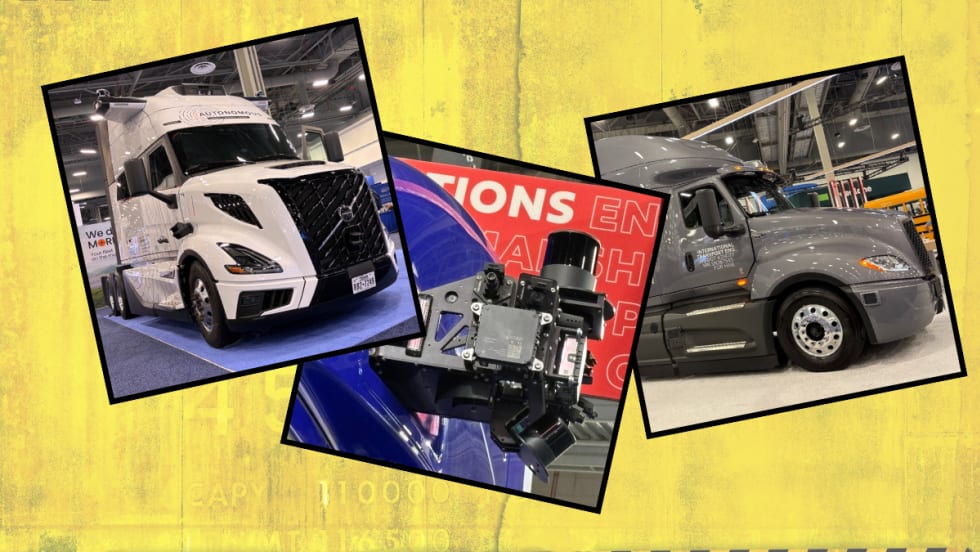
The Biggest Gap in Driverless Trucking Isn’t Tech. It’s Safety Validation
Nauto’s Stefan Heck says autonomous trucks are advancing quickly but proving they’re safe enough for large-scale deployment may be the industry’s hardest challenge.
Read More →
Truck Crash Rates Are Down. So Why Do Insurance Costs Keep Rising?
ATRI’s latest research points to litigation, social inflation, and soaring claims costs as key drivers behind record-high liability premiums for trucking fleets. But there are things motor carriers can do.
Read More →
FMCSA Removes More Than a Dozen ELDs from Registered List
The FMCSA continues its efforts to fight electronic logging devices that don't meet federal requirements, removing more than a dozen from the registered ELD list in May.
Read More →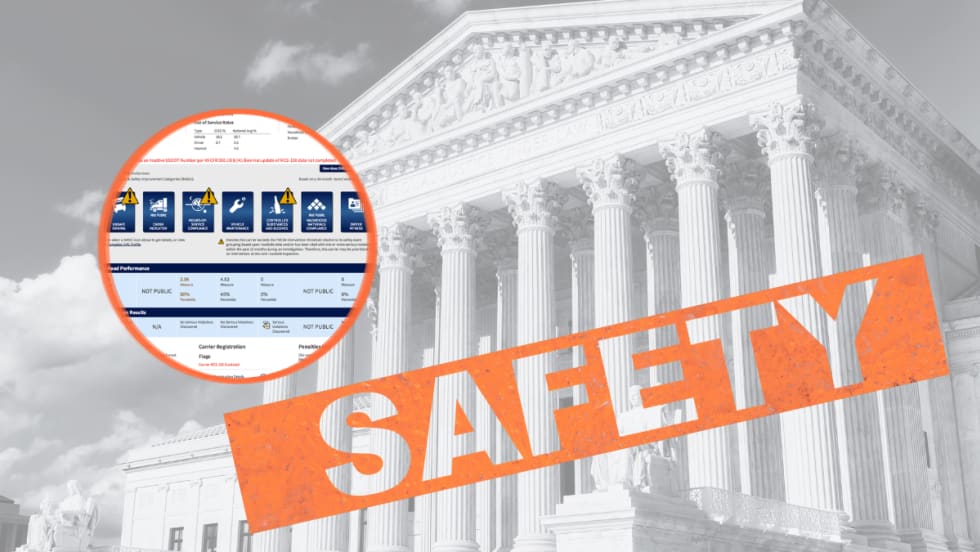
How the Supreme Court Broker Liability Ruling Could Reshape Trucking’s Safety Landscape
The Supreme Court’s May 11 broker-liability ruling may not radically rewrite transportation law overnight. But industry experts say it will intensify pressure on brokers, carriers, and shippers to prove they are prioritizing safety.
Read More →
Recall of Fontaine Fusion Flatbeds Warns Owners Not to Use the Trailers
Some Fontaine Fusion flatbed trailer manufactured between February 2025, and March 2026 could have mainbeams weakened by hydrogen embrittlement because of a problem in the galvanizing process.
Read More →