




ATA's Spear: Trucking Deserves a Stronger Role in Policy
At the TMC Annual meeting, ATA president Chris Spear said that the time was right for trucking to take its rightful seat at the negotiating table, tell its story and make certain it was not cut out of the picture in the legislative, policy and technology issues both today and in the future.
March 5, 2018

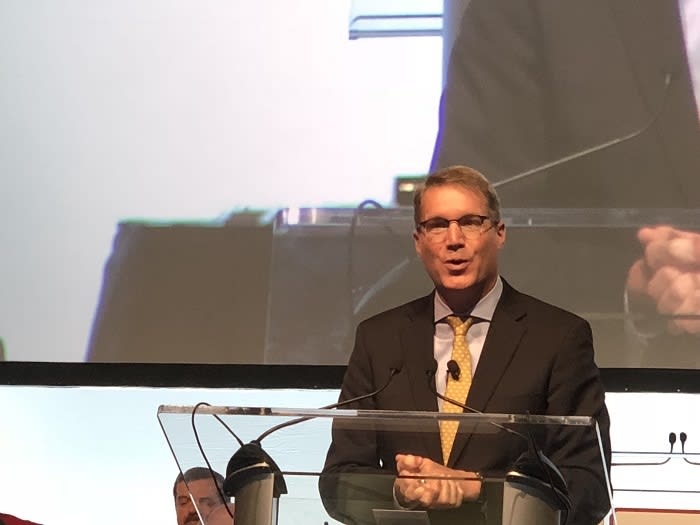
Spear wants trucking to take its rightful seat at the negotiating table and make certain it was not cut out of the picture in the legislative, policy and technology issues both today and in the future. Photo: Jack Roberts
4 min to read
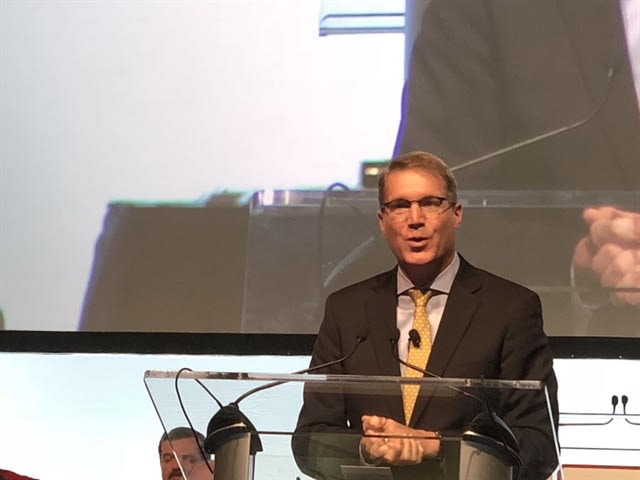
Spear wants trucking to take its rightful seat at the negotiating table and make certain it was not cut out of the picture in the legislative, policy and technology issues both today and in the future.Photo: Jack Roberts
American Trucking Associations president Chris Spear told a packed room at the 2018 Technology and Maintenance Council Annual Meeting that the time was right for trucking to take its rightful seat at the negotiating table, tell its story and make certain it was not cut out of the picture in the legislative, policy and technology issues both today and in the future.
“We believe the best way to to that is to tell the truth and pack it to the brim with data is the best way to insure positive outcomes in those negotiations,” Spear told attendees at TMC’s Town Meeting, Monday evening in Atlanta. “You are driving those outcomes. You are framing the future that will allow this industry to grow.”
The Strong Economy
Spear began his remarks by acknowledging recent changes made to TMC’s leadership structure and program to reflect both a changing industry and attendee and exhibitor wishes. He then noted strong economic conditions in the United States today, pointing out that trucking today moves 71% of all domestic freight in the country today. Trucking also employees 7.4 million Americans in today, with 3.5 million truck driving jobs in the mix. Spear also noted that 1 in 16 of every job in the U.S. today is in the trucking industry, with trucking now the top job employing Americans in 29 states.
“This is our time to shine,” Spear said. “We are the backbone of this economy today, which is booming thanks to the largest tax code reform since 1986. All the key ingredients are coming into place to insure a wonderful future for this industry.”
But, Spear cautioned, a booming economy also mean demands to move even more freight and expose the industry’s weaknesses. “The economy is strong, but it shows we have a lot of work to do,” Spear summed up. “We are short of 50,000 truck drivers now. And that shortage could grow to 100,000 drivers in five years if current trends continue.”
Finding the Next Generation of Drivers
The time has come, Spear told TMC attendees, to stop talking about problems and start solving them, instead. To that end, he pointed out recent ATA efforts to address the 18 to 21 year old hiring ban that keeps young drivers out of truck cabs — often until they’ve already been snapped up and started careers in other industries. “The fact that we can’t hire these young people to drive our trucks, but they are old enough to go overseas and fight our wars and operate multi-million dollar pieces of equipment is absurd,” Spear said. “To counter this problem, ATA is working on new solutions with built-in controls to protect the public while attracting young talent and nurturing them and helping them eventually earn a Commercial Driver’s License.”
A key part of this effort, Spear said, was for ATA to work closely with the U.S. Department of Labor to initiate President Trump’s new Apprenticeship Program. “There is no better industry than trucking to partner with the Federal government and wisely use taxpayer dollars to bridge that relationship,” Spear added.
Spear also called out the media for what he called “hyping” emerging technologies in ways that could scare potential workers away from the trucking industry. Trucking should embrace new technology, Spear said, and not fear it.
“We need to get past the hype, however,” Spear warned. “For the media to suggest that drivers will be taken out of the picture — that we’re going to have trucks with no steering wheels, or pedals or drivers tomorrow can drive potential employees away. Who would want to join an industry where autonomous technology will take their job away in a few short years. So, I say to the media, let’s be realistic and solve the problems new technology will create. But let’s not blow new technology out of proportion.”
Spear wrapped up his remarks by noting that a strong, modern infrastructure was also crucial for trucking to continue to power the U.S. economy and compete globally. To counter this trend, Spear said ATA was continuing to advocate Congress for a fuel tax “baked into the price of fuel and hardly noticeable to consumers,” as a way to short up the U.S. highway trust fund and generating $340 billion in real revenue that can be used to repair the nation’s degrading roads and bridges. “This is an investment in our future, which is why Ronald Reagan signed two similar bills into law during his presidency,” Spear said. “If we don’t invest in our infrastructure now, our roads and bridges will continue to deteriorate at a rate that we will eventually not be able to recover from.”
More Fleet Management

Sponsored•September 16, 2026
Color Match Smarter: Tools That Restore & Perform
For fleet managers and collision repair professionals keeping heavy-duty trucks on the road, getting the color right the first time isn't just about appearance — it's about efficiency, turnaround time, and bottom-line results. Discover how today's digital color tools are transforming the repair process from guesswork to precision.
Read More →
FMCSA Pauses Biennial-Update Enforcement Amid Motus Transition
Carriers whose updates were due on or after June 1 have more time, while FMCSA works to stabilize its new registration system and warns of phishing sites impersonating its new carrier registration system, Motus.
Read More →
Sponsored•September 14, 2026
2026 Blueprint for Countering Smarter Supply Chain Theft
Cargo theft is no longer just the cost of doing business. It's a multi-billion-dollar criminal enterprise exploiting vulnerabilities across your fleet, drivers, and supply chain.
Read More →


Sponsored•September 1, 2026
How Telematics Improves Visibility, Control, and Performance in Refrigerated Fleets
Explore how telematics help refrigerated fleets improve visibility, uptime, efficiency, compliance, and cargo protection across connected cold chain operations.
Read More →
What the U.S.-Canada Trade War Means for Trucking
Escalating U.S.-Canada tariffs could disrupt cross-border freight, reduce truck volumes, raise costs, and create new uncertainty for carriers on both sides of the border.
Read More →
What Are Trucking’s Top Concerns for 2026?
The American Transportation Research Institute wants to know what's worrying trucking fleet managers, drivers, and other stakeholders in its annual Industry Issues survey.
Read More →
American Trucking Associations Looks for a New Leader
ATA President and CEO Chris Spear abruptly left his job at the association on August 21, at a pivotal time for the trucking industry.
Read More →
Public Wi-Fi Cybersecurity Risks: How Truck Drivers and Fleets Can Protect Their Data
Public Wi-Fi can expose truck drivers and fleets to credential theft, malware, and other cyber threats. Here’s how to reduce the risk on the road.
Read More →
For Nicky Cupp, Fleet Innovation Starts With Frustration
HDT Truck Fleet Innovator Nicky Cupp turns everyday pain points at Fraley & Schilling into opportunities for better technology and smarter processes.
Read More →
Adam Buttgenbach’s Approach to Electric Trucks: Start With Where They Fit
HDT Truck Fleet Innovator Adam Buttgenbach helped PepsiCo build one of North America’s largest EV fleets by focusing on where electric trucks make operational sense.
Read More →