




Spot Flatbed Rate Rises Again, Van and Reefers Continue Decline
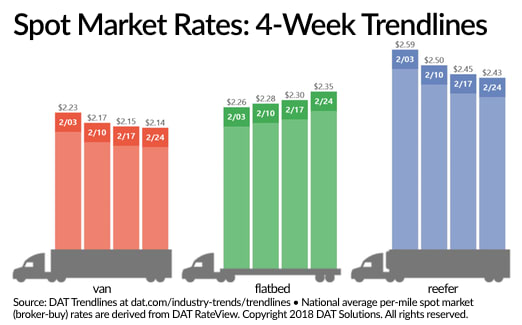
The national average rate for spot flatbed loads increased for the third straight week and the flatbed load-to-truck ratio topped 70 to 1 during the week ending Feb. 24, according to DAT Solutions and its network of load boards.

The national average rate for spot flatbed loads increased for the third straight week and the flatbed load-to-truck ratio topped 70 to 1 during the week ending Feb. 24, according to DAT Solutions and its network of load boards.
The number of available flatbed loads increased 10% compared to the previous week while truck posts dipped 1%. The load-to-truck ratio rose 10% as the national average flatbed rate gained 5 cents to $2.35 per mile. All rates include fuel surcharges.
Van and refrigerated freight rates continued their gradual slide but remain higher than at this point last year.
The national average van rate lost 1 cent to $2.14 per mile on a 6% decline in the number of van loads and a 1% gain in available capacity. The van load-to-truck ratio fell slightly to 6.7 loads per truck.
The national average reefer rate fell 2 cents to $2.43 per mile. The number of available loads was down 2% and truck posts edged up 1% for a 9.3 to 1 load-to-truck ratio.
The mixed performance with freight rates happened as the average cost of diesel fell to $3.023 per gallon.
The national average spot van rate has now fallen for seven straight weeks, according to DAT, but there are some signs they may have hit bottom and could rebound soon:
Most declines last week were slight, and pricing has been stable in many markets.
Volumes rebounded 2% last week on the top 100 van lanes.
The "phase-in" period for the electronic logging device mandate ends on April 1, which is when trucks will be placed out of service if they don't have an electronic logging device (ELD) installed. If capacity tightens the way that it did when the mandate started in December, prices could spike again.
Just when capacity gets tight, demand is expected to surge. The first quarter closes on Saturday, March 31, and shippers will be in a rush to move freight before the weekend. Then the spring freight season starts to rev up in April, and rates typically keep climbing at least until July 4th.
You can read more about the latest spot market trends in the DAT blog.
More Fleet Management

How Telematics Improves Visibility, Control, and Performance in Refrigerated Fleets
Explore how telematics help refrigerated fleets improve visibility, uptime, efficiency, compliance, and cargo protection across connected cold chain operations.
Read More →
What the U.S.-Canada Trade War Means for Trucking
Escalating U.S.-Canada tariffs could disrupt cross-border freight, reduce truck volumes, raise costs, and create new uncertainty for carriers on both sides of the border.
Read More →
What Are Trucking’s Top Concerns for 2026?
The American Transportation Research Institute wants to know what's worrying trucking fleet managers, drivers, and other stakeholders in its annual Industry Issues survey.
Read More →

American Trucking Associations Looks for a New Leader
ATA President and CEO Chris Spear abruptly left his job at the association on August 21, at a pivotal time for the trucking industry.
Read More →
Public Wi-Fi Cybersecurity Risks: How Truck Drivers and Fleets Can Protect Their Data
Public Wi-Fi can expose truck drivers and fleets to credential theft, malware, and other cyber threats. Here’s how to reduce the risk on the road.
Read More →
For Nicky Cupp, Fleet Innovation Starts With Frustration
HDT Truck Fleet Innovator Nicky Cupp turns everyday pain points at Fraley & Schilling into opportunities for better technology and smarter processes.
Read More →
Adam Buttgenbach’s Approach to Electric Trucks: Start With Where They Fit
HDT Truck Fleet Innovator Adam Buttgenbach helped PepsiCo build one of North America’s largest EV fleets by focusing on where electric trucks make operational sense.
Read More →
Deen Albert: Let Automation Do the Math, People Make the Decisions
HDT Truck Fleet Innovator Deen Albert makes sure people are still at the heart of operations at Grand Island Express, even while adopting artificial intelligence tools. AI-assisted dispatch helped boost revenue 25% with the same number of trucks.
Read More →
Trimble’s New AI Agent Takes Aim at Fleet Back-Office Busywork
Arc Agent works across Trimble TMS products to automate repetitive tasks such as freight orders, maintenance, invoices, fuel costs and more.
Read More →
How HDT’s 2026 Truck Fleet Innovators Are Rethinking Fleet Operations
Meet five trucking leaders who are challenging assumptions, solving operational problems, and putting innovative ideas to work.
Read More →