




ATA Issues First-Ever Autonomous Truck Policy Guidelines
ORLANDO – The American Trucking Associations issued its first-ever policy guidelines concerning the deployment of autonomous trucks in interstate commerce operations.

ATA has issued 21 policy points aimed at smoothing the eventual deployment and operation of autonomous trucks. Photo: Freightliner

ATA has issued 21 policy points aimed at smoothing the eventual deployment and operation of autonomous trucks. Photo: Freightliner
ORLANDO – In a sign that events are accelerating rapidly on the autonomous trucks front, American Trucking Associations unanimously approved its first-ever policy for the development of automated trucks at its annual meeting this week. ATA’s new policy covers a variety of topics including safety, the roles of the federal and state governments, uniformity across state lines, infrastructure, and education.
The new policy is comprehensive in nature and divided into eight key policy points that the agency has identified as crucial for the successful deployment and operation of autonomous trucks. Those eight policy points are Safety, Flow of Interstate Commerce, Federal Preemption and State’s Rights, Uniform State Laws, Infrastructure and Connectivity, Public Education and Maintainability.
Working within those policy points, ATA developed more detailed action plans to work with various government and law enforcement agencies as well as OEMs, suppliers and members as autonomous technology use in trucking draws near.
Key points outlined in the new policy include:
The trucking industry, led by ATA, should invest in coalition building with government, academia, research institutions, and private sector to demonstrate the rising level of safety related to automated and connected vehicle technology.
Demonstrations of automated trucks are needed to provide data to establish safety and other benefits of this technology. Initial data generated by technology developers, based on their safety and validation testing, will be valuable.
Government regulators and lawmakers should revise or remove outdated safety-related laws, regulations, and guidance as data demonstrates a technology’s ability to provide an equivalent or higher level of safety than current regulations support or incorporate.
As automated truck technology is developed, tested, and commercialized, it is critical that federal, state and local laws do not create disparities that limit commerce and obstruct the successful adoption of these potentially safety- and productivity-boosting technologies.
Conflicting or duplicative requirements among Federal and State agencies will create roadblocks to deployment of automated technology, delaying the safety benefits, fuel savings, emissions reductions, and potential efficiency improvements to our country’s transportation system. When conflicts arise between federal and state regulations, the federal government must take a clear leadership role and, if necessary, exercise federal preemption.
States should commit to ensuring a unified national framework to facilitate the development, testing, and deployment of commercialized automated and connected truck technology, including further harmonization of state-level traffic and vehicle rules affecting the operation of such technology.
Federal and State laws and regulations should neither require, nor limit differing levels of automation. The trucking industry, when given a choice, will deploy technologies that are best suited for individual business needs. Carriers will increasingly adopt proven levels of automation in the interest of safety and productivity.
Investments in infrastructure such as repairing, maintaining, and improving pavement, lane markings, and signs, as well as intelligent transportation systems (ITS) technology, will benefit both automated and conventional vehicles.
“Over the past year, ATA has been active in this debate, advocating for recognition of the importance of the trucking industry when it comes to the development of automated vehicles,” ATA President and CEO Chris Spear said. “The adoption of this policy gives a clear direction about what our industry will expect and require as policymakers establish a comprehensive framework for automated vehicles.
“ATA has always been at the leading edge of developments in the trucking industry, and now with this policy in hand, we are poised to continue leading this industry into a more automated future,” said ATA Chairman Dave Manning, president of TCW Inc. “I’d like to thank all the ATA staff and members who worked diligently in crafting this foundational document and look forward to the challenge of using it to advocate on behalf of our industry.”
More Safety & Compliance

NYC Expands Speed, Pedestrian Safety Tech Across Fleet
New York City is expanding intelligent speed assistance and pedestrian-alert systems across its municipal fleet, moving the technologies from pilot programs into vehicle procurement and retrofit requirements.
Read More →
FMCSA Removes 110 Truck Driver Training Schools from Certified ELDT List
Federal regulators also are targeting more than 160 additional training providers and launching a nationwide audit of third-party CDL skills testers as part of a broader crackdown on trucking fraud.
Read More →
Beyond DOT Compliance: What Makes a Trucking Fleet Truly Safe?
A trucking fleet can follow every rule and still make unsafe decisions. The real test comes when safety conflicts with freight, productivity, or cost.
Read More →
Hours of Service Pilot Programs: FMCSA Readies for 2027 Rollout
Two pilot programs could eventually reshape hours-of-service rules, giving truck drivers options to pause their 14-hour clock or use longer split sleeper rest periods.
Read More →
New Guide Offers Pet Safety Tips for Truck Drivers
Hundreds of thousands of pets travel in truck cabs. A new safety guide from Volvo Trucks and the Center for Pet Safety offers practical advice for truck drivers who bring dogs and cats along for the ride.
Read More →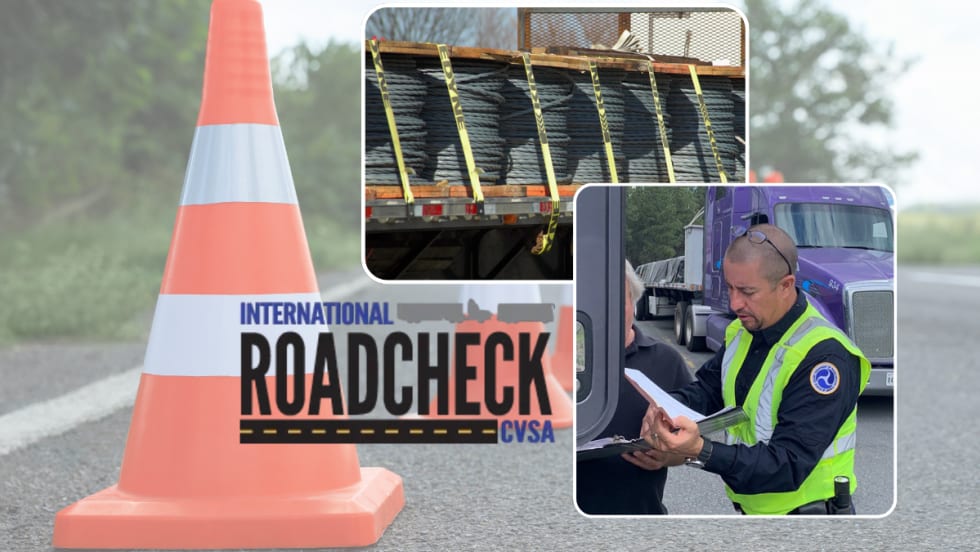
Medical Cards, English Proficiency Reshape Roadcheck Violations
Medical-card violations jumped to the top of the driver out-of-service list during CVSA’s 2026 International Roadcheck, while English-language proficiency violations appeared among the leading violations for the first time.
Read More →
How Lance Evans Turns Enforcement Experience Into Better Fleet Safety
HDT Truck Fleet Innovator Lance Evans brings lessons from law enforcement to K&B Transportation’s approach to safety technology, data, driver coaching, and compliance.
Read More →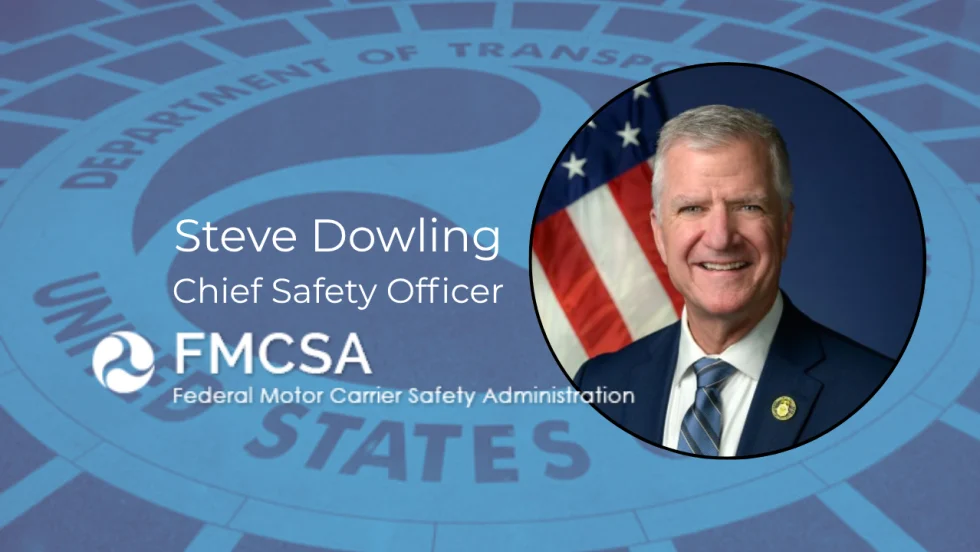
New FMCSA Chief Safety Officer Has Trucking Industry and Law Enforcement Experience
Steve Dowling joins FMCSA after serving as senior director of safety at Covenant Logistics and in leadership roles in commercial motor vehicle industry organizations.
Read More →
Driver Trust Can Make or Break the Success of Fleet Safety Technology
New Teletrac Navman research suggests that onboarding, transparency about driver data, and positive feedback can play a significant role in how commercial drivers respond to safety and coaching technology.
Read More →
FMCSA: Stop Using These 15 Electronic Logging Devices
Fleets and drivers must replace the revoked ELDs with ones on the FMCSA's registered device list of electronic logging devices.
Read More →