Spot Freight Volumes Rise in Late July Push, Rates Move Little
An unusual surge of truckload freight led to higher-than-normal volume on the spot market for the week ending July 29, according to DAT Solutions and its network of load boards, but it failed to turn into any substantial rate increases.
Evan Lockridge・Former Business Contributing Editor
August 2, 2017
2 min to read
An unusual surge of truckload freight led to higher-than-normal volume on the spot market for the week ending July 29, according to DAT Solutions and its network of load boards, but it failed to turn into any substantial rate increases.
The number of available loads increased 2% while truck posts edged down 2% compared to the previous week. Typically, July is a month when spot truckload freight activity begins to decline.
Ad Loading...
National average load-to-truck ratios stayed firm with the van load to truck ratio at 5.3 to 1, up from 4.8 to 1 the previous week. Flatbeds remained at 36.1 to 1 and reefers held at 8.5 to 1.
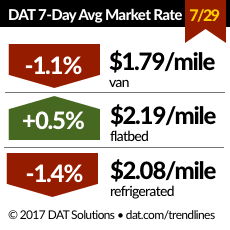
In the van market, the top 100 van lanes set all-time records for volumes last week. Nationally, load posts increased 6% and posted truck capacity decreased 2%. However, rates did not respond with the national average van rate falling 2 cents to $1.79 per mile, down from $1.90 per mile for the week ending July 8. (All rates below include fuel surcharges and are based on real transactions between carriers and brokers.)
Outbound average van rates also declined in several major markets:
Ad Loading...
Chicago, $2.08 per mile, down 1 cent
Los Angeles, $2.15 per mile, down 3 cents
Houston, $1.76 mile, down 3 cents
Charlotte, $2.16 per mile, down 3 cents
Reefer demand remains strong for late July as load posts increased 5% and truck posts declined 2%. The national average rate fell 1 cent to $2.08 per mile, its lowest level out of the past four weeks.
Regionally, harsh weather is taking a toll on crops but several lanes showed solid gains:
Grand Rapids-Cleveland added 50 cents to $4.12 per mile
Grand Rapids-Madison rose 32 cents to $3.19 per mile
Chicago-Atlanta was up 32 cents to $2.59 per mile
Sacramento-Denver added 26 cents to $2.55 per mile
The highest outbound average reefer rate last week was Green Bay, a penny higher than the week before at $2.88 per mile.
Ad Loading...
Flatbed load posts declined 1% last week while truck posts fell 4%. At $2.19 mile, the national average flatbed rate was 1 cent higher compared to the previous week but still lower than where it was two weeks earlier.
The trucking industry has no shortage of cybersecurity reports and cargo crime statistics. What it lacks is timely, operational intelligence that fleets can actually use.
ATRI’s latest research points to litigation, social inflation, and soaring claims costs as key drivers behind record-high liability premiums for trucking fleets. But there are things motor carriers can do.
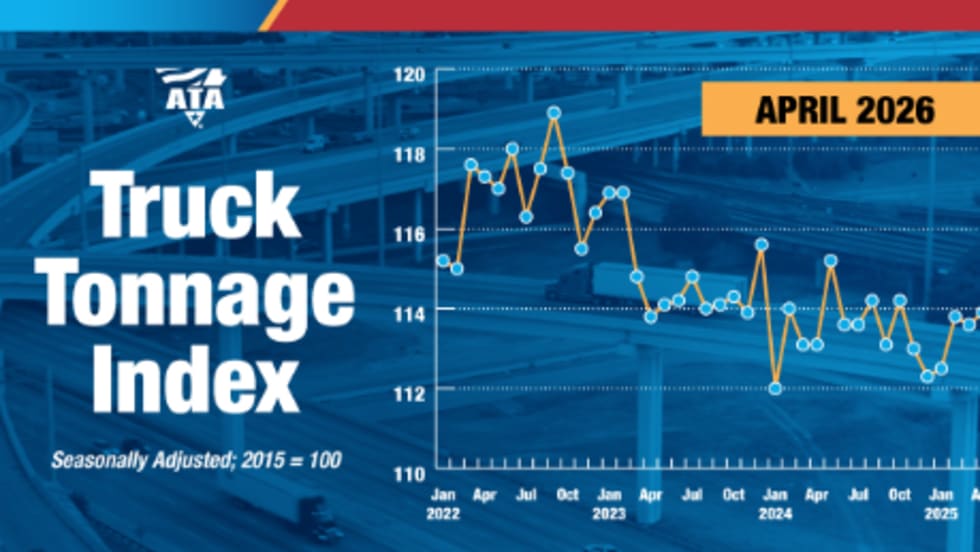
ATA’s For-Hire Truck Tonnage Index was unchanged in April after a strong March gain, with freight volumes remaining at their highest levels since late 2022.
Transportation attorney Greg Feary breaks down the recent Supreme Court decision that brokers can be held liable for damages in truck accidents and what it means for the trucking industry going forward.
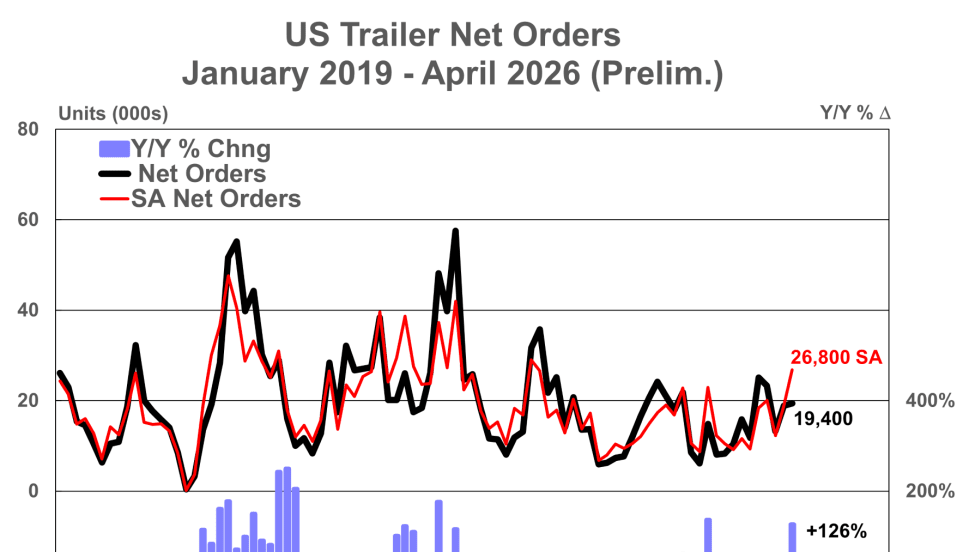
Preliminary net trailer orders rose 3% from March and jumped 126% year over year, signaling stronger-than-expected demand despite typical seasonal softness.
The unanimous SCOTUS ruling in the closely watched Montgomery v. Caribe case allows state negligence claims against freight brokers that hire unsafe motor carriers, raising new liability and vetting concerns among brokers.