




FTR: The Economics of 33' Trailers Only Benefit a Few Markets
FTR released a new report detailing the economics of using twin 33-foot trailers, showing that only in specific cases would the extra capacity lead to a benefit. However, for those fleets, the increase would be worth it.
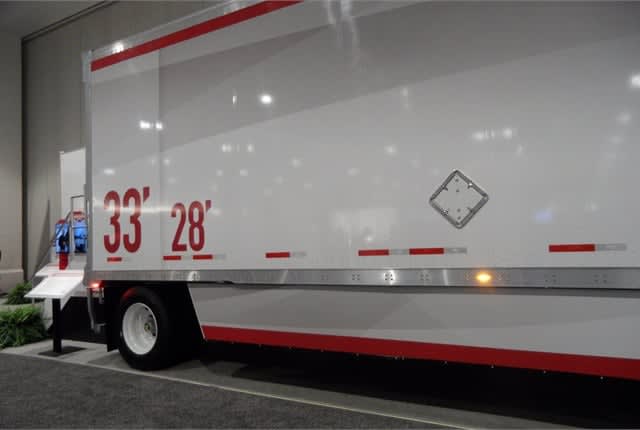
Photo: Tom Berg
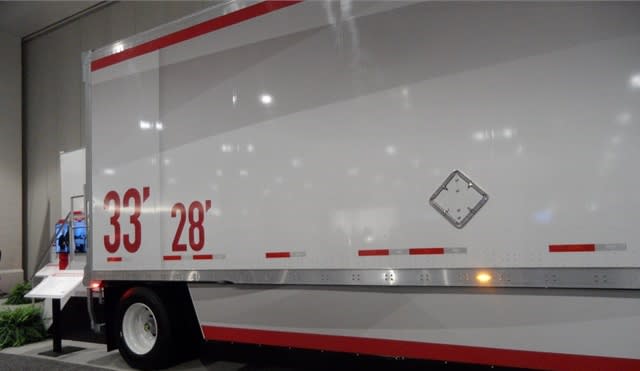
Photo: Tom Berg
FTR released a new report detailing the economics of using twin 33-foot trailers compared to twin 28-foot trailers and standard 53-foot trailers, showing that in only specific cases would the extra capacity lead to a benefit.
The change from 28-foot to 33-foot double trailers has primarily been based on safety concerns, but newer technologies have allowed for the safe operation of larger trucks since the last expansion of length limits in the early 1990s, according to FTR. Regulators have been debating a proposal to increase the federal maximum length, which would lead to an overall increase of 10 feet for the entire rig.
The thinking behind such an increase is that it would increase capacity per truck. But in reviewing the economics of the change, FTR found that adoption of double 33-foot trailers would likely be limited. It would benefit primarily less-than-truckload and parcel carriers and more niche operations such as the movement of caskets or insulation. Based on its own research, FTR expects load conversion in just the 1-2% range.
While double trailers present increased capacity in space and weight over a single trailer, for shippers of low-density freight the gain in loading capacity is only 4%. The main reason that carriers choose twin trailers over a single trailer is what the industry calls "unit" loading, a common practice in LTL and parcel operations. Since the cube advantage over 53-foot trailers is relatively small, the main reason for a carriers’ preference for doubles is to avoid the re-sorting required to consolidate many customer shipments as the freight moves across the hub-and-spoke terminal networks.
FTR found that for the segments most directly affected by increasing the allowable trailer length, they would see as much as a 10% increase in cost savings. It also expects the longer trailers to decrease the number of trucks on the road by 18% in the affected segments of trucking, which would lead to lower overall emissions.
Trucking costs don’t increase in proportion to the length of a trailer, which means that 33-foot trailers would be cheaper to operate than 28-foot trailers on a per-ton basis, according to FTR. A drawback to using longer trailers in the increased handling and need for additional loading space, with FTR calling the change a niche play only.
The limited scope of fleets that would be interested in longer double trailers is actually one of the advantages that FTR wants lawmakers to consider while pushing for the increased maximum length. This could downplay public fears about significant amounts of larger vehicles on the road because the change would not be as obvious.
FTR also believes the because the change is simple and requires no new technology and no need for costly changes to infrastructure, longer trailers would also be an easy sell. Lastly, the tradeoffs for the fleets that would use them are obvious and significant.
The full report is available here.
More Fleet Management

How Telematics Improves Visibility, Control, and Performance in Refrigerated Fleets
Explore how telematics help refrigerated fleets improve visibility, uptime, efficiency, compliance, and cargo protection across connected cold chain operations.
Read More →
What the U.S.-Canada Trade War Means for Trucking
Escalating U.S.-Canada tariffs could disrupt cross-border freight, reduce truck volumes, raise costs, and create new uncertainty for carriers on both sides of the border.
Read More →
What Are Trucking’s Top Concerns for 2026?
The American Transportation Research Institute wants to know what's worrying trucking fleet managers, drivers, and other stakeholders in its annual Industry Issues survey.
Read More →

American Trucking Associations Looks for a New Leader
ATA President and CEO Chris Spear abruptly left his job at the association on August 21, at a pivotal time for the trucking industry.
Read More →
Public Wi-Fi Cybersecurity Risks: How Truck Drivers and Fleets Can Protect Their Data
Public Wi-Fi can expose truck drivers and fleets to credential theft, malware, and other cyber threats. Here’s how to reduce the risk on the road.
Read More →
For Nicky Cupp, Fleet Innovation Starts With Frustration
HDT Truck Fleet Innovator Nicky Cupp turns everyday pain points at Fraley & Schilling into opportunities for better technology and smarter processes.
Read More →
Adam Buttgenbach’s Approach to Electric Trucks: Start With Where They Fit
HDT Truck Fleet Innovator Adam Buttgenbach helped PepsiCo build one of North America’s largest EV fleets by focusing on where electric trucks make operational sense.
Read More →
Deen Albert: Let Automation Do the Math, People Make the Decisions
HDT Truck Fleet Innovator Deen Albert makes sure people are still at the heart of operations at Grand Island Express, even while adopting artificial intelligence tools. AI-assisted dispatch helped boost revenue 25% with the same number of trucks.
Read More →
Trimble’s New AI Agent Takes Aim at Fleet Back-Office Busywork
Arc Agent works across Trimble TMS products to automate repetitive tasks such as freight orders, maintenance, invoices, fuel costs and more.
Read More →
How HDT’s 2026 Truck Fleet Innovators Are Rethinking Fleet Operations
Meet five trucking leaders who are challenging assumptions, solving operational problems, and putting innovative ideas to work.
Read More →