




Related: What's Available in Hybrid and Electric Drive Systems
Electric Trucks Start Arriving at Southern California Freight, Rail Yards
The State of California, San Bernardino Council of Governments. and partners at Daylight Transport and BYD Motors have announced the arrival of the first of 27 zero-emission electric yard and service trucks in three disadvantaged communities in Southern California.
by Staff
March 10, 2017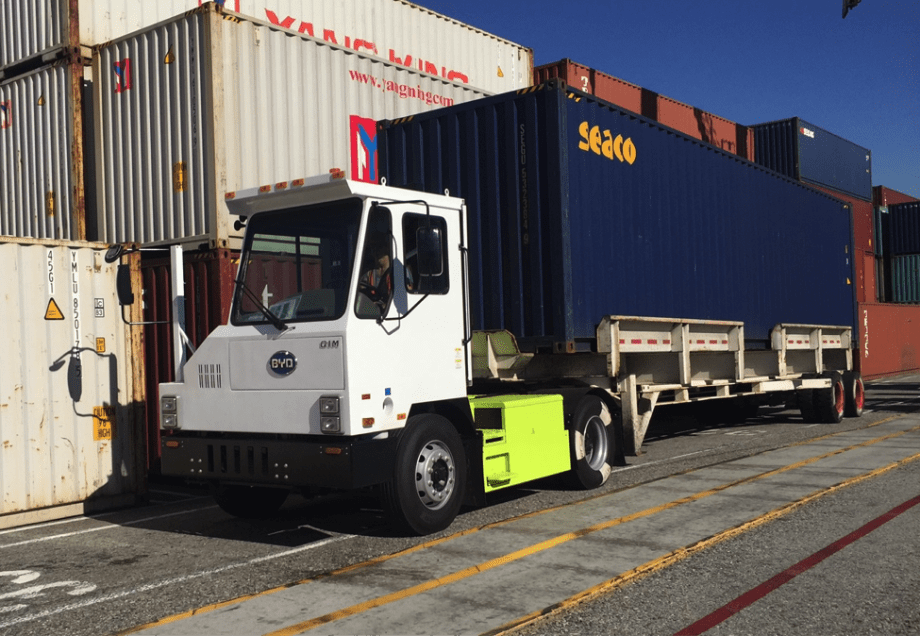
A BYD all-electric yard truck. The typical yard truck burns 2 to 4 gallons of diesel fuel per hour. Photo: CARB
2 min to read
A BYD all-electric yard truck. The typical yard truck burns 2 to 4 gallons of diesel fuel per hour.Photo: CARB
The State of California, San Bernardino Council of Governments, and partners at Daylight Transport and BYD Motors have announced the arrival of the first of 27 zero-emission electric yard and service trucks in three disadvantaged communities in Southern California.
BYD is providing the 27 vehicles, of which 23 will be battery-electric Class 8 yard trucks and four will be Class 5 service trucks. Three yard trucks and a service truck will be operated by Daylight while the other 23 trucks will operate at two BNSF Railway rail yards in San Bernardino and Los Angeles. BNSF will receive its trucks in the summer.
Funded by the state’s cap-and-trade program and other programs, the demonstration truck project is part of California Climate Investments, a statewide program that invests in reducing greenhouse gas emissions, strengthening the economy and improving public health and the environment.
“It’s exciting to see the first of these ultra-clean trucks roll off the manufacturing line in Lancaster and get to work moving cargo in Fontana,” said Mary D. Nichols, California Air Resources Board chair. “Electric trucks mean cleaner air for all Californians, especially those who live in neighborhoods close to freight transfer facilities and rail yards.”
The two types of trucks funded by the grant are the most common vehicles at major freight locations in the U.S. and are aimed at providing a model for truck electrification that could be scaled to any facility.
CalStart, a Pasadena, Calif.-based clean transportation not-for-profit, will be evaluating the future potential for commercialization and job creation.
“Daylight Transport is excited to participate in the rollout of zero-emission yard trucks. We are committed to clean energy and sustainability,” said Greg Steele, Daylight Transport executive vice president. “The collaboration with CARB, SBCOG and BYD will help us toward reducing our carbon footprint and operating in a continuously more environmentally conscious manner. This is an outstanding way to introduce ourselves to the Fontana community.”
DayLight Transport will operate the trucks out of a newly constructed facility that will include a 600-kilowatt solar system that covers nearly the entire 60,000-square-foot warehouse. The solar power system will be used to power the electric vehicles.
The project aims to reduce emissions over the course of two years by around 2,500 tons of carbon dioxide equivalent, 3,250 pounds of nitrogen oxide, and 170 pounds of diesel soot.
More Fuel Smarts

East Coast Port Launches $45M Electric Truck Push
The Port Authority of New York and New Jersey announced millions in incentives for zero-emission drayage trucks, yard tractors, and new charging hubs near the port.
Read More →
California Bill Could Shed Light on Electric Truck Prices
Why do battery-electric Class 8 trucks remain so expensive? A California bill headed to Gov. Gavin Newsom would give fleets and state agencies more visibility into what manufacturers charge.
Read More →
Detroit Opens Orders for EPA 2027 Engines
Detroit isn’t starting from scratch to meet EPA 2027 diesel emissions standards. Its Gen 6 DD13 and DD15 engines keep much of today’s platform while updating the fuel and aftertreatment systems.
Read More →
Zero-Emission Truck Corridor Planned for West Coast
California, Oregon, Washington, British Columbia and Baja California are coordinating plans for truck charging and hydrogen fueling from Canada to Mexico.
Read More →
A Closer Look at Kenworth’s Electric T880E Vocational Truck [Video]
Learn more about Kenworth's T880E battery-electric vocational truck at the Paccar Technical Center, including its range, applications, upfitting considerations, and PTO options, in this HDT Spotlight video.
Read More →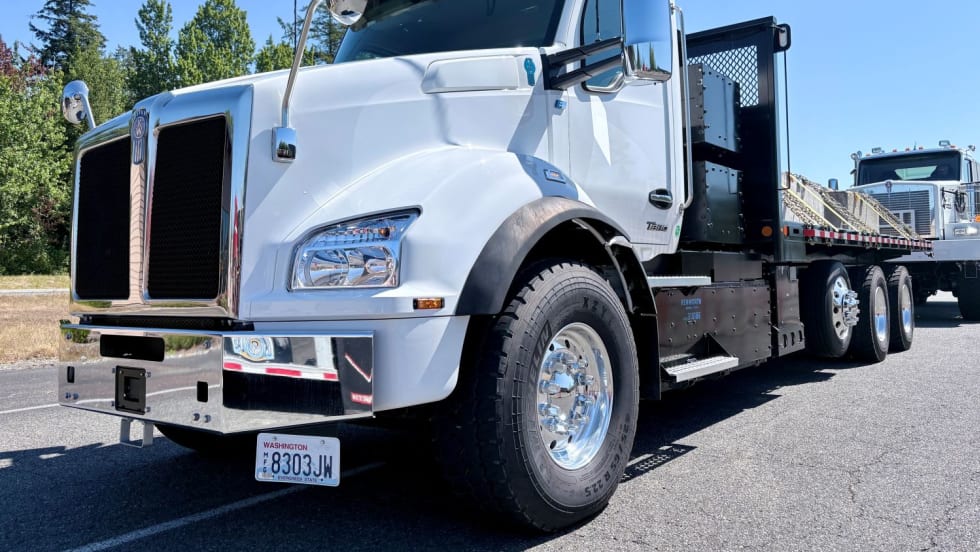
Kenworth T880E Brings EV Power to Vocational Trucks
A closer look at the Kenworth T880E’s range, charging, powertrain and upfit options — and where fleets are showing the most interest.
Read More →
Jennie Abarca Is Proving Electric Trucks Can Do the Job
HDT Truck Fleet Innovator Jennie Abarca is building confidence in fleet electrification one load at a time while openly sharing the challenges she encounters along the way as a small-fleet owner.
Read More →
Cummins Adjusts 2027 Engine Rollout After EPA Proposal
The engine maker will gradually introduce its new Model Year 2027 diesel engines while continuing to offer current models during the transition, citing the EPA's proposed emissions rule changes.
Read More →
EPA Proposal Could Ease 2027 Truck Costs and Buying Uncertainty
The proposal doesn't change the tougher NOx standard, but it would revise key implementation requirements that manufacturers say have driven up costs and complicated fleet purchasing decisions.
Read More →
Cummins, Paccar Ease DEF Derates After EPA Guidance
Updated diesel engine software gives truck operators more time to address emissions-system issues while staying compliant with EPA emissions standards.
Read More →