




Intelligent Transpo Roadmap Stresses Long-Term Thinking on Funding
Among the numerous recommendations laid out in a public-policy roadmap issued on Feb. 8 by the Intelligent Transportation Society of America, is a call to a potentially leverage a “tax overhaul” to fund new transportation infrastructure.

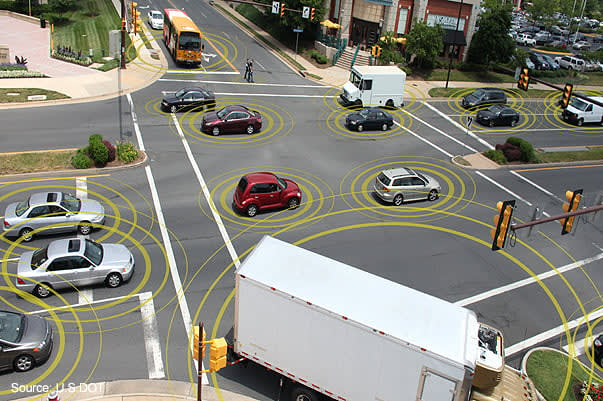
Image: U.S. Dept. of Transportation
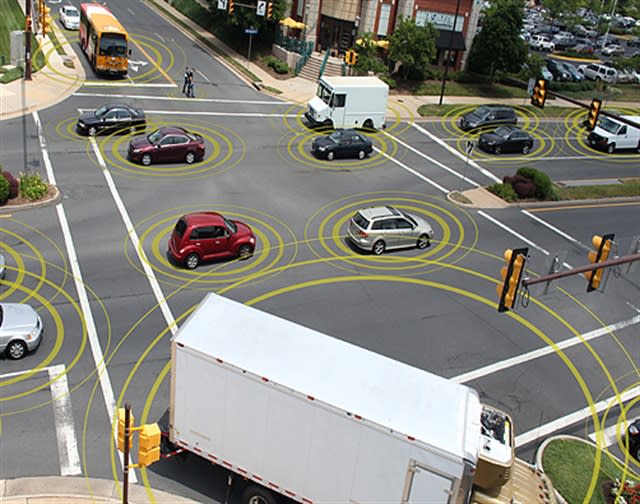
Image: U.S. Dept. of Transportation
Among the numerous recommendations laid out in a public-policy roadmap issued on Feb. 8 by the Intelligent Transportation Society of America, is a call to a potentially leverage a “tax overhaul” to fund new transportation infrastructure.
The expansive document covers a range of policy arenas that impact the research and deployment of intelligent transportation— aka “mobility”—technologies. These include everything from robotics and automation to artificial intelligence and cloud computing.
ITS America said the related issues in play include “looking for new and long-term funding and financing options around much needed transportation investment” along with cybersecurity/privacy, easing the transition to automated and connected vehicles, increasing integration of technologies that improve the operational life and efficiency of road networks, and “energizing new business models of passenger and freight mobility.”
Specific to transportation funding, the roadmap seeks to:
Promote Innovative Models in Transportation Funding, Finance, Partnerships and Performance Measures. “Address potential use of a tax overhaul to fund new and long-term transportation infrastructure and systems with a focus on technology-driven mobility investments.”
Increase Overall Investments in Transportation with a Greater Focus on Technology. “Support new and long-term sustainable funding and financing in transportation infrastructure that expand technology-driven mobility investments and preserves the broad ITS eligibilities under the Fixing America’s Surface Transportation Act (FAST Act) to fund technology capital projects and operations and maintenance. Advocate for flexible policies regarding Federal/State/Local matching requirements (e.g., 100% Federal funding upfront for technology-driven mobility infrastructure investments).”
Encourage Federal Funding Flexibility and New Funding Mechanisms. Advocate for flexible policies regarding Federal/State matching requirements (e.g., 100% Federal funding upfront with a back-end match by Locals/State for continuing operations) and other implementation provisions in the FAST Act and any new infrastructure bill related to the deployment of smart technology for communities.”
Identify Innovation Champions at the Local Level and Educate on the Tools for Experimentation. “Encourage communities to allow Chief Technology Officers or other appropriate officials to use ‘Other Transaction Authority,’ pilot programs, and similar programs to bypass onerous, time-consuming procurement procedures. Encourage the FHWA to enable better flexibility in the States by using performance level conditions measures instead of the traditional measures. Examine Federal restrictions on sole sourcing. Study means to add flexibility to communities (e.g. States, Cities, MPOs, etc.).”
Support Proposals that Integrate Federal “Smart Communities” Programs and Provide Resources Where Appropriate. “Support legislative efforts that would improve coordination of ‘smart community’ programs across the Federal government. Provide State and Local governments with technical assistance and resources to help foster the deployment of smart community technologies. Support STEM education and training required for the development and operation of smart communities. Support the necessary R&D to enhance the functionality—including cybersecurity and privacy protections—of smart community technologies.”
“This roadmap provides Federal, State, and Local policymakers with the tools to capitalize on this innovation— from automated vehicles to highways and traffic lights that communicate in real time with drivers on the road,” said ITS America President and CEO Regina Hopper. “Now is the time to jumpstart the economy and save thousands of lives per year.”
ITS America stated that in the year ahead, it will “urge President Trump and Congress to build out transportation infrastructure by including roadmap recommendations in upcoming infrastructure proposals.”
"It's time for Congress and the Administration to work together to facilitate the implementation of modern, innovation-driven transportation policies that will result in safer, more reliable and efficient mobility, helping to save lives across the country,” noted Jill Ingrassia, immediate past chairman of ITS America and managing director of Government Relations and Traffic Safety Advocacy at AAA.
More Fleet Management

How Telematics Improves Visibility, Control, and Performance in Refrigerated Fleets
Explore how telematics help refrigerated fleets improve visibility, uptime, efficiency, compliance, and cargo protection across connected cold chain operations.
Read More →
What the U.S.-Canada Trade War Means for Trucking
Escalating U.S.-Canada tariffs could disrupt cross-border freight, reduce truck volumes, raise costs, and create new uncertainty for carriers on both sides of the border.
Read More →
What Are Trucking’s Top Concerns for 2026?
The American Transportation Research Institute wants to know what's worrying trucking fleet managers, drivers, and other stakeholders in its annual Industry Issues survey.
Read More →

American Trucking Associations Looks for a New Leader
ATA President and CEO Chris Spear abruptly left his job at the association on August 21, at a pivotal time for the trucking industry.
Read More →
Public Wi-Fi Cybersecurity Risks: How Truck Drivers and Fleets Can Protect Their Data
Public Wi-Fi can expose truck drivers and fleets to credential theft, malware, and other cyber threats. Here’s how to reduce the risk on the road.
Read More →
For Nicky Cupp, Fleet Innovation Starts With Frustration
HDT Truck Fleet Innovator Nicky Cupp turns everyday pain points at Fraley & Schilling into opportunities for better technology and smarter processes.
Read More →
Adam Buttgenbach’s Approach to Electric Trucks: Start With Where They Fit
HDT Truck Fleet Innovator Adam Buttgenbach helped PepsiCo build one of North America’s largest EV fleets by focusing on where electric trucks make operational sense.
Read More →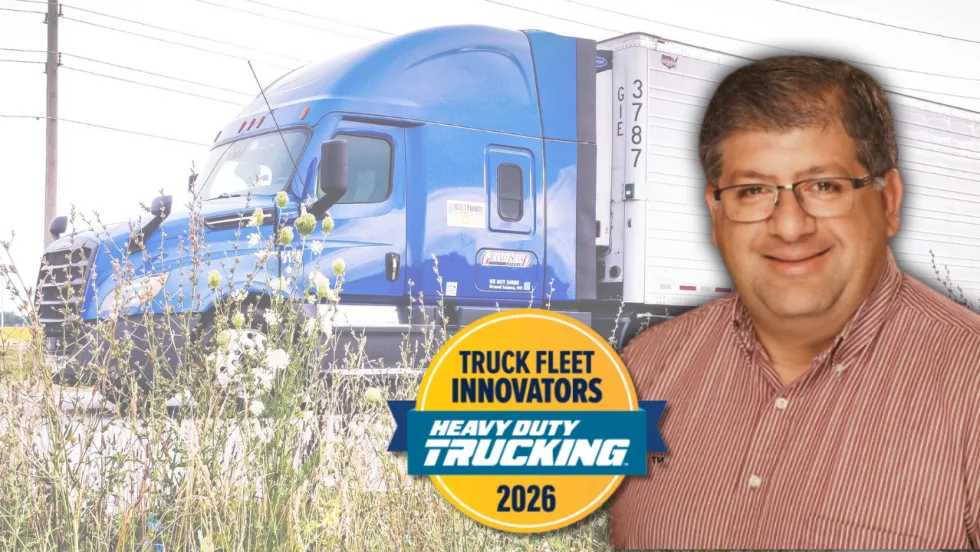
Deen Albert: Let Automation Do the Math, People Make the Decisions
HDT Truck Fleet Innovator Deen Albert makes sure people are still at the heart of operations at Grand Island Express, even while adopting artificial intelligence tools. AI-assisted dispatch helped boost revenue 25% with the same number of trucks.
Read More →
Trimble’s New AI Agent Takes Aim at Fleet Back-Office Busywork
Arc Agent works across Trimble TMS products to automate repetitive tasks such as freight orders, maintenance, invoices, fuel costs and more.
Read More →
How HDT’s 2026 Truck Fleet Innovators Are Rethinking Fleet Operations
Meet five trucking leaders who are challenging assumptions, solving operational problems, and putting innovative ideas to work.
Read More →