




Related: Park My Truck App Helps Drivers Find Available Parking
Parking Searches Can Cost Drivers $4,600 Annually
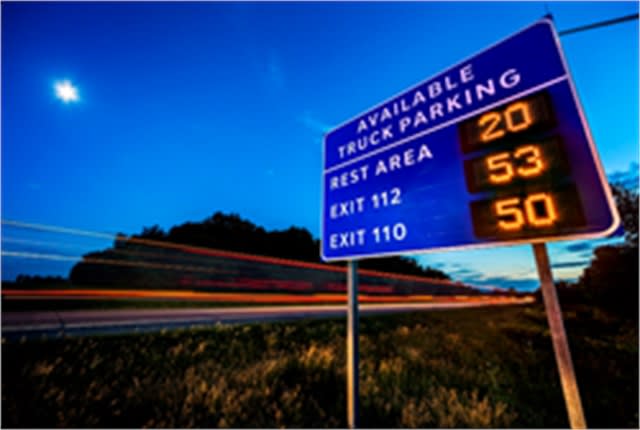
Truck parking availability is a top concern of the trucking industry and ATRI highlighted the anxiety that truckers feel through its Truck Parking Diary research findings.
by Staff
December 15, 2016
3 min to read
Truck parking availability is a top concern of the trucking industry and ATRI highlighted the anxiety that truckers feel through its Truck Parking Diary research findings.
The truck parking diary collected detailed data from commercial truck drivers who agreed to provide documentation of their challenges in looking for safe, available truck parking. Over the course of 14 days, these truckers recorded their parking experiences and issues, representing over 4,700 parking stops.
By breaking down these instances over the course of two weeks, ATRI found that several trends were common to many of the participants in the study.
Weekends and mid-day were often the easiest times to find available parking, according to the study. The most difficult times were during the week after 7 p.m., when most of the available parking had already been taken up. Parking stayed full and difficult to find until 5 a.m. when truckers begin their next driving period.
There were interesting exceptions to this, including a higher instance of non-commercial vehicles taking up commercial vehicle parking spaces on the weekends, adding to the difficulties even during non-peak hours. ATRI concluded that more flexible shipper/receiver appointment times would allow drivers to shift when they operate to less busy times so they could take advantage of off-peak parking times.
Drivers typically dedicated an average of 56 minutes of available drive time to parking, rather than risking not being able to find parking down the road. Since time is money for drivers, the unused drive time effectively reduced a driver’s productivity by 9,300 minutes annually, equal to a lost wage of $4,600.
For 10-hour required hours of service breaks, drivers tended to devote more time to finding parking to ensure that basic amenities were available. Factors drivers considered when searching for parking were practical with proximity to a route being the number one concern, followed by restroom and shower access, expected parking availability, and ease of access.
ATRI noted that conditions could be improved by adding to parking along major freight corridors and near urban areas, providing parking with basic facilities. These locations might lack some amenities desired for long breaks but would at the very least provide for basic needs.
Ultimately ATRI’s findings led it to make suggestions to both public and private sectors, as well as to carriers and drivers, on how these issues could be improved going forward. It recommended more investment in parking spaces and facilities across the board, while also asking for more flexibility with available parking in places like public rest areas, which can limit the amount of time a truck is allowed to park.
Truck stops were urged to better police non-commercial use of truck parking spaces to prevent vehicles from taking up more than a single lane and use public sector funding when available to expand facilities.
Carriers were encouraged to cover reservation fees for drivers to help reduce the stress of needing to find parking. Not only does this cut down on lost driving time, but it could improve retention rates at a carrier.
Lastly, drivers were asked to shift schedules when possible to avoid peak truck parking times and, while it might only add a little more capacity, ATRI reminded drivers to park in designated spaces, taking care to not take up multiple spaces if not over-size or over-weight.
"The lack of available truck parking creates a lot of stress for me and my fellow drivers," said Stephanie Klang, a professional driver for CFI and an America's Road Team Captain. "And, as ATRI's diary research shows, it's a number of things - from lack of capacity, concerns over running out of hours, time limitations on parking in public rest areas and customers not letting us park in their facilities – that all combine to make this a perennial issue for us."
You can download a copy of this report on ATRI's website at www.atri-online.org.
More Drivers

Truck Drivers Need More Than Another Alert
Fleets have more visibility into truck health, safety events, and driver activity than ever. The next challenge is turning all that information into useful guidance for the person who has to decide what to do next.
Read More →
FMCSA Removes 110 Truck Driver Training Schools from Certified ELDT List
Federal regulators also are targeting more than 160 additional training providers and launching a nationwide audit of third-party CDL skills testers as part of a broader crackdown on trucking fraud.
Read More →
Hours of Service Pilot Programs: FMCSA Readies for 2027 Rollout
Two pilot programs could eventually reshape hours-of-service rules, giving truck drivers options to pause their 14-hour clock or use longer split sleeper rest periods.
Read More →
Medical Cards, English Proficiency Reshape Roadcheck Violations
Medical-card violations jumped to the top of the driver out-of-service list during CVSA’s 2026 International Roadcheck, while English-language proficiency violations appeared among the leading violations for the first time.
Read More →
Driver Trust Can Make or Break the Success of Fleet Safety Technology
New Teletrac Navman research suggests that onboarding, transparency about driver data, and positive feedback can play a significant role in how commercial drivers respond to safety and coaching technology.
Read More →
EEOC Sues KLLM Over Alleged Sex Discrimination in Driver Training
KLLM is facing a federal sex-discrimination lawsuit over policies the EEOC alleges put female truck driver trainees at a disadvantage.
Read More →
FMCSA Moves to Codify English Language Requirements for Commercial Drivers
By changing regulations on English-language proficiency requirements for commercial drivers, rather than relying on a guidance memo, the FMCSA said future administrations won't be able to walk back the Trump administration's stricter enforcement with just a memo.
Read More →
Drivers Put Western Star Trucks to the Test at Star Nation Experience
Watch to get an inside look at the Western Star trucks, technology, and community behind the Star Nation Experience 2026!
Read More →
Trump Administration Looks to Put More Veterans Behind the Wheel
The Freedom Haulers program pulls together existing and expanded programs at several federal agencies to recruit veterans to drive commercial heavy-duty trucks and cut the red tape for them to get a CDL, training, and employment.
Read More →
Putting Mack’s Command Steer to the Test
A test drive of Mack’s Command Steer active steering system evaluates how it can make truck driving easier and less tiring.
Read More →