




Related: Nearly a Third of Major Urban Roads in Poor Condition
DOT to Set Up Alternative-Fuel Corridors
The U.S. Department of Transportation is establishing a network of 55 alternative fueling and charging corridors for electric, natural gas, hydrogen, and propane fuel vehicles.
by Staff
November 7, 2016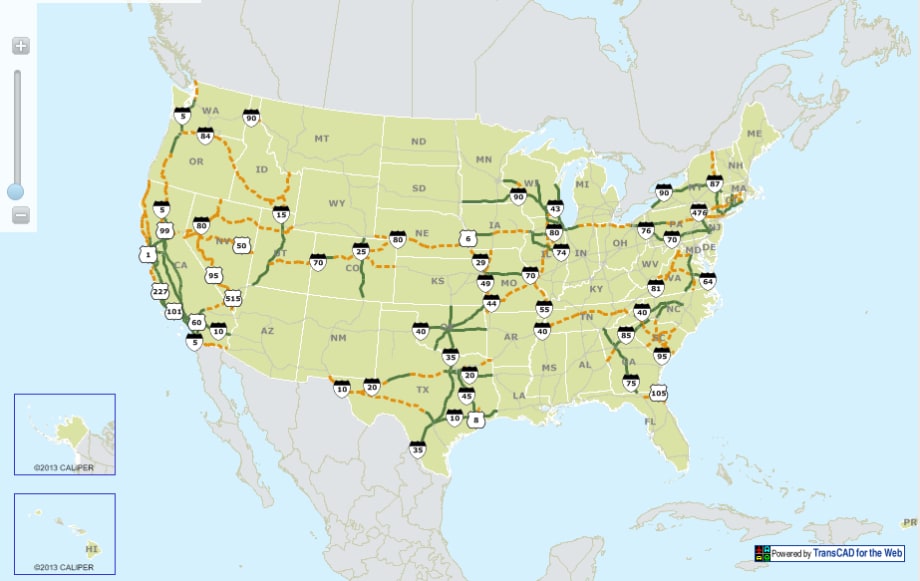
Source: Federal Highway Administration
2 min to read
Source: Federal Highway Administration
The U.S. Department of Transportation is establishing a network of 55 alternative fueling and charging corridors for electric, natural gas, hydrogen, and propane fuel vehicles.
The corridors will help drivers find routes with places to recharge or refuel an alternative-fueled vehicle and make it easier for drivers to move to alt-fuel vehicles, especially electric ones.
It spans 35 states and Washington, D.C., and 48 out of 55 routes will be designated as electric-vehicle charging corridors.The corridors will include signage developed by the Federal Highway Administration indicating a charging station or alterative-fueling location. Along the corridors, drivers can expect either existing or planned charging stations within every 50 miles.
The corridor designations were divided into two categories: signage-ready and signage pending. Signage-ready corridors currently have enough alternative fueling facilities to warrant signage along the corridor. Signage-pending corridors have demonstrated plans for future operational infrastructure.
A spokesperson for the FHWA told HDT that there are not currently plans for specific signage indicating fueling stations that could accommodate commercial vehicles, but the plan is in the early stages and is still being developed in participating states and organizations.
“Alternative fuels and electric vehicles will play an integral part in the future of America’s transportation system,” said U.S. Transportation Secretary Anthony Foxx. “We have a duty to help drivers identify routes that will help them refuel and recharge those vehicles and designating these corridors on our highways is a first step.”
More Fuel Smarts

Fleet Economics Shape Electric Truck Outlook
ACT Research expects costs, charging infrastructure, and technology improvements to drive zero-emission commercial vehicle adoption as federal regulations and incentives retreat.
Read More →
Wex Adds Cardless Fuel Payments for Over-the-Road Customers
A new fuel card feature for Wex customers offers convenience and security.
Read More →
New California Law Could Shed Light on Electric Truck Prices
Why do battery-electric Class 8 trucks remain so expensive? A California bill signed by Gov. Gavin Newsom would give fleets and state agencies more visibility into what manufacturers charge.
Read More →

How Volvo Updated Its D13 for EPA 2027 [Watch]
Volvo’s updated D13 promises lower emissions without sacrificing performance or fuel economy. Take a closer look at what changed inside the engine in this HDT Spotlight video.
Read More →
Diesel Price Spike Shortens Payback for Natural Gas Trucks, Report Says
Energy Vision estimates fleets could recover the higher purchase price of an RNG-fueled Class 8 tractor in 1.3 to 2.8 years under current fuel-price scenarios.
Read More →
Calstart Becomes Catalyst Mobility, Reflecting Broader Focus
Calstart is now Catalyst Mobility, reflecting the nonprofit’s growing national role in clean transportation, including zero-emission trucks, infrastructure and incentive programs.
Read More →
Record Diesel Prices Squeeze Trucking Fleets
Average U.S. diesel prices have climbed to nearly $6 a gallon, surpassing the 2022 record as tight refinery capacity and Middle East disruptions keep fuel costs elevated.
Read More →
Sponsored•September 9, 2026
How Fuel Delivery Shapes Engine Performance
Fuel delivery depends on more than what happens at the injector. For fleet, maintenance and technical professionals, looking at the full path from pump to injector can provide useful context for understanding engine performance.
Read More →
East Coast Port Launches $45M Electric Truck Push
The Port Authority of New York and New Jersey announced millions in incentives for zero-emission drayage trucks, yard tractors, and new charging hubs near the port.
Read More →
Detroit Opens Orders for EPA 2027 Engines
Detroit isn’t starting from scratch to meet EPA 2027 diesel emissions standards. Its Gen 6 DD13 and DD15 engines keep much of today’s platform while updating the fuel and aftertreatment systems.
Read More →