




Related: CVSA Brake Check Puts 12% Out of Service for Violations
Brake Service Violations Increase to 13.2%, CVSA Says
The results from the 2016 Commercial Vehicle Safety Alliance’s Brake Safety Week have revealed a slight increase in out-of-service violations compared to last year’s inspection period.
by Staff
November 14, 2016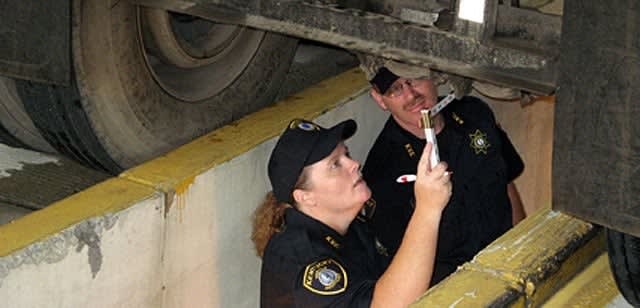
2 min to read

The results from the 2016 Commercial Vehicle Safety Alliance’s Brake Safety Week have revealed a slight increase in out-of-service violations compared to last year’s inspection period.
For 2016, enforcement members of CVSA conducted 18,385 commercial vehicle and brake-system inspections during the week resulting in brake-related out-of-service violations in 13.2% of vehicles. Local, state, provincial, territorial, and federal inspectors throughout the U.S. and Canada conducted inspections to identify out-of-adjustment brakes and brake-system violations.
Roadside inspections included examining brake-system components to identify loose or missing parts, air or hydraulic fluid leaks, cracked, damaged or worn linings, pads, drums or rotors, and other faulty brake-system components.
This year, inspectors also checked anti-lock braking system indicator lamps for compliance with jurisdictional regulations. Partcipatng jurisdicitons collected data for an ABS survey looking at the prevalence of ABS systems and related violations on trucks and trailers.
As many as 93.2% of air-braked trucks and 90.4% of hydraulic-braked trucks required ABS based on their date of manufacture while 89.4% of air-braked trailers required ABS based on manufacturing date. Of those inspected, 8.8% of all ABS-required trucks were found with ABS violations while 15.8% of all trailers requiring ABS were found with ABS violations.
Around 7.6% of trailers were not subject to ABS requirements because they had neither air brakes or hydraulic brakes. Inspections also included 328 buses and motor coaches during the event, 80.8% of which required ABS systems. Only two buses violated ABS requirement regulations.
“Brakes must be routinely checked and properly maintained to ensure the safety of the commercial motor vehicle, the CMV driver and everyone else on the road,” said Julius Debuschewitz of Yukon Highways and Public Works, CVSA president. “Although brake inspections are a part of the Level I inspections conducted by our hard-working CMV inspectors every day, Brake Safety Week is an opportunity to remind motor carriers and drivers of the importance of brake health and safety, and it provides the opportunity for our inspectors to conduct targeted and focused inspections to identify and remove commercial motor vehicles that have brakes with critical violations from our roadways.”
Brake Safety Week is part of the Operation Airbrake Program sponsored by CVSA in partnership with FMCSA and the Canadian Council of Motor Transport Administrators. The Operation Airbrake Program is an international enforcement activity dedicated to preventing large truck and bus crashes, and saving lives throughout North America. The campaign seeks to highlight the importance of proper brake inspection and maintenance in an effort to reduce the number of brake-related violations discovered during a roadside inspection.
More Safety & Compliance
Farewell, CDL: Why I'm Giving Up My Commercial Driver's License
After more than 20 years as a CDL holder, HDT Executive Editor Jack Roberts is letting his commercial license expire. Not because he wants to — but because trucking's nuclear verdict crisis has made the risks of public-road test drives too great for editors, manufacturers, and everyone involved.
Read More →
Sponsored•July 1, 2026
Enhance Fleet Performance with High-Efficiency Auxiliary Power Units
Drive sustainable cost savings while increasing driver comfort during short- and long-haul logistics operations.
Read More →
Wabash Trailers Recalled for Improperly Installed Underride Guards
More than 900 Wabash dry van trailers may not comply with the Federal Motor Vehicle Safety Standard for rear impact guards.
Read More →

Why K&B Trucking Is Embracing AI and Driver Safety Technology
Crunching data and embracing artificial intelligence are key in K&B Trucking's safety efforts, says the company's safety director.
Read More →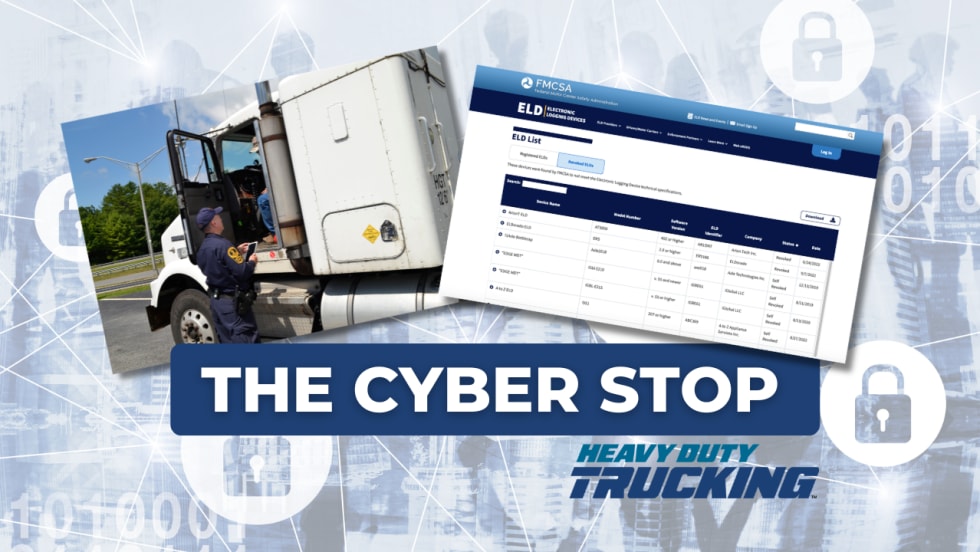
The Hidden Problem Behind FMCSA's ELD Revocations
NMFTA researchers say dozens of registered ELDs may be built on the same software platforms, allowing compliance and security concerns to persist even after individual devices are removed from the market.
Read More →
ATRI Wants Motor Carriers for Driver-Facing Camera Study
In this new study, the American Transportation Research Institute will explore how driver-facing cameras can impact safety and operational metrics in trucking fleets.
Read More →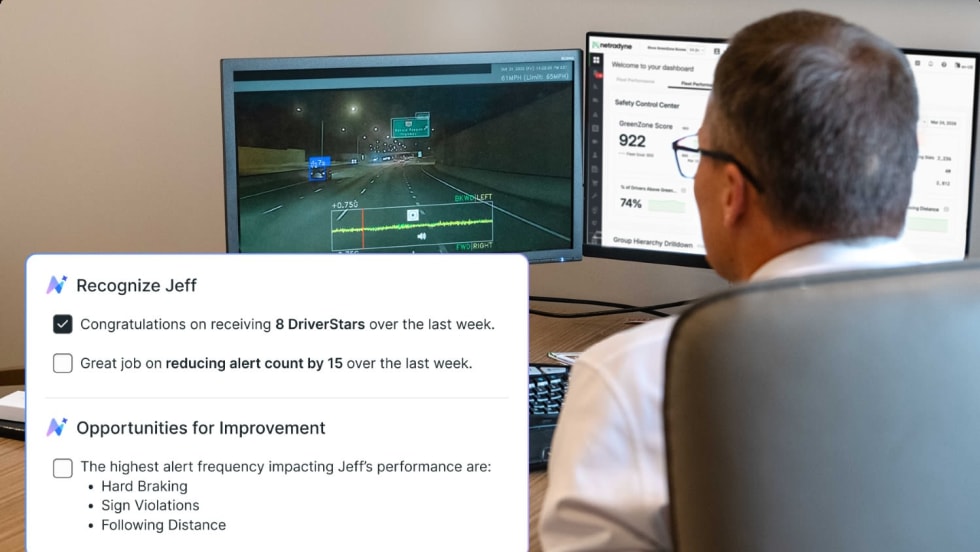
Netradyne Intelligence Uses New AI Agents to Automate Response to In-Cab Camera Data
The company called the next-generation in-cab camera safety platform "a fundamental shift from systems that report on what happened to systems that actively drive what should happen next."
Read More →Mack, Volvo Issue ‘Do Not Drive’ Recall on Possible Wheel-Offs
Owners will be sent advance notice not to operate their affected vehicles until the remedy is performed.
Read More →
Fleetworthy Integrates Lytx Video Snapshots into Safety+ Platform
A new Fleetworthy-Lytx integration gives fleet managers access to video context alongside safety event data, streamlining driver coaching and incident review.
Read More →
How Waste Connections is Using Data, Telematics, and AI
How do you manage and maintain more than 18,000 connected trucks? Data. Lots of it.
Read More →