




International Rolls Out Predictive Cruise Control for Class 8 Trucks
International Truck now offers predictive cruise control technology on its International ProStar and LoneStar Class 8 on-highway trucks.
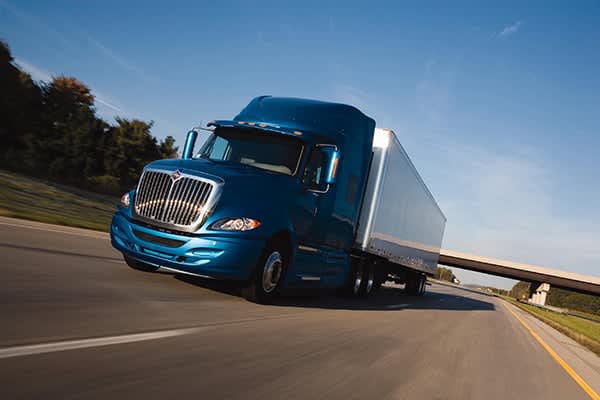
Photo: International Trucks
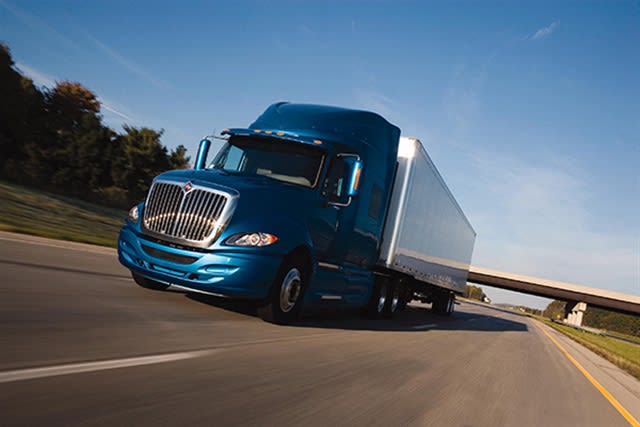
Photo: International Trucks
International Truck has announced it is now offering predictive cruise control technology as an option on its ProStar and LoneStar Class 8 on-highway truck models.
The proprietary system uses preinstalled GPS maps and the latest commercial route data to make adjustments to cruising speed without the need to “pre-drive” routes.
“Because the GPS maps and route data are already loaded, this smart technology will enable fleets and drivers to obtain greater fuel efficiency and reduced emissions right out of the box,” said Denny Mooney, senior vice president, Global Product Development. “As a result, drivers who frequently run different routes will experience the same benefit as drivers who are used to driving a standard route.”
Predictive cruise control optimizes cruising speed based on topographical GPS data inputs to help maximize fuel economy. International’s system monitors driver speed, engine load, truck weight and road grade to optimize the vehicle’s performance based on the road ahead. As the terrain changes, the predictive control modulates cruising speed to correspond to the topography.
“We’re seeing data indicating that this technology, when coupled with a Navistar or Cummins engine and an Eaton transmission, can increase fuel efficiency by up to 4%,” said Mooney. “By reducing the need for drivers to make frequent adjustments to the terrain, the system makes vehicles easier and safer to operate, thus helping our customers attract and retain new drivers and be more successful.”
In a July 13 conference call with reporters, Mooney explained that the predictive cruise software developed by Navistar incorporates mapping “so geographic features and major highway systems used by over-the-road trucks are built in.”
He said the system “looks ahead and knows what’s coming up and optimizes the most fuel-efficient way to operate the truck.” The predictive cruise will speed up as much as 5 mph over the set speed, then will let the speed drop down as much as 10 mph below set speed as need to help conserve fuel even when going up and down hills.
“It will vary speed and prevent engine braking to prevent downshifts,” he added. “The 5 and 10 mph variances can be reduced per driver or owner preferences. But [changing them] might reduce the ultimate efficiency of the truck. Ours is a little different than existing [predictive cruise control] systems which have to ‘learn’ the route, then change shift and throttle settings.”
Mooney also pointed out that because drivers may not expect the truck to speed up or slow down, “a lot of driver training is required to get driver comfortable” with predictive cruise control.
The optional system has its own stand-alone control module and communicates over the industry-standard J1939 data bus.
While International’s Predictive Cruise Control is initially being offered on ProStar and LoneStar on-highway trucks, Mooney said it would be possible for the OEM to offer it on the aftermarket as well at some point.
He added that the new system resulted from Navistar’s involvement in the Department of Transportation’s SuperTruck program.
More Fleet Management
Geotab Links Fleet Card to Vehicle Data
The new card combines fuel discounts with telematics-based purchase controls. Geotab’s analysis also points to potential savings from choosing lower-priced fuel stops.
Read More →
How MFA Helps Protect Trucking Fleets
Multi-factor authentication adds protection when passwords are stolen. Here’s how it works and where fleets should start.
Read More →
How Better Freight Data Helps Trucking Teams Get Ahead of Disruption
Trucking and logistics teams have plenty of data. The problem is getting the right information in front of the right people soon enough to act. Better-connected data can help teams spot trouble earlier and make smarter decisions before small problems become big ones.
Read More →

Trimble: Taking Artificial Intelligence in Trucking Beyond Faster Tasks
At Insight 2026, Trimble executives argued that fleets may need to redesign workflows to get more from AI as it introduced new products and enhancements. AI’s value will depend on how fleets combine automation with their people's knowledge.
Read More →
Build a bulletproof fleet: Uniting ELDs and dash cams for total compliance
An ELD can prove compliance, but it cannot always prove what happened on the road. Discover how uniting accurate ELD data with AI-powered dash cam video can help your fleet strengthen compliance, defend against liability, protect drivers and reduce operational costs.
Read More →
Nominations Open for HDT Emerging Leaders
Heavy Duty Trucking is looking for accomplished trucking fleet professionals under 40 who are making an impact and helping lead the industry forward.
Read More →
Why Private Fleets Are Taking More Freight
Private fleets are putting their own trucks on demanding customers and high-cost lanes as companies seek greater control over service, costs, and capacity.
Read More →
Color Match Smarter: Tools That Restore & Perform
For fleet managers and collision repair professionals keeping heavy-duty trucks on the road, getting the color right the first time isn't just about appearance — it's about efficiency, turnaround time, and bottom-line results. Discover how today's digital color tools are transforming the repair process from guesswork to precision.
Read More →
FMCSA Pauses Biennial-Update Enforcement Amid Motus Transition
Carriers whose updates were due on or after June 1 have more time, while FMCSA works to stabilize its new registration system and warns of phishing sites impersonating its new carrier registration system, Motus.
Read More →
2026 Blueprint for Countering Smarter Supply Chain Theft
Cargo theft is no longer just the cost of doing business. It's a multi-billion-dollar criminal enterprise exploiting vulnerabilities across your fleet, drivers, and supply chain.
Read More →