




Freight Shipments, Expenditures Hit Highest Levels of 2016 but Will it Continue?
Freight shipments and expenditures edged up in June after three months of lackluster performance, hitting their highest levels of the year, according to the Cass Freight Index – but it remains unclear if this is part of a larger trend.

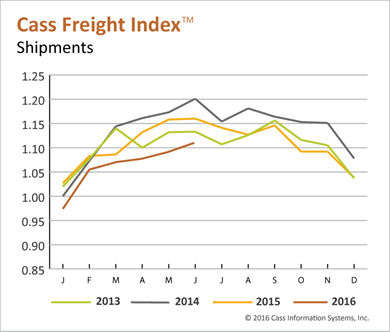

Freight shipments and expenditures edged up in June after three months of lackluster performance, hitting their highest levels of the year, according to the Cass Freight Index – but it remains unclear whether this is part of a larger trend.
The June freight shipments index climbed 1.7% from the month before, but it is still 4.3% below last year’s level and 7.6% lower than in June 2014.
Rosalyn Wilson, supply chain industry analyst and founder/president of the consulting practice FreightMatters, who provides analysis for the report, says stores are already stocking school supplies, which accounts for some of the increase.
She notes that after particularly slow traffic in April and May, the Association of American Railroads reports that carload shipments rose 29.3% and intermodal shipments jumped 23.4% in June. Also, The American Trucking Associations reported that May truck tonnage was up 2.7%. However, figures released just hours before the Cass Index showed a 1.5% decline in ATA's tonnage in June, while May’s figures was revised higher showing a 2.9% gain.
In addition, the freight-matching service provider DAT reported that spot market loads increased 28% in June, “indicating that truck tonnage should be up in June also,” Wilson said – but that didn’t happen, at least with ATA numbers.
“June’s shipments are in step with patterns that have been observed in the past few years, but are still well below the volume in the last two years," she said. "July usually sees a dip in the number of freight shipments, but the first part of July [this year] seems to be fairly robust."
Total freight expenditures reported by Cass jumped 3.9% in June from May, the second largest increase this year, but it's 8.8% below the level of June 2015.
Wison said the increase can be attributed to growth in shipments.
“DAT reported that both volumes and rates were up for most spot market moves. Abundant available truck capacity has provided strong competition for rail intermodal, holding down rates for both,” she said. “With the relatively slow and bumpy freight market so far in 2016, rates should stay flat with expenditure changes tied closely to the volume of freight shipments.”
If all of this leaves you feeling a bit confused, you’re not the only one, with Wilson calling the first half of the year’s economic performance “perplexing.”
“Consumer spending has been growing, although the effect on freight is small, as most of this increase has been in the service sector. Inventories are mostly unchanged at uncomfortably high levels, but the inventory-to-sales ratio fell in April for the first time in over a year,” she said.
Wilson also noted exports and imports are down, residential and commercial construction has been slowing, and consumer spending on goods is weak.
“That said, the manufacturing sector is awakening with a 3.9% growth in production, 2.3% increase in new orders and an 11.7% growth in order backlog," she said. The Federal Reserve recently decided against another interest rate hike, citing ‘considerable uncertainty’ in the U.S. economic outlook and ‘vulnerabilities’ from abroad.
The bottom line, according to Wilson, is that while the economy in the second quarter was stronger than the first, “the mixed signals in the air make the third quarter uncertain.”
Data within the Cass Freight Index includes all domestic freight modes and is derived from $25 billion in freight transactions processed by Cass Information Systems annually on behalf of its client base of hundreds of large shippers, accordign to the company, while annual freight volume per organization ranges from $1 million to over $1 billion.
More Fleet Management

How to Modernize Your TMS Without Replacing It [Podcast]
Before investing in a new transportation management system, take a closer look at what you've already got. AI, cloud technology and better integrations may offer ways to improve your trucking operations without starting over.
Read More →
Could Your Truck's Connected Devices Be a Cybersecurity Risk?
ELDs, telematics systems and driver tablets help fleets operate more efficiently. But every connected device needs protection against cyberattacks.
Read More →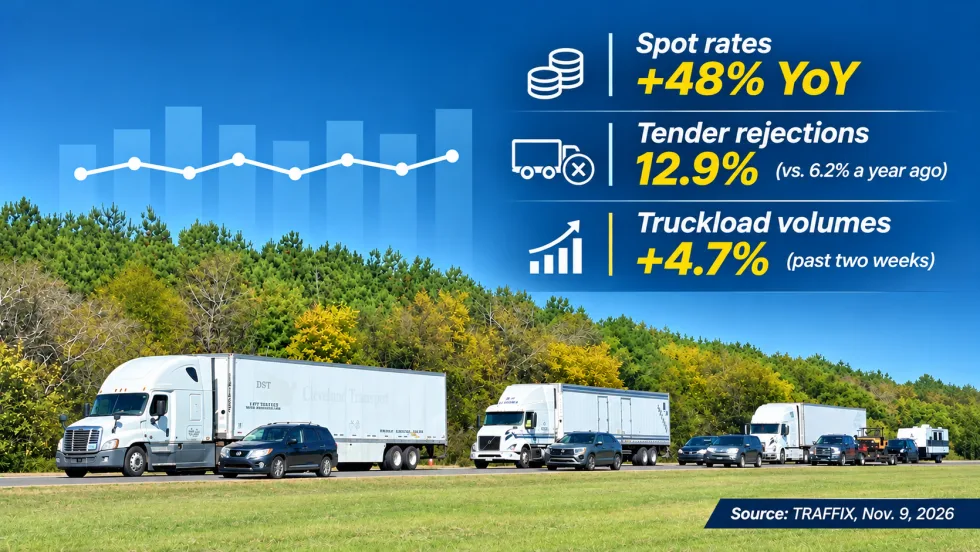
Holiday Freight Meets a Tight Trucking Market
There's no freight boom, but truckload carriers are finding themselves in a stronger position to negotiate rates. And holiday shipping demand could tighten the market further.
Read More →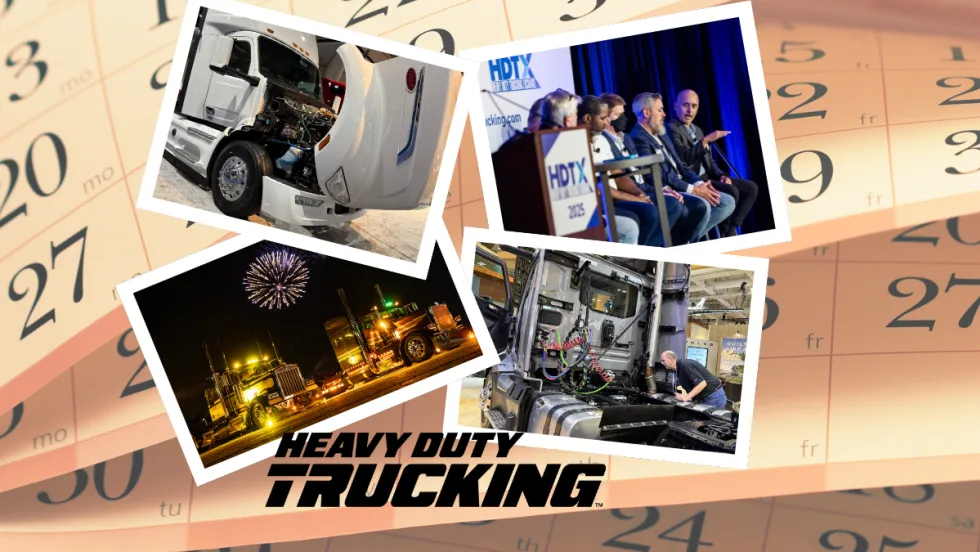
What Trucking Events are Happening in 2027?
Looking for trucking-related conventions, expos, and other events? Heavy Duty Trucking has developed this list of national and larger regional trucking shows and events.
Read More →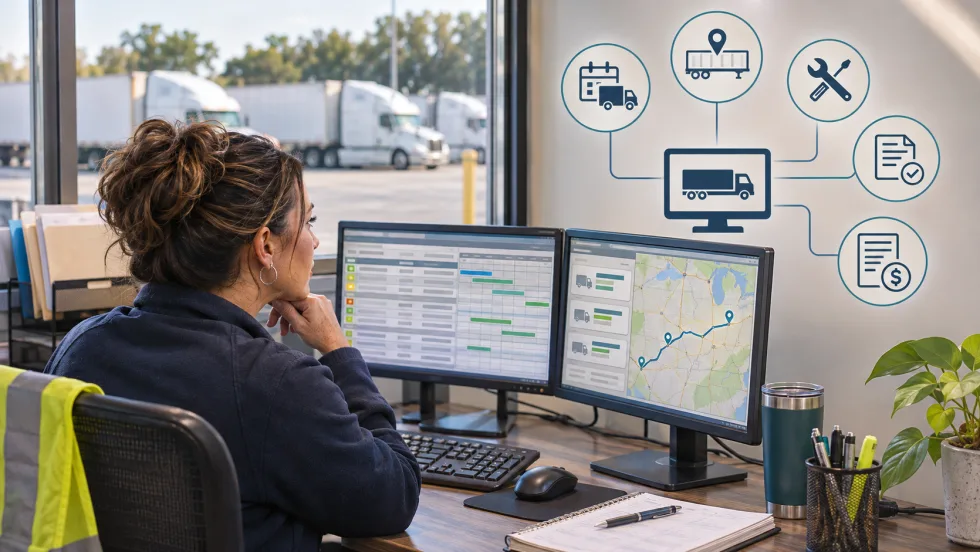
Does Your Trucking Fleet Need a New TMS?
Artificial intelligence and better integrations promise less busywork and more useful data. Can your TMS help your company solve problems? Do you need additional vendors or an upgrade? Or is it time to look for a new platform?
Read More →
Fleet Costs Shape ACT Expo 2027 Agenda
With diesel prices high and operating expenses under pressure, ACT Expo's 2027 agenda emphasizes fuel efficiency, AI, safety and the return on fleet technology investments.
Read More →
Does Your Trucking Fleet Need a New TMS? [Video]
Cloud technology, AI and new integrations are changing what transportation management systems can do. But does taking advantage of those advances mean replacing your existing TMS?
Read More →
Road Ready Becomes Saegic, Launches New Trailer Telematics Gateway
Clarience Technologies is rolling out new hardware and expanding its plans for connecting trailer telematics, maintenance data, and video.
Read More →
Give Your Trucking Fleet a Cybersecurity Walkaround
Your fleet's cybersecurity policies may look good on paper. These seven checks can help you find out whether they’re working.
Read More →
Kodiak Lines Up Fleets for Driverless Trucking
An agreement for 75 trucks, a new Texas freight lane, and progress on safety validation move Kodiak closer to its planned driverless highway launch.
Read More →