




How Automation, Technology Will Change Trucking in the Next Decade
The changes currently happening in technology and automation are likely to change trucking as profoundly as the development of the Interstate Highway System, predicted Noel Perry Thursday in FTR’s monthly State of Freight webinar.

The changes currently happening in technology and automation are likely to change trucking as profoundly as the development of the Interstate Highway System, predicted Noel Perry Thursday in FTR’s monthly State of Freight webinar.
“Most of the time, the future is not that much different, and the details of it are uncertain enough, that spending a lot of time worrying about what happens 10 years from now doesn’t make a lot of sense,” said Perry, an economist who has specialized in the transportation and logistics industry for decades.
In forecasting, he said, you concentrate on things that are both important to the industry and of a high probability. For a small fleet in the 1950s, the importance of highways that could halve transport times was evident. When President Eisenhower signed the bill establishing the Interstate Highway System, the probability of that change became not only high, but a virtual certainty.
Today, Perry said, “the explosion of digital calculating tools and automating tools will have an equally large effect on our business 10 years from now” as the highway system did on the business. “We see a lot of them being introduced and tested right now, so the likelihood is high.”
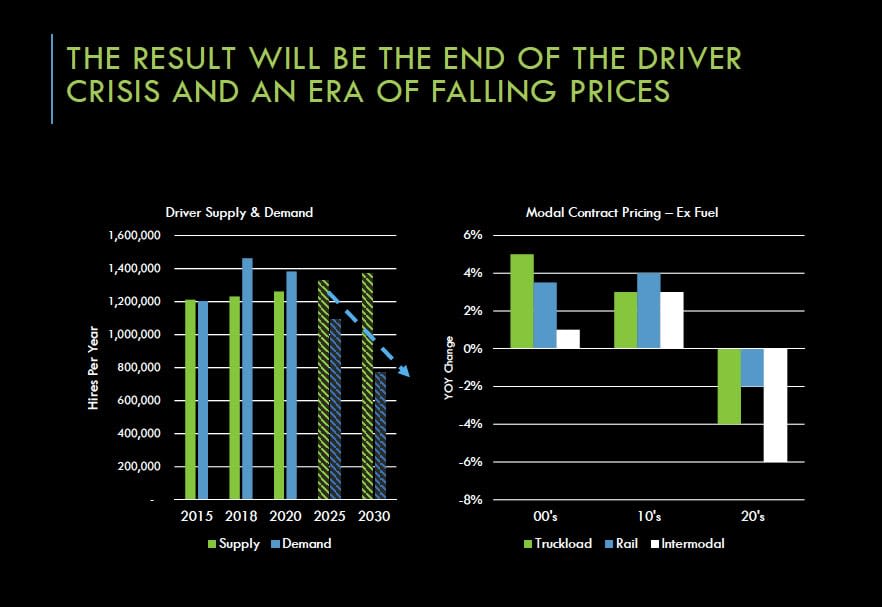
By the late 2020s, he said, we will no longer have a driver shortage, making it tough to get higher rates. Other costs will be lower. Yet taxes, he said, will be higher, as governments turn to trucking to not only pay for infrastructure but also for increasing social services for an aging population, and for the country’s rising debt and higher interest on that debt.
From an economic standpoint, however, a decade from now we’ll see that the explosion in automation “erases the advantage China has over us in labor costs and economies of scale.” Today’s automated manufacturing tools, he said, will be more affordable for smaller companies.
“That means the U.S., which has tremendous advantages in capital, logistics and materials, reverses its position as a high cost manufacturing location and becomes a low cost manufacturing location,” Perry said. “Even better than Mexico. A lot of the economic benefit we’ve lost overseas will come back. And it will just about offset the job losses from automation inside our manufacturing places.”
However, he said, these changes also will reduce the amount of transportation that’s required. As plants gain the ability to become smaller through automation, they can move closer to customers. We may see the re-opening of car factories in California, for instance. So length of haul goes down.
On top of that, he said, with automation comes less waste in the manufacturing sector.
“When you take waste and length of haul out, it’s very likely we’ll be moving fewer ton miles of freight than we do today. That’s great for the economy, very efficient; it’s not so good for us in transportation.
“The demand for transportation will change from a volume issue to a quality issue. These tools will require more precise transportation. It’s going to be about quality and service.”
Add to the increased efficiency and productivity of the manufacturing sector the potential for increased automation and “productivity” of transportation itself, and you could see the number of trucks needed reduced by as much as half, Perry projected.
“As we automate the construction and operation of our highways, capacity increases without changes in investment,” he said. If you just get everyone driving the same speed, for instance, you lose the inefficient “accordion effect” and reduce accidents. “If you put in some more sophisticated technology it’s possible to triple the capacity of any highway,” he said.
So other than increased taxes, he said, other costs will go down — driver costs, fuel costs, accident and insurance costs, etc.
Many of these technologies are already partially in play, he said. Look at navigation (“nobody carries maps anymore), automated paperwork in the form of electronic logs, automated lane management and following distance systems. Some fleets are already using these technologies, and some will be mandated. “So this stuff is coming at us very rapidly, more so than I thought originally.”
“When it happens, the driver shortage goes away,” Perry said. In 2018-2020, he said, we’ll still have a problem with the supply of drivers being less than demand because of regulatory problems.
“But once we get into the ‘20s and productivity goes up, supply will be higher and demand will be lower…. of course that has profound implications for pricing…. the only way we’re going to make money … is to emphasize quality.”
More Fleet Management
Where Electric Trucks Can Charge Now
New depots and truck-stop chargers gave electric trucks more places to plug in in 2026. Here’s where fleets can charge today, how megawatt charging works, and which freight routes to watch in 2027.
 Discuss with peers
Truck Tonnage Slips, Carrier Outlook Improves
For-hire truck tonnage fell 1.8% in October but was higher than a year earlier, and FTR raised its outlook for carriers for at least the next three quarters.
New Independent Contractor Rule Gives Trucking More Clarity
The Labor Department is once again changing how it determines who's an independent contractor. This time, the rule includes specific examples addressing trucking safety requirements, CDLs, and lease-purchase agreements.
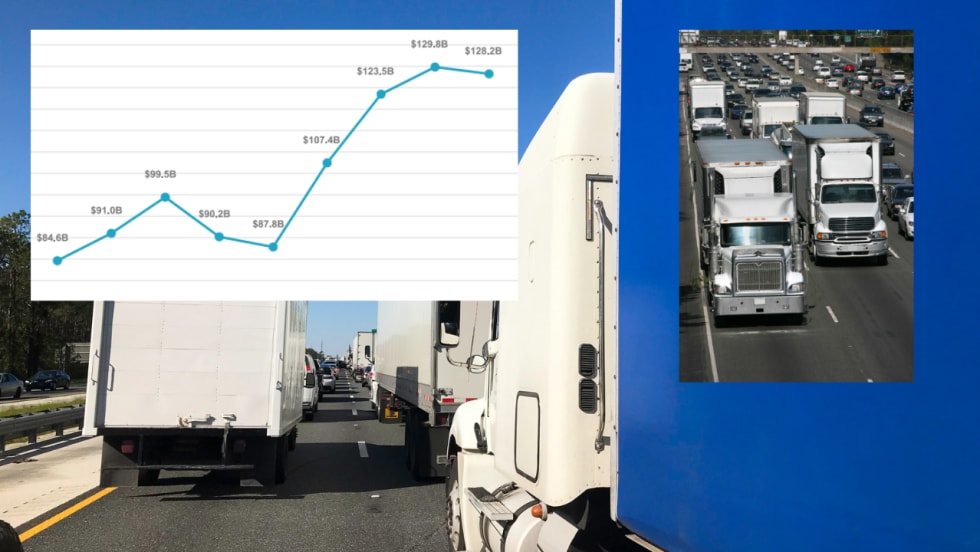
Trucking's Annual Congestion Costs Reach $128.2 Billion
That's the average cost, according to new ATRI research. And the wasted time and diesel are staggering.

How to Modernize Your TMS Without Replacing It [Podcast]
Before investing in a new transportation management system, take a closer look at what you've already got. AI, cloud technology and better integrations may offer ways to improve your trucking operations without starting over.

Could Your Truck's Connected Devices Be a Cybersecurity Risk?
ELDs, telematics systems and driver tablets help fleets operate more efficiently. But every connected device needs protection against cyberattacks.
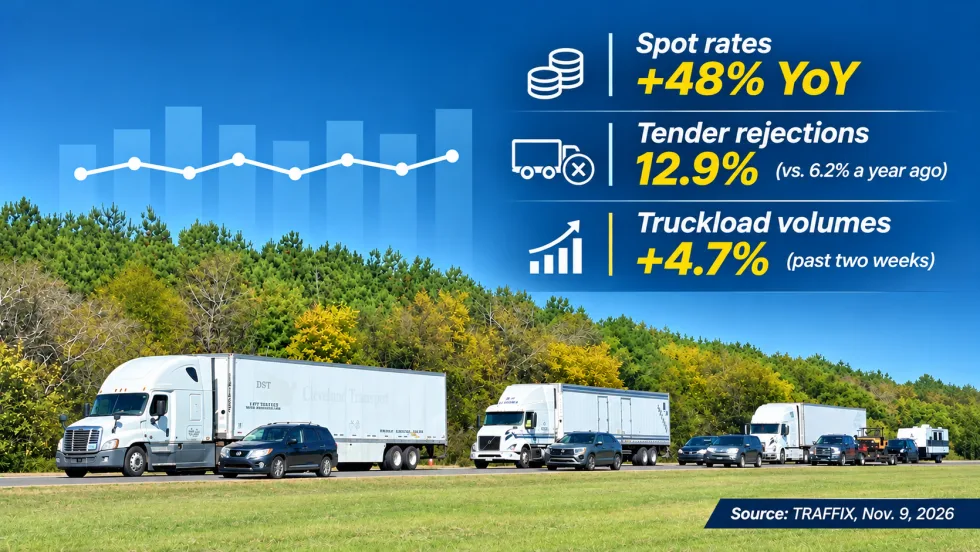
Holiday Freight Meets a Tight Trucking Market
There's no freight boom, but truckload carriers are finding themselves in a stronger position to negotiate rates. And holiday shipping demand could tighten the market further.
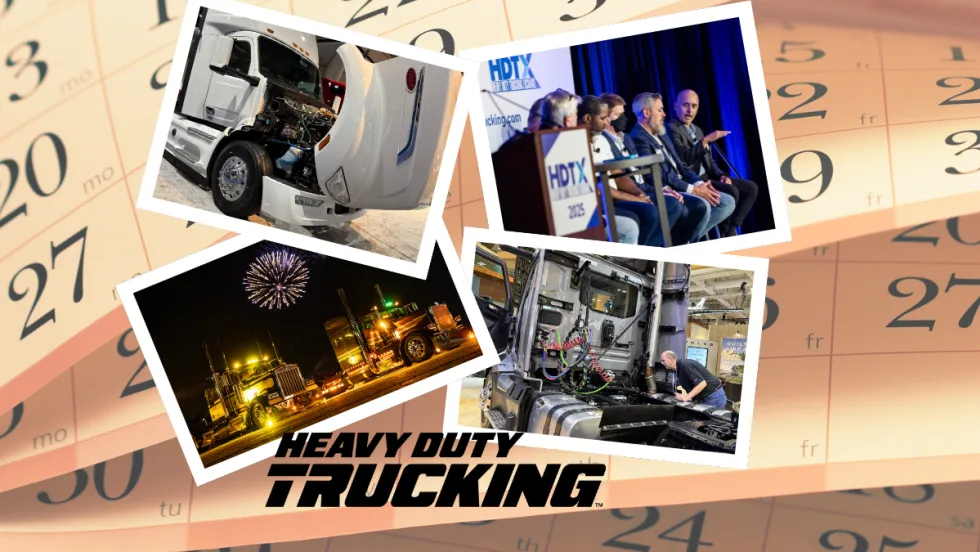
What Trucking Events are Happening in 2027?
Looking for trucking-related conventions, expos, and other events? Heavy Duty Trucking has developed this list of national and larger regional trucking shows and events.
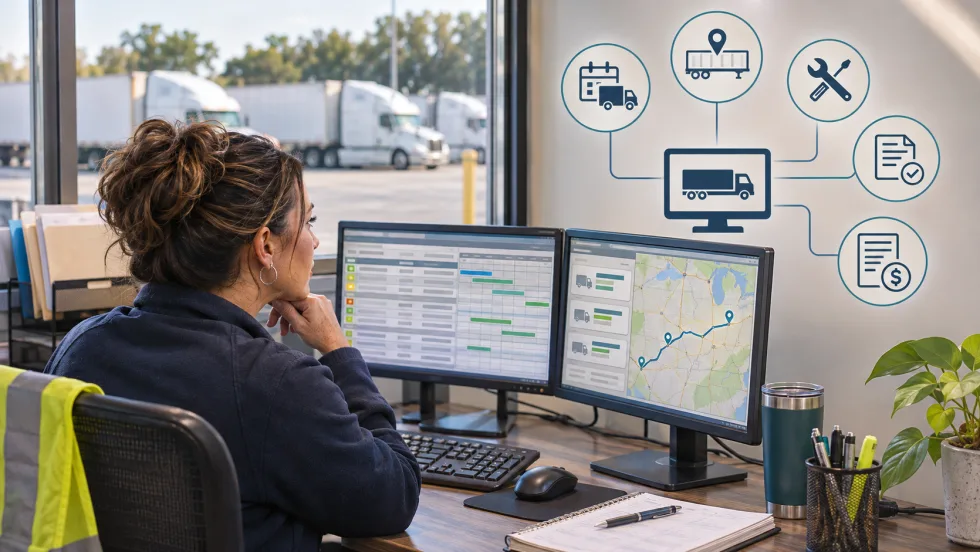
Does Your Trucking Fleet Need a New TMS?
Artificial intelligence and better integrations promise less busywork and more useful data. Can your TMS help your company solve problems? Do you need additional vendors or an upgrade? Or is it time to look for a new platform?
Fleet Costs Shape ACT Expo 2027 Agenda
With diesel prices high and operating expenses under pressure, ACT Expo's 2027 agenda emphasizes fuel efficiency, AI, safety and the return on fleet technology investments.