




FMSCA Extends Safety-Fitness Rulemaking Comment Period
The Federal Motor Carrier Safety Administration has extended the public comment period for its proposed rule on safety fitness determinations for motor carriers.

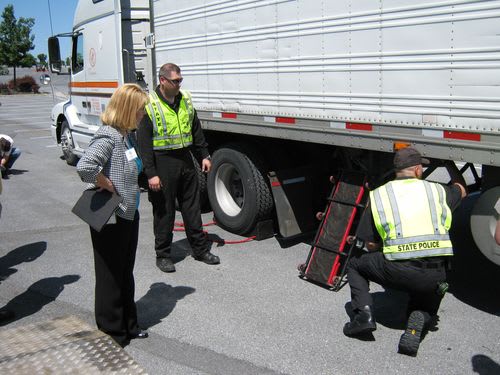
Photo: U.S. DOT

The Federal Motor Carrier Safety Administration has extended the public comment period for its proposed rule on safety fitness determinations for motor carriers.
The deadline for the submission of initial comments is now May 23, 2016. Reply comments will be due on or before June 23, 2016. FMCSA said that stakeholder requests led to the comment extension.
On January 21, the agency published a Notice of Proposed Rulemaking to amend the current methodology for issuing safety fitness determinations. Shortly after, several trucking associations petitioned for a 60-day extension of the comment period. Those requests were followed by the Owner Operator Independent Drivers Association’s petition for an even longer extension of 90 days.
Upon reviewing those requests, FMCSA said it decided to grant a 60-day extension “to provide all interested parties adequate time to submit comments on proposals in this rulemaking.” In the extension notice, FMCSA also corrected the title and date of an American Transportation Research Institute report that the original Notice of Proposed Rulemaking cited about the agency's Safety Measurement System.
FMSCA said the proposed SFD rule would replace the current three-tier federal rating system of “satisfactory–conditional–unsatisfactory,” which has been in place since 1982, with a single determination of “unfit.” A carrier that is determined to be unfit would be required to either improve its operations or cease operations.
The agency also said the proposal would permit FMCSA to assess the safety fitness of approximately 75,000 companies a month. By comparison, it is now only able to investigate 15,000 motor carriers annually– with less than half of those companies receiving a safety rating.
Per FMCSA, the proposed methodology would determine when a carrier is not fit to operate commercial motor vehicles based on:
The carrier’s performance in relation to a fixed failure threshold established in the rule for five of the agency’s Behavior Analysis and Safety Improvement Categories (BASICs)
Investigation results; or
A combination of on-road safety data and investigation information
The requests for extending the comment period reflects the controversy that the SFD rulemaking stirred up— even before it was officially released.
About a week before the NPRM was published, a coalition of eight associations representing trucking interests challenged FMCSA’s intentions in a letter sent to several lawmakers who had championed FMCSA reform provisions within the FAST Act highway bill passed late last year. FMCSA Chief Counsel T.F. Scott Darling III was copied as well.
The group of stakeholders, which includes the Western States Trucking Association and the National Association of Small Trucking Companies, had contended that “FMCSA plans to ignore the clear mandates of the FAST Act… [with a rulemaking] that would change existing standards for determining the safety fitness of individual motor carriers.”
In their Jan. 12 letter, the associations argued that “it is apparent that the proposed [SFD] rule would incorporate the same ‘on-road safety performance data’ that FMCSA has used in calculating BASICs” under SMS and CSA. “We believe that if FMCSA goes ahead with its proposed ‘quickie’ rulemaking on use of SMS/CSA data,” such action would disregard at least three provisions of the FAST Act.
They added that “we are expressing our concerns that any Notice of Proposed Rulemaking involving a safety fitness determination at this time in light of the strictures imposed by the FAST Act is highly inappropriate and will be challenged.”
Both initial and reply comments should be identified by Docket Number FMCSA-2015-0001 and submitted to the agency via any of these methods:
Federal eRulemaking Portal by going to www.regulations.gov and following the online instructions for submitting comments
Fax to 1-202-493-2251
Mail to Docket Services, U.S. Department of Transportation, Room W12-140, 1200 New Jersey Avenue SE., Washington, DC 20590-0001
More Safety & Compliance

Farewell, CDL: Why I'm Giving Up My Commercial Driver's License
After more than 20 years as a CDL holder, HDT Executive Editor Jack Roberts is letting his commercial license expire. Not because he wants to — but because trucking's nuclear verdict crisis has made the risks of public-road test drives too great for editors, manufacturers, and everyone involved.
Read More →
Enhance Fleet Performance with High-Efficiency Auxiliary Power Units
Drive sustainable cost savings while increasing driver comfort during short- and long-haul logistics operations.
Read More →
Wabash Trailers Recalled for Improperly Installed Underride Guards
More than 900 Wabash dry van trailers may not comply with the Federal Motor Vehicle Safety Standard for rear impact guards.
Read More →

Why K&B Trucking Is Embracing AI and Driver Safety Technology
Crunching data and embracing artificial intelligence are key in K&B Trucking's safety efforts, says the company's safety director.
Read More →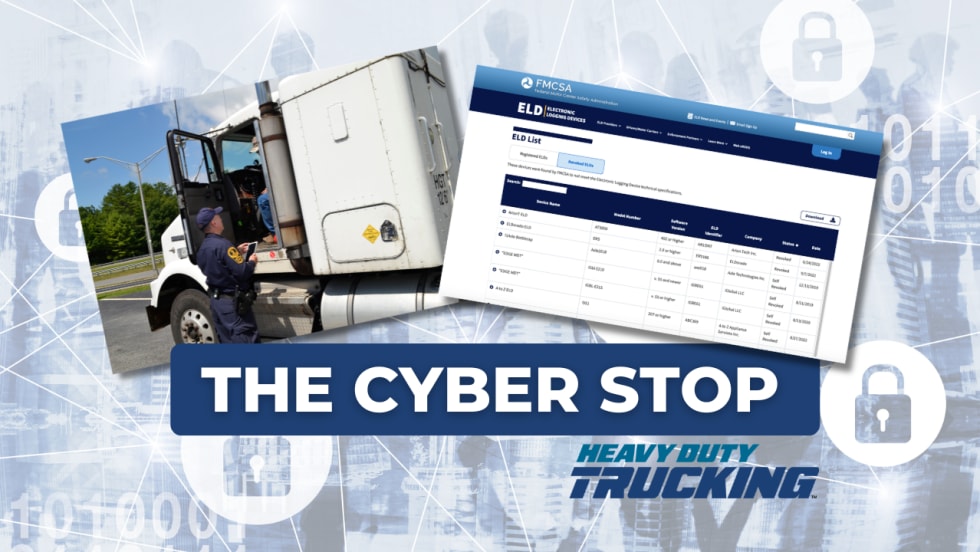
The Hidden Problem Behind FMCSA's ELD Revocations
NMFTA researchers say dozens of registered ELDs may be built on the same software platforms, allowing compliance and security concerns to persist even after individual devices are removed from the market.
Read More →
ATRI Wants Motor Carriers for Driver-Facing Camera Study
In this new study, the American Transportation Research Institute will explore how driver-facing cameras can impact safety and operational metrics in trucking fleets.
Read More →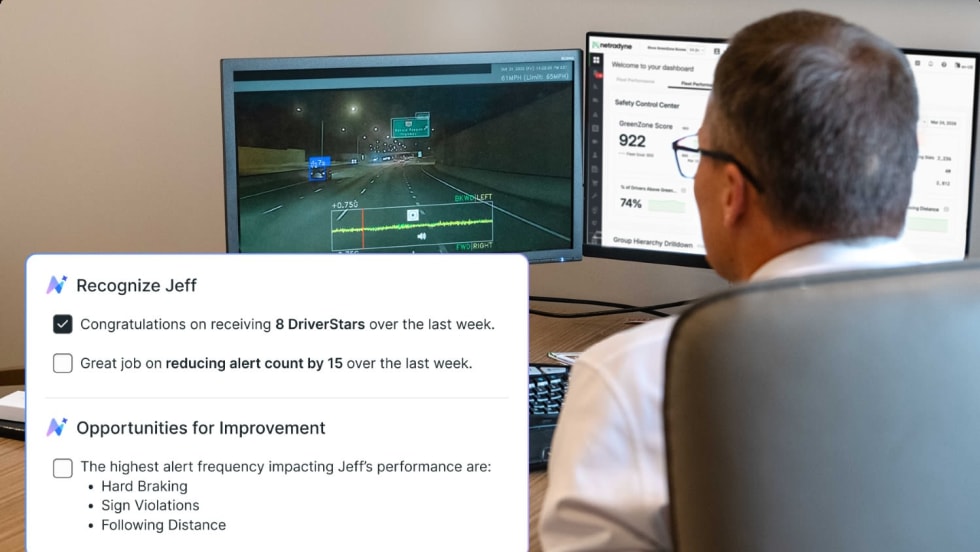
Netradyne Intelligence Uses New AI Agents to Automate Response to In-Cab Camera Data
The company called the next-generation in-cab camera safety platform "a fundamental shift from systems that report on what happened to systems that actively drive what should happen next."
Read More →Mack, Volvo Issue ‘Do Not Drive’ Recall on Possible Wheel-Offs
Owners will be sent advance notice not to operate their affected vehicles until the remedy is performed.
Read More →
Fleetworthy Integrates Lytx Video Snapshots into Safety+ Platform
A new Fleetworthy-Lytx integration gives fleet managers access to video context alongside safety event data, streamlining driver coaching and incident review.
Read More →
How Waste Connections is Using Data, Telematics, and AI
How do you manage and maintain more than 18,000 connected trucks? Data. Lots of it.
Read More →