




A number of manufacturers also noted that reduced capital spending across the energy sector had weighed on demand.
Economic Watch: Manufacturing Improves as Construction Jumps
While activity in the nation’s manufacturing improved in January from the month before, according to reports on Monday, there is disagreement as to whether this sector is expanding or shrinking.

Evan Lockridge・Former Business Contributing Editor

5 min to read

While separate reports issued Monday show activity in the nation’s manufacturing improved in January from the month before, there is disagreement as to whether this sector is expanding or shrinking.
According to a survey of nation’s supply executives by the Institute of Supply Management, manufacturing contracted in January for the fourth consecutive month, with its Purchasing Managers’ Index (PMI) registering 48.2%, up 0.2 of a percentage point in December.
A reading above 50% indicates that the manufacturing economy is generally expanding while below 50% indicates that it is generally contracting. The good news is, the group says a reading above 43.2% over a period of time indicates an expansion of the overall economy, and in January it was above this reading for the 80th straight month.
The New Orders Index registered 51.5%, an increase of 2.7 percentage points from the seasonally adjusted reading of 48.8% in December. The Production Index registered 50.2%, 0.3 of a percentage point higher than the seasonally adjusted December reading of 49.9%.
“Comments from the panel indicate a mix ranging from strong to soft orders, as eight of our 18 industries report an increase in orders, and seven industries report a decrease in orders,” said Bradley J. Holcomb, chair of the Institute for Supply Management Manufacturing Business Survey Committee. "The past relationship between the PMI and the overall economy indicates that the PMI for January corresponds to a 1.6% increase in real gross domestic product (GDP) on an annualized basis."
A separate report from a different organization, also based on a survey of manufacturers, was slightly more positive, showing output and new orders both rising at faster rates than at the end of 2015.
At 52.4 in January, the final seasonally adjusted U.S. Manufacturing Purchasing Managers’ Index (PMI) from the financial information services provider Markit was up slightly from December’s 38-month low of 51.2.
Like the ISM index, a reading above 50 indicates expansion.
The headline index showed a moderate improvement in overall business conditions at the start of this year, but the latest reading was still the second-lowest since October 2013.
“Production volumes were reported to have increased at a solid pace in January, with the rate of expansion accelerating from December’s recent low,” the report said. “Reports from survey respondents cited improved spending patterns, in particular from domestic clients. Reflecting this, latest data pointed to a rebound in new business growth to its fastest for three months.”
According to Markit, anecdotal evidence suggested that improving U.S. economic conditions continued to boost new business volumes, although a number of manufacturers also noted that reduced capital spending across the energy sector had weighed on demand. At the same time, new export sales increased only marginally in January, with the rate of expansion slower than that recorded for total new work.
“One bright light appeared, in that order book growth picked up, led by an upturn in domestic demand," said Chris Williamson, chief economist at Markit. "However, hiring remained in the doldrums, suggesting that firms remain cautious in relation to the business outlook and reluctant to expand capacity.
“The manufacturing sector continues to struggle against the headwinds of weak global demand, the strong dollar, slumping investment in the energy sector and rising financial market uncertainty, all of which mean the goods-producing sector looks set to act as a drag on the wider economy again in the first quarter of 2016," Williamson said.
The persistent downturn in manufacturing activity, while showing signs of abating, is occurring against a backdrop of sluggish global demand and has been further buffeted by the appreciation of the U.S. dollar, with the trade-weighted currency rising to a 12-year high in January, according to RBC Economics.
“Today’s report indicates that the impact of these headwinds on external demand for manufactured goods from the U.S. may be easing,” it said, while noting as with December, the bulk of the headline decrease reflected a pullback in manufacturing employment.
Consumer Spending Level as Personal Savings Jump
Another facet of the economy reported Monday was also lukewarm at best.
According to the U.S. Commerce Department, personal spending, which measures everything people buy, from apples to autos, in December was unchanged from the month before. November’s increase was revised upward to a 0.5% increase from October.
For all of 2015, consumer spending increased 3.4%, weaker than 2014’s improvement of 4.2% from the year before.
Even though personal income in 2015 jumped 4.5% from the year before – the largest gain since 2012 – consumers decided to hang on to their money, with personal savings in December at the highest level in three years.
“Amid ongoing uncertainty and mounting signs of weakness in the U.S. and global economy, American consumers continued to tighten their purse strings throughout the key holiday spending season,” said Stifel Chief Economist Lindsey Piegza. “Lower energy prices helped to provide a floor to spending, but rather than translating into additional consumption, the average American squirreled away those costs savings, something they do when they are concerned about the future and their financial footing.”
The reason for this performance, Piegza said, is that job growth remains positive but hardly robust enough to put upward pressure on wages, “still bouncing around the range established since the end of the recession. Without continued improvement in job creation, high-wage, full time job creation, there is little expectation for additional income growth, which will continue to moderate consumers' spending patterns.”
Construction Spending Highest in Eight Years
A fourth report on Monday showed lackluster activity for construction spending in the final month of last year, but overall, 2015 spending showed a huge improvement from the year before.
The Commerce Department reported just a 0.1% increase in December from the month before, following a downwardly revised decline of 0.6% in November from October. The reason was a drop in nonresidential building, including factories and offices, that was the largest since January 2013, while residential construction gained 0.9% in December.
However, when overall construction in 2015 is compared to the year before it increased 10.5%, the biggest annual gain since 2007. That follows a 9.4% increase in 2014.
Last year home construction increased 12.6% from 2014 while private nonresidential building was up nearly as much.
More Fleet Management

Public Wi-Fi Cybersecurity Risks: How Truck Drivers and Fleets Can Protect Their Data
Public Wi-Fi can expose truck drivers and fleets to credential theft, malware, and other cyber threats. Here’s how to reduce the risk on the road.
Read More →
For Nicky Cupp, Fleet Innovation Starts With Frustration
HDT Truck Fleet Innovator Nicky Cupp turns everyday pain points at Fraley & Schilling into opportunities for better technology and smarter processes.
Read More →
Adam Buttgenbach’s Approach to Electric Trucks: Start With Where They Fit
HDT Truck Fleet Innovator Adam Buttgenbach helped PepsiCo build one of North America’s largest EV fleets by focusing on where electric trucks make operational sense.
Read More →
Deen Albert: Let Automation Do the Math, People Make the Decisions
HDT Truck Fleet Innovator Deen Albert makes sure people are still at the heart of operations at Grand Island Express, even while adopting artificial intelligence tools. AI-assisted dispatch helped boost revenue 25% with the same number of trucks.
Read More →
Trimble’s New AI Agent Takes Aim at Fleet Back-Office Busywork
Arc Agent works across Trimble TMS products to automate repetitive tasks such as freight orders, maintenance, invoices, fuel costs and more.
Read More →
How HDT’s 2026 Truck Fleet Innovators Are Rethinking Fleet Operations
Meet five trucking leaders who are challenging assumptions, solving operational problems, and putting innovative ideas to work.
Read More →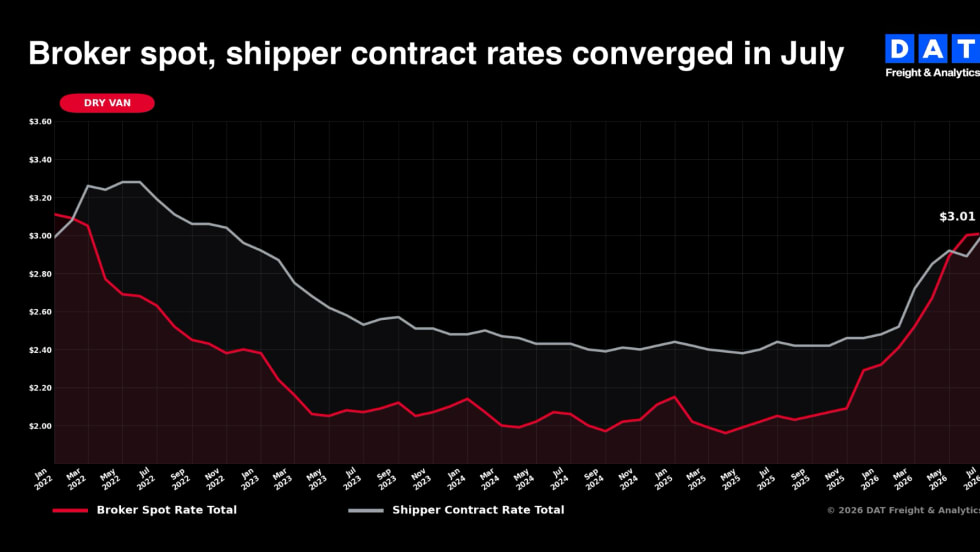
Tight Trucking Capacity Pushes Rates Higher Even as Freight Volumes Fall
“Spot rates moving ahead of contract rates have historically signaled a tightening market, but we haven’t seen a capacity-driven market quite like this one,” said DAT's Dean Croke.
Read More →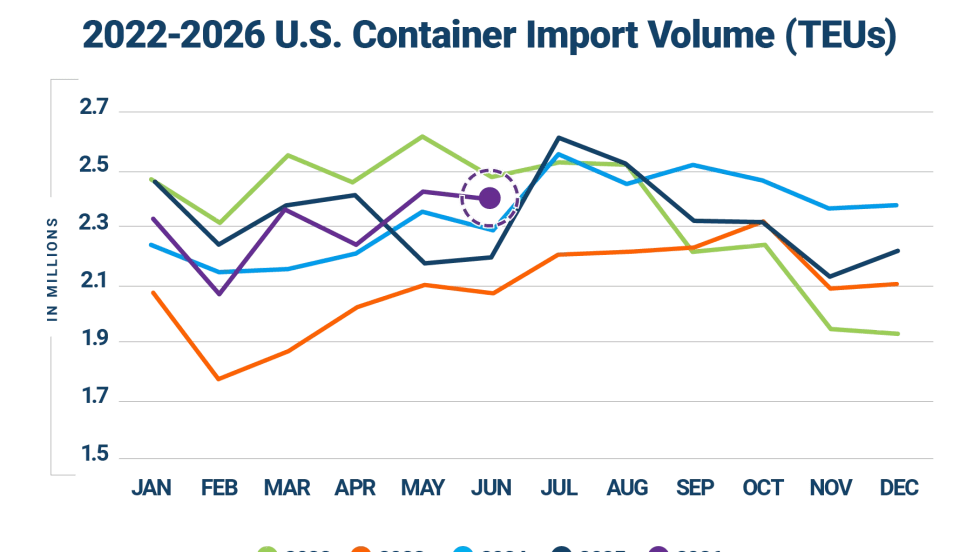
Import Cargo’s Early Peak Season is Winding Down
There was an early start to peak season this year at the nation's gateway ports, as retailers brought in merchandise ahead of tariff changes in late July and responded to other supply chain uncertainties,
Read More →
Fewer Cargo Thefts, Bigger Losses: Criminals Target Higher-Value Loads
CargoNet says organized theft rings are stealing fewer shipments but choosing more valuable freight, including metals and technology, resulting in record losses.
Read More →
How Innovative Trucking Leaders Turn Change Into an Advantage
As the pace of change accelerates in trucking, the fleets that adapt best have more than the latest technology. They have cultures that embrace improvement.
Read More →