




Related: Starship Rig Shooting for Top MPG
Daimler: Tests Show Integrated Approach Ups Fuel Efficiency
Daimler Trucks found 14% reductions in CO2 emissions and improved fuel economy using a comprehensively optimized truck as part of the company’s Efficiency Run tests.
by Staff
November 3, 2015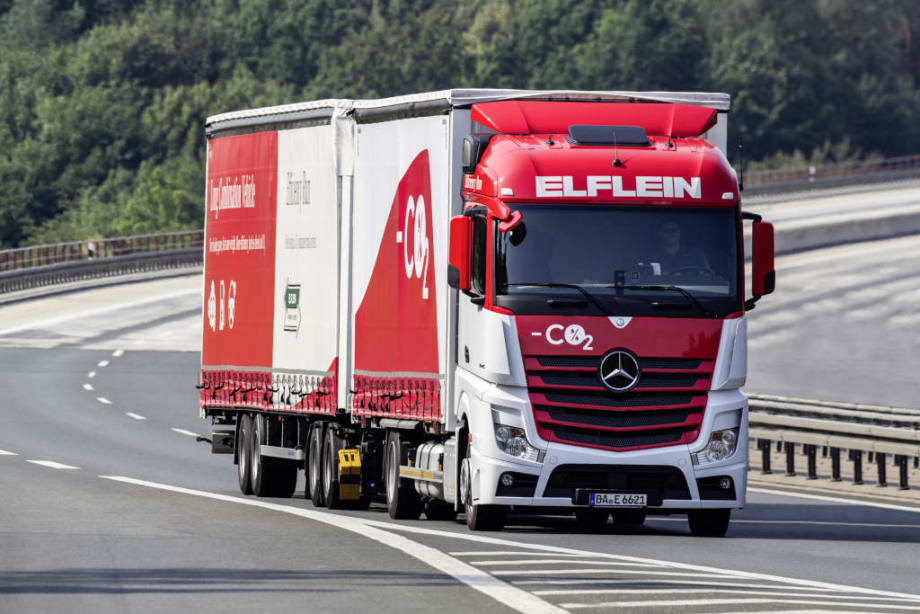
Photo: Daimler Trucks
2 min to read
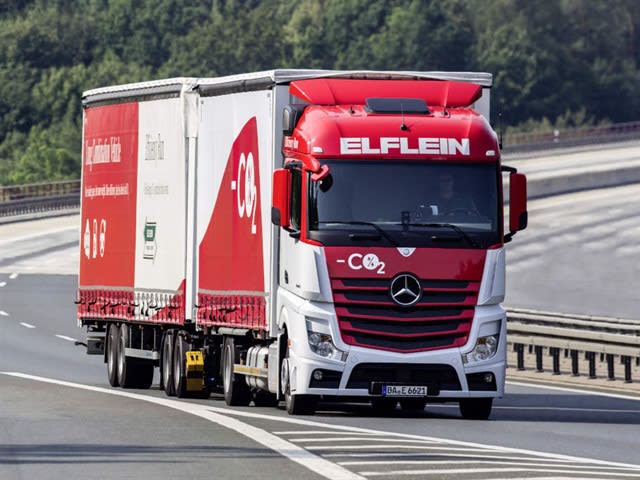
Photo: Daimler Trucks
Germany's Daimler Trucks found 14% reductions in CO2 emissions and improved fuel economy using a comprehensively optimized truck as part of the company’s Efficiency Run tests.
Using efficienct technology that involved all parts of a vehicle and trailer rather than focusing on a single component, Daimler’s tests found that each truck consumed around 12% to 14% less fuel than standards vehicles in each fleet.
The Efficiency Run took place in Berlin, Germany in cooperation with German logistics companies DB Schenker Logistics, Grosse-Behne and Elflein.
It involved freight being driven on normal roads under realistic conditions using two Mercedes-Benz Actros semi-trailer combinations. The tests were measured and certified by an independent testing organization known as DEKRA.
“We have proven [that] if we want to significantly further reduce both fuel consumption and CO2 emissions in road transport, we need to look beyond just the engine,” said Wolfgang Bernhard, Daimler board member. “We must widen our focus to include tires, semi-trailer and other key components.”
The tests also investigated the potential of the Long Combination vehicle and found that fuel consumption was reduced by around 17% compared with standard semi-trailer combinations used in volume-based transport.
For the Efficiency Run, Daimler wanted to reduce emissions and improve efficiency using real-world components and conditions. The company chose standard tractor units with standard powertrains; in this case an Actros 1842 hooked up to a weight-optimized Krone Eco trailer.
The goal was to adopt an integrated approach in which all participants involved in freight transportation could take part in achieving targets including manufacturers, body and tire suppliers, logistics companies and even politicians.
Efficiency Run also stressed improvements in vehicle operation such as driver training, cargo pooling, infrastructure and fleet renewal.
“Our aim is to ensure that customers who buy a Mercedes-Benz Actros have the most efficient vehicle in its class so, naturally, we were especially keen to see how much more optimization is possible on the vehicle as a whole,” said Stefan Buchner, head of Mercedes-Benz Trucks. “Reductions of up to 14% on the standard semi-trailer combination clearly exceeded our expectations.”
More Fuel Smarts

Why Diesel Price Relief Efforts May Fall Short
Diesel prices have eased from September’s record high, but doubts about additional Russian supply and limits on dyed-diesel tax relief mean trucking fleets still face expensive fuel. And prices could go higher.
Read More →
Why Small Fuel Savings Matter in Trucking
Can better fuel economy help pay for driver raises? In this podcast, GP Transco explains how small efficiency gains create room to reinvest in its people.
Read More →
How GP Transco Cuts Trucking Fuel Costs, a Tenth of a Gallon at a Time
What’s another tenth of a mile per gallon worth? GP Transco shares how equipment upgrades and driver coaching turn small gains into meaningful fuel savings.
Read More →
Electric Yard Tractors Move Beyond Pilots
Operating-cost savings have overtaken sustainability goals as the leading reason surveyed fleets are adopting battery-electric terminal tractors, according to new NACFE research.
Read More →
Geotab Links Fleet Card to Vehicle Data
The new card combines fuel discounts with telematics-based purchase controls. Geotab’s analysis also points to potential savings from choosing lower-priced fuel stops.
Read More →
Fleet Economics Shape Electric Truck Outlook
ACT Research expects costs, charging infrastructure, and technology improvements to drive zero-emission commercial vehicle adoption as federal regulations and incentives retreat.
Read More →
Wex Adds Cardless Fuel Payments for Over-the-Road Customers
A new fuel card feature for Wex customers offers convenience and security.
Read More →
New California Law Could Shed Light on Electric Truck Prices
Why do battery-electric Class 8 trucks remain so expensive? A California bill signed by Gov. Gavin Newsom would give fleets and state agencies more visibility into what manufacturers charge.
Read More →
How Volvo Updated Its D13 for EPA 2027 [Watch]
Volvo’s updated D13 promises lower emissions without sacrificing performance or fuel economy. Take a closer look at what changed inside the engine in this HDT Spotlight video.
Read More →
Diesel Price Spike Shortens Payback for Natural Gas Trucks, Report Says
Energy Vision estimates fleets could recover the higher purchase price of an RNG-fueled Class 8 tractor in 1.3 to 2.8 years under current fuel-price scenarios.
Read More →