




Truck Size/Weight Study Dinged by Outside Agency
The Dept. of Transportation’s Comprehensive Truck Size and Weight Limits Study “lacks a consistent and complete quantitative summary of the alternative configuration scenarios... and major categories of costs are not estimated,” contends a study review released by the Transportation Research Board.

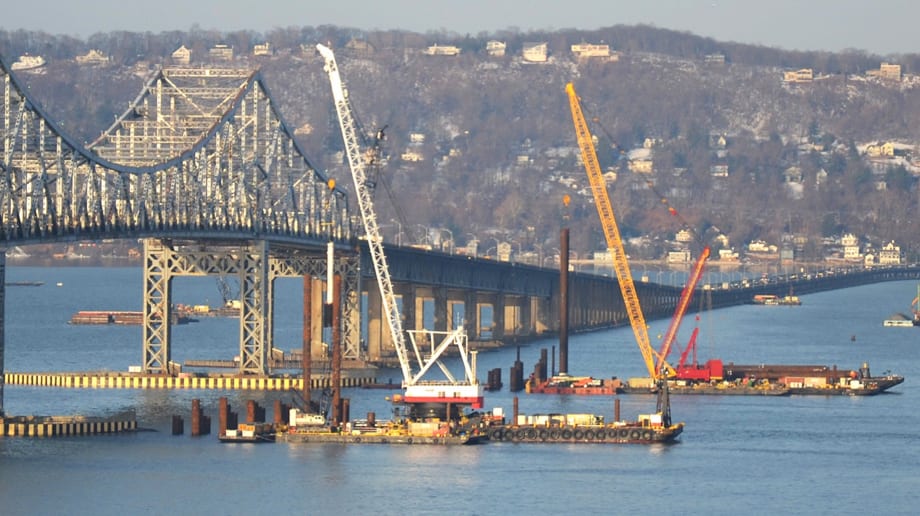
TRB says DOT study is lacking in how it estimates impact of future changes in truck size/weight limits, such as to bridge structural costs. Photo: DOT
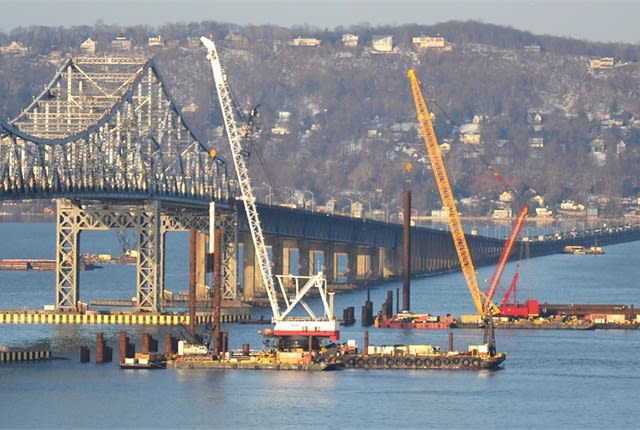
TRB says DOT study is lacking in how it estimates impact of future changes in truck size/weight limits, such as to bridge structural costs.Photo: DOT
The Dept. of Transportation’s Comprehensive Truck Size and Weight Limits Study falls short in how it estimates the impact that changes to federal size and weight limits might have on everything from pavement wear to highway safety, according to a peer review of the study released October 8 by the Transportation Research Board of the National Academies of Sciences, Engineering, and Medicine.
The board said the study “lacks a consistent and complete quantitative summary of the alternative configuration scenarios, and major categories of costs -- such as expected bridge structural costs, frequency of crashes, and infrastructure costs on certain roads-- are not estimated.”
DOT had requested TRB to convene a committee to review the congressionally mandated size/weight study, which has yet to be completed. Last year, that committee issued a “letter report” that reviewed preliminary products of the study.
The board’s new “final letter report” goes further. It assesses the methods and data DOT used to come up with estimates of how changing federal truck size and weight limits would impact bridges, pavement, the shares of total freight traffic carried by trucks and other freight modes, safety, and the enforcement of truck regulations.
TRB chided the DOT study for not providing “a framework for understanding all the costs and benefits” based on results of present and past studies, including:
A comprehensive list of the categories of costs and benefits
The features of a proposed regulatory change that influence each category
Approximate sizes of impacts on shippers, truck operators, road users, and the public
The categories that are likely to be critical to evaluating regulations
“The committee also identified assumptions and simplifications in the DOT study that might result in misleading estimates of infrastructure, traffic, and safety impacts,” TRB stated.
TRB pointed out that its report “does not take a position on whether or how to change current federal truck size and weight limits," only recommendations for how to better estimate the impact of any changes.
This summer, DOT had declared that “data limitations” uncovered by its research on the impact of increasing truck size and weight limits should at this point preclude changing “relevant laws and regulations.”
In a June 5 letter to Congress detailing the informational deficiency, DOT Under Secretary for Policy Peter Rogoff said that the research effort “revealed very significant data limitations that severely hampered the Federal Highway Administration’s efforts to conclusively study the effects of the size and weight of various truck configurations.”
At that time, DOT said that the next step it would take toward completing its mandated report would involve meeting with an “independent peer review team,” managed by TRB, as well as seeking public comment. DOT stated then that despite the data shortcomings uncovered, the technical reports on size and weight “provide an opportunity for experts in the field to comment in anticipation of the final report to Congress.”
“Troubling” is how the Coalition for Efficient & Responsible Trucking, a nonprofit organized by leading LTL carriers to lobby for twin 33-ft trailers, characterized the TRB review.
“Every public policy maker should be troubled by the National Academies of Sciences findings that the Federal Highway Administration for the past five years has been ignoring a wealth of valuable research while failing to consider relevant and available data in preparing its MAP-21 Comprehensive Truck Size and Weight Report to Congress,” said CERT spokesman Ed Patru.
“The National Academies' conclusion that ‘a more comprehensive and useful response would have been possible,’ is an understatement, to say the least,” he added.
The Trucking Alliance for Driver Safety & Security, a coalition of trucking businesses that lobbies for safety improvements, finds fault with the push in general to liberalize truck size and weight laws.
“Both the TRB and the USDOT ignore that truck size and weight increases are unnecessary if the U.S. trucking industry has an ample supply of trucks and trailers to meet demand, and the industry does,” Lane Kidd, the Alliance’s managing director told HDT. “However, productivity does suffer when hundreds of thousands of truck drivers sit idly for hours at freight docks each day, waiting to unload and load their freight, or when millions of truck drivers inch along in congested traffic, because politicians won’t spend enough money to improve our highways.
“Productivity won’t be a problem if Congress and the nation’s shippers do more to help truck drivers actually drive the hours that the law will allow, and this will help trucking companies avoid the unnecessary risks and liabilities that heavier and longer truck weight limits would require," he added.
On the other hand, a group reportedly funded by the railroad industry, which specifically lobbies against liberalizing federal truck size and weight limits, sees the TRB report as reinforcing one of its key arguments.
"The TRB review underscores a fundamental point-- the lack of data surrounding the impacts of allowing bigger, heavier trucks on the roads,” said Shane Reese, spokesman for the Coalition Against Bigger Trucks, in a statement.
“The reason so little data exists is that states and law enforcement have been unwilling to allow these bigger trucks on the roads, given the abundant evidence that they make passing, merging, and turning at intersections more difficult and take longer to stop.," he continued.
Reese also contended that the TRB review “does not support the charge by the American Trucking Associations that the USDOT study was biased against the trucking industry.” Rather, he said “if anything,” it shows that DOT “likely underestimated the damage that longer, heavier trucks will do to bridges and did not account for the major infrastructure and safety impacts on local communities. Given the panel's recommendations, Congress should put the brakes on 91-foot-long trucks and heavier trucks."
Apparently, Reese was referencing the position against the DOT study outlined by ATA back in June when the trucking lobby declared the release of the “self-acknowledged incomplete study [was] timed to color [the] current debate” on truck size/weight reform.
“Given the timing of the release of this [DOT] study, it is an obvious attempt to promote administration policy, rather than give Congress the unbiased information it requested,” ATA President and CEO Bill Graves said at the time.
Copies of TRB’s new Review of U.S. Department of Transportation Truck Size and Weight Study can be accessed online.
More Fleet Management

How MFA Helps Protect Trucking Fleets
Multi-factor authentication adds protection when passwords are stolen. Here’s how it works and where fleets should start.
Read More →
How Better Freight Data Helps Trucking Teams Get Ahead of Disruption
Trucking and logistics teams have plenty of data. The problem is getting the right information in front of the right people soon enough to act. Better-connected data can help teams spot trouble earlier and make smarter decisions before small problems become big ones.
Read More →
Trimble: Taking Artificial Intelligence in Trucking Beyond Faster Tasks
At Insight 2026, Trimble executives argued that fleets may need to redesign workflows to get more from AI as it introduced new products and enhancements. AI’s value will depend on how fleets combine automation with their people's knowledge.
Read More →

Build a bulletproof fleet: Uniting ELDs and dash cams for total compliance
An ELD can prove compliance, but it cannot always prove what happened on the road. Discover how uniting accurate ELD data with AI-powered dash cam video can help your fleet strengthen compliance, defend against liability, protect drivers and reduce operational costs.
Read More →
Nominations Open for HDT Emerging Leaders
Heavy Duty Trucking is looking for accomplished trucking fleet professionals under 40 who are making an impact and helping lead the industry forward.
Read More →
Why Private Fleets Are Taking More Freight
Private fleets are putting their own trucks on demanding customers and high-cost lanes as companies seek greater control over service, costs, and capacity.
Read More →
Color Match Smarter: Tools That Restore & Perform
For fleet managers and collision repair professionals keeping heavy-duty trucks on the road, getting the color right the first time isn't just about appearance — it's about efficiency, turnaround time, and bottom-line results. Discover how today's digital color tools are transforming the repair process from guesswork to precision.
Read More →
FMCSA Pauses Biennial-Update Enforcement Amid Motus Transition
Carriers whose updates were due on or after June 1 have more time, while FMCSA works to stabilize its new registration system and warns of phishing sites impersonating its new carrier registration system, Motus.
Read More →
2026 Blueprint for Countering Smarter Supply Chain Theft
Cargo theft is no longer just the cost of doing business. It's a multi-billion-dollar criminal enterprise exploiting vulnerabilities across your fleet, drivers, and supply chain.
Read More →
What the U.S.-Canada Trade War Means for Trucking
Escalating U.S.-Canada tariffs could disrupt cross-border freight, reduce truck volumes, raise costs, and create new uncertainty for carriers on both sides of the border.
Read More →