




Economic Watch: Durable Goods Orders, Consumer Confidence Both Fall
A stretch of recently leaner times for at least one part of the nation’s manufacturing sector could be nearing an end, despite a new report showing lower new orders.

A stretch of recently leaner times for at least one part of the nation’s manufacturing sector could be nearing an end, despite a new report showing lower new orders, as a key economic indicator turned nearly positive from the month before.
The U.S. Commerce Department said on Tuesday an advance report shows orders for durable goods fell 1.2% in September from the month before, while the August level was revised downward showing a 3% drop. The September decline was the fourth out of the past six months.
This sector, which includes items designed to last at least three years, was led by a 2.9% decline in new transportation orders.
In contrast, shipments of durable goods, up three out of the last four months, increased 0.2% in September from the month before, following an August 0.5% drop that was also revised slightly downward.
Shipments also were led by transportation, up 0.6%, the third increase out of the past four months.
Of special notice was the 0.3% drop in orders for nondefense capital goods excluding aircraft, an indicator of future business investment. This followed a 1.6% decline in August, worse than the first reported 0.8% drop. The corresponding shipments measure rose 0.5%, following a revised 0.8% August decline that was originally a 0.4% drop.
However, RBC Economics pointed out that even with declines in August and September, orders of nondefense capital goods increased an annualized rate 6.2% in the third quarter, marking the first increase in the measure in a year.
“The corresponding shipments component rose 2.2% in the third quarter after inching up 0.3% in second quarter and falling 4.4% in first quarter, while a continued widening in the capital goods trade deficit suggests that sales growth to domestic purchasers has been somewhat stronger,” said Nathan Janzen, senior economist. “Today’s report remains broadly consistent with our monitoring for a 7.5% gain in real third quarter equipment investment.”
Even with the improvement in this area, the overall report, coupled with others recently, likely means an interest rate hike is off the table as the Federal Reserve meets this week, according to Lindsey Piegza, chief economist at Stifel Fixed Income.
“This morning's larger-than-expected decline in durable orders is the latest in the slew of disappointing figures suggesting the underlying momentum of the U.S. economy is slowing markedly, taking the likelihood of a rate hike in October off the table, or by the end of the year for that matter,” she said.
The Fed is set to make is announcement Wednesday afternoon as to whether it is increasing rates.
Consumers Less Happy Than Last Month
A separate report also released Tuesday shows a drop in consumers’ feeling about the economy, according to one private research group.
The Conference Board Consumer Confidence Index, which had increased moderately in September, declined in October to 97.6, down from 102.6 the month before.
“Consumers were less positive in their assessment of present-day conditions, in particular the job market, and were moderately less optimistic about the short-term outlook," said Lynn Franco, director of economic indicators at The Conference Board. "Despite the decline, consumers still rate current conditions favorably, but they do not anticipate the economy strengthening much in the near term."
The Present Situation Index fell from 120.3 last month to 112.1 in October, while the Expectations Index edged down to 88.0 from 90.8 in September.
“Households’ optimism over recent months has been buoyed by a sanguine assessment of current conditions that had masked uncertainty over future economic prospects, although the resilience of the former came under pressure in October,” said Laura Cooper, economist at RBC Economics. “Overall, as firms continue to hire, housing activity strengthens and low gas prices persist, we anticipate that consumer confidence will resume an upward trend, thereby supporting consumer spending sustaining a near 3% annualized rate of increase over the coming quarters.”
More Fleet Management

FMCSA Pauses Biennial-Update Enforcement Amid Motus Transition
Carriers whose updates were due on or after June 1 have more time, while FMCSA works to stabilize its new registration system and warns of phishing sites impersonating its new carrier registration system, Motus.
Read More →
2026 Blueprint for Countering Smarter Supply Chain Theft
Cargo theft is no longer just the cost of doing business. It's a multi-billion-dollar criminal enterprise exploiting vulnerabilities across your fleet, drivers, and supply chain.
Read More →
How Telematics Improves Visibility, Control, and Performance in Refrigerated Fleets
Explore how telematics help refrigerated fleets improve visibility, uptime, efficiency, compliance, and cargo protection across connected cold chain operations.
Read More →

What the U.S.-Canada Trade War Means for Trucking
Escalating U.S.-Canada tariffs could disrupt cross-border freight, reduce truck volumes, raise costs, and create new uncertainty for carriers on both sides of the border.
Read More →
What Are Trucking’s Top Concerns for 2026?
The American Transportation Research Institute wants to know what's worrying trucking fleet managers, drivers, and other stakeholders in its annual Industry Issues survey.
Read More →
American Trucking Associations Looks for a New Leader
ATA President and CEO Chris Spear abruptly left his job at the association on August 21, at a pivotal time for the trucking industry.
Read More →
Public Wi-Fi Cybersecurity Risks: How Truck Drivers and Fleets Can Protect Their Data
Public Wi-Fi can expose truck drivers and fleets to credential theft, malware, and other cyber threats. Here’s how to reduce the risk on the road.
Read More →
For Nicky Cupp, Fleet Innovation Starts With Frustration
HDT Truck Fleet Innovator Nicky Cupp turns everyday pain points at Fraley & Schilling into opportunities for better technology and smarter processes.
Read More →
Adam Buttgenbach’s Approach to Electric Trucks: Start With Where They Fit
HDT Truck Fleet Innovator Adam Buttgenbach helped PepsiCo build one of North America’s largest EV fleets by focusing on where electric trucks make operational sense.
Read More →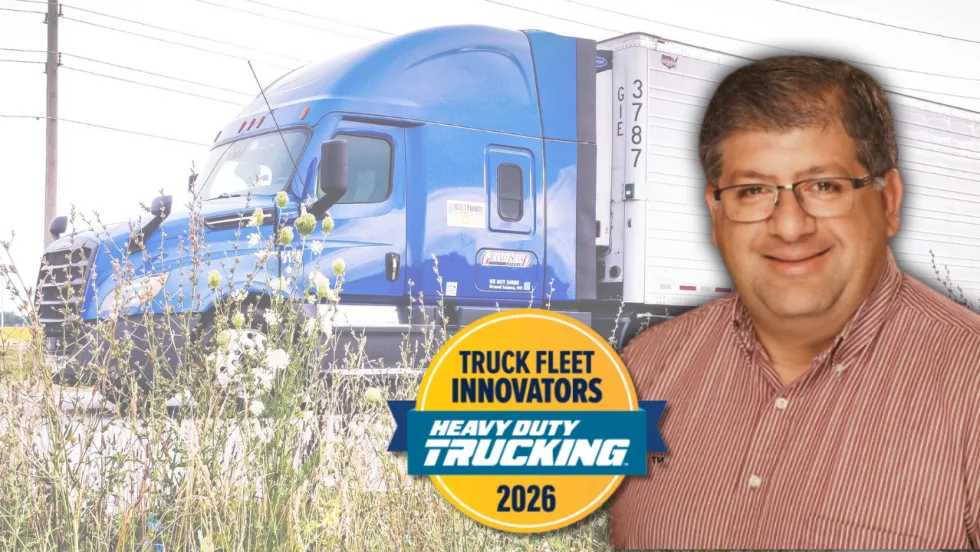
Deen Albert: Let Automation Do the Math, People Make the Decisions
HDT Truck Fleet Innovator Deen Albert makes sure people are still at the heart of operations at Grand Island Express, even while adopting artificial intelligence tools. AI-assisted dispatch helped boost revenue 25% with the same number of trucks.
Read More →