





“If a huge chunk of people don’t have a driver license, they certainly are not going to have a CDL."
New Technologies Will Create Challenges for Transportation
Technological changes can happen very quickly and if companies are not prepared to recognize and embrace these changes, they could end up going out of business as the new technologies make their products or services obsolete.
September 15, 2015

4 min to read

Technological changes can happen very quickly, and if companies are not prepared to recognize and embrace these changes, they could end up going out of business as the new technologies make their products or services obsolete. That was the message from Simon Anderson, a futurist with the company VentureForesight.com.
Speaking at TMW Systems’ user conference in Orlando Sept. 14, Anderson noted all one has to do is look at the telecom industry to see how rapidly technology change can occur. He referred to change as exponential or linear. Exponential change means the farther out you go, the more things change. He pointed out that Kodak actually developed the first digital camera in the '70s, but was so focused on its film business, its managers failed to anticipate that digital cameras would put them out of business. That technology changed so fast, that the storage for a digital camera card increased 1,000 times in 9 years.
He noted that a number of things you were told as a child are no longer true. When that happens, he said, you have to unlearn the old truth and relearn a new one. “We have to continuously unlearn,” he said. He quoted Alvin Toffler as saying that the illiterates of the 21st century would not be so because they could not read or write, but because they could not learn, unlearn and relearn.
Anderson said businesses have to pay attention to changes and anticipate what these changes will mean for their business.
He outlined a number of trends. First, the distinction between digital natives (millennials for instance) and digital immigrants (those who didn’t grow up with smartphones or tablets).
Digital 'Natives'
Digital technology has always been around for the natives, who look at new software as options -- rather than obstacles, which is how the digital immigrants often look at new technologies.
Furthermore, the traditional American dream is not a reality for digital natives, who are carrying some $1.4 trillion in education loans. Other differences between the digital natives and their elders: in 2008, only about 50% of 16-year-olds had a driver's license. By 2010, that was down to about 25%. “If a huge chunk of people don’t have a driver license, they certainly are not going to have a CDL,” he said.
And while the digital natives may be socially conscious, they are somewhat apolitical. They have a different way of thinking and looking at things.
He noted that trucking companies are not the only organizations having trouble attracting and retaining employees. “The younger generation is not as competitive as their elders – they are more collaborative. Plus, they want real-time feedback as opposed to an annual review," he said, noting that 58% of them want to be in a job for less than three years.
How do you create a culture that not only attracts these workers, but also makes them want to stay with you?
He suggests that to attract them, you need to go where they are – social media such as Facebook, Instagram and other sites. “Connect with them where they are looking.” This group likes to be trained, so a job that offers training on a lot of things would be attractive, Anderson advised. So would offering time off for volunteering – even if it’s just one day. They hate going to work and using old technology, so employers must be aware of that.
Technology Trends
Another trend he noted was 3D printing. How will 3D printing impact transportation? For one thing, it has the potential to move manufacturing closer to the consumer, which will require less transportation.
Wearable technology such as smart watches, Google Glass and others are another trend to keep an eye on.
“Many of these devices won’t show up until next year – so we’ll see if they are big deals or not." Such devices could offer good opportunities for training using virtual reality.
Vehicle communication — smart vehicles and smart roads – will also have an impact on transportation. Truck platooning systems are an example, which he termed a “very exciting technology for trucking.” In the future, allowing cars to join a truck platoon may offer an additional revenue source for trucking companies.
Renewable energy source are also a trend to watch. He expects that electric power will eventually come to trucking, but there are challenges there to work out as each pound of battery reduces a truck’s payload.
Artificial intelligence is also a trend that we can see already. For instance, Facebook has an algorithm that can recognize faces in photographs better than people can. And, smart phones already have AI built-in, such as the iPhone’s Siri. It’s already in the automotive space with self-parking cars.
Many of the examples are not “20 years away – these things are happening right now – they already exist,” he said.
He advises keeping track of trends by reading, talking to colleagues (turn small talk into future talk). Most important, however, is to keep unlearning outmoded ideas.
More Fleet Management
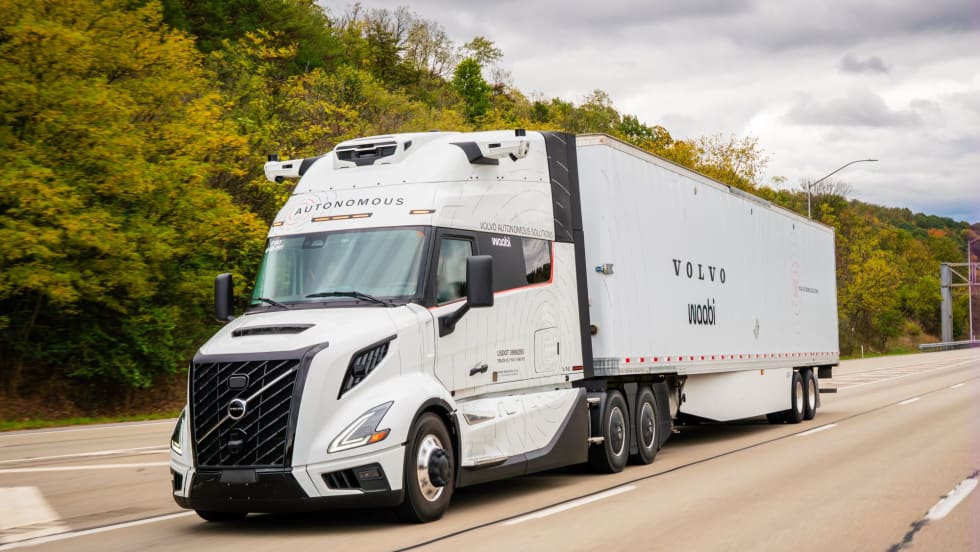
Volvo, Waabi Start Commercial Autonomous Operations in Texas
Volvo VNL Autonomous trucks, powered by the Waabi Driver, are hauling freight directly to third-party facilities for a customer in Texas.
Read More →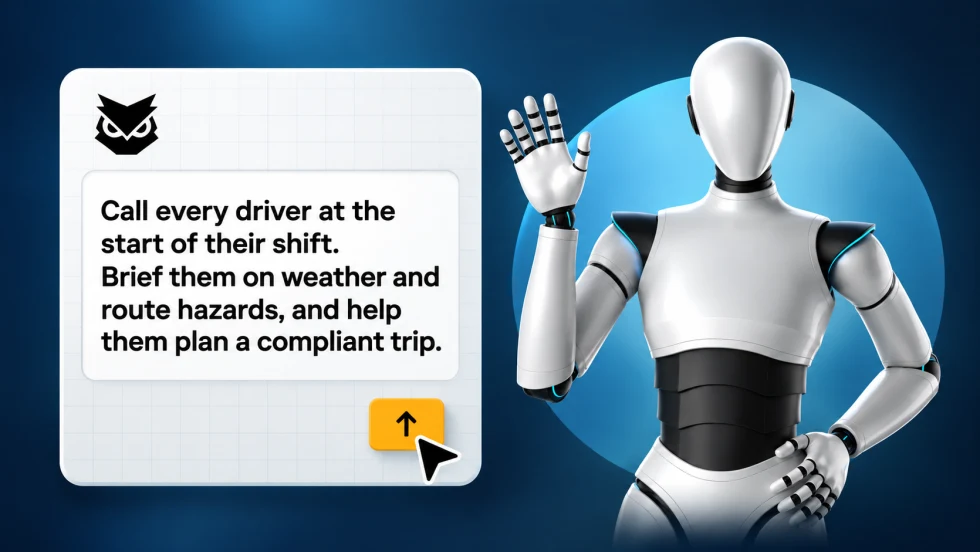
Samsara Launches Custom AI Agent Builder
Agent Studio lets fleets create AI tools for hours-of-service monitoring, reporting and driver support, including agents that communicate by phone.
Read More →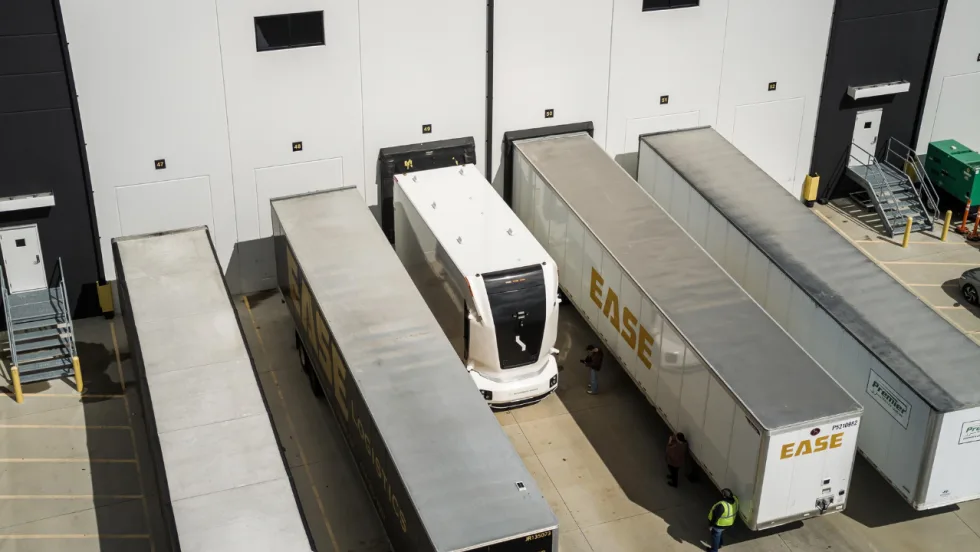
Einride Driverless Electric Trucks Begin Daily Freight Operations in Ohio
Two cabless electric trucks are hauling freight between EASE Logistics facilities in Marysville, Ohio, as part of a multi-state truck automation project.
Read More →
Geotab Links Fleet Card to Vehicle Data
The new card combines fuel discounts with telematics-based purchase controls. Geotab’s analysis also points to potential savings from choosing lower-priced fuel stops.
Read More →
How MFA Helps Protect Trucking Fleets
Multi-factor authentication adds protection when passwords are stolen. Here’s how it works and where fleets should start.
Read More →
How Better Freight Data Helps Trucking Teams Get Ahead of Disruption
Trucking and logistics teams have plenty of data. The problem is getting the right information in front of the right people soon enough to act. Better-connected data can help teams spot trouble earlier and make smarter decisions before small problems become big ones.
Read More →
Trimble: Taking Artificial Intelligence in Trucking Beyond Faster Tasks
At Insight 2026, Trimble executives argued that fleets may need to redesign workflows to get more from AI as it introduced new products and enhancements. AI’s value will depend on how fleets combine automation with their people's knowledge.
Read More →
Sponsored•September 28, 2026
Build a bulletproof fleet: Uniting ELDs and dash cams for total compliance
An ELD can prove compliance, but it cannot always prove what happened on the road. Discover how uniting accurate ELD data with AI-powered dash cam video can help your fleet strengthen compliance, defend against liability, protect drivers and reduce operational costs.
Read More →
Nominations Open for HDT Emerging Leaders
Heavy Duty Trucking is looking for accomplished trucking fleet professionals under 40 who are making an impact and helping lead the industry forward.
Read More →
Why Private Fleets Are Taking More Freight
Private fleets are putting their own trucks on demanding customers and high-cost lanes as companies seek greater control over service, costs, and capacity.
Read More →