




Bill Would Up Truck Weight Limit to 91,000 Pounds
A bill that would allow individual states to increase the federal vehicle weight limit to 91,000 pounds for tractor-trailers equipped with a sixth axle has been introduced by Rep. Reid Ribble (R-WI).

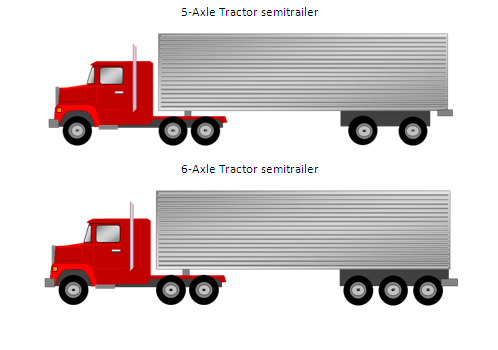
Image: Federal Highway Administration
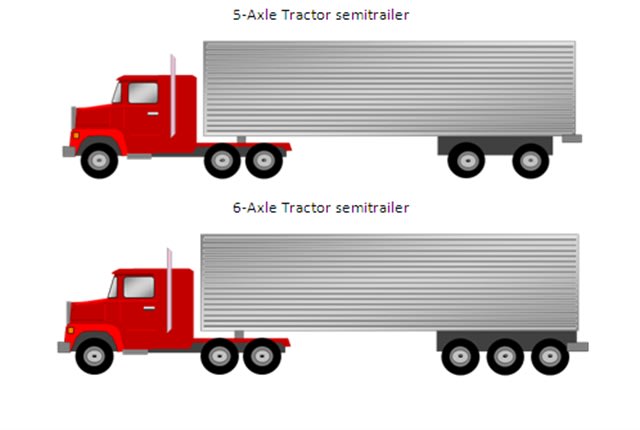
Image: Federal Highway Administration
A bill that would allow individual states to increase the federal vehicle weight limit to 91,000 pounds for tractor-trailers equipped with a sixth axle has been introduced by Rep. Reid Ribble (R-WI).
The Safe, Flexible, and Efficient (SAFE) Trucking Act would “allow fewer trucks to move more cargo in a safer manner” via a configuration compliant with the federal bridge formula, Ribble said during a Sept. 10 telephone press briefing. The bill has been loudly applauded by at least six major associations representing the interests of shippers. But, at least initially, it has drawn no support from trucking-specific lobbies.
Ribble said that he plans to introduce the SAFE Act as an amendment to the long-term highway bill so that the House Transportation and Infrastructure Committee is expected to begin marking up soon “so that members can discuss it separately.”
He noted that there is a “fairly broad coalition of members [on the House Transportation and Infrastructure Committee] who support itfrom both parties, but I will let them speak for themselves” on his bill. “On the Senate side, I expect [including] this act will be worked out during the conference process.”
The bill “would allow our freight shipping industry to be more efficient while creating less pavement wear and tear and improving safety on our shared roads and bridges,” he said. Ribble noted that another aim of the legislation is “to move heavier trucks [allowed in some states] off local and state roads and onto Interstates.”
The congressman emphasized that despite adding up to 11,000 pounds to its GCW limit, such a truck would operate more safely because its mandated sixth axle would provide it with “stopping power equal to or better than that of a five-axle truck.” The bill would also enable the Dept. of Transportation to require additional safety equipment on these heavier trucks.
According to Ribble, the bill was written based on DOT safety and road wear data “to ensure that truck stopping times and pavement wear are as good or better than our current trucks.” During the call, he specifically referenced data released by DOT as part of its Comprehensive Truck Size and Weight Limits Study, which has yet to be completed.
Ribble told reporters that the SAFE Act seeks a raise GCW limit to 91,000 pounds instead of a figure as high as 97,000 pounds limit that has been sought by some lobbying for heavier trucks “because safety advocate in the past have opposed” going that high and he is “trying to find the sweet spot” that would move the limit up with the most support in Congress. “Their [safety advocates] baseline position has been more weight equates to less safety,” he noted, adding that he expects reaction to the bill “will depend on the actual [safety] group.”
The congressman also said that his measure concerns only single trailers because “when you get into [changing size and weight of] doubles and triples, it gets more complicated. This bill does not touch truck at all. I deliberately did not address that in this bill because I did not want to go down that rabbit trail.”
During the press conference, representatives of several large shipper-based lobbying groups voiced their support for the legislation. \
“Truck travel has grown 22 times faster than road capacity since the federal weight limit was last changed in 1982,” said John Runyan, executive director of the Coalition for Transportation Productivity, which represents nearly 200 manufacturers, shippers, carriers and allied associations CTP. “The Safe Trucking Act safely improves the productivity of truck shipments so we can decrease the truckloads necessary to meet demand and make our entire transportation network more efficient.”
Runyan stated that by requiring an additional axle, the bill’s tractor-trailer configuration has “consistently been proven to safely ship more goods while braking faster, polluting less, reducing pavement wear and being safe for Interstate bridges. Our major trading partners are already safely utilizing these trucks to increase efficiency and reduce truckloads. Now it’s up to Congress to give states the flexibility to put them to work.”
According to CTP, the DOT size-and-weight study recently found that “six-axle trucks can safely weigh up 91,000 pounds while yielding significant truckload reductions, pavement wear savings and environmental efficiency benefits.”
The group also said that DOT has “stated that the configuration is federal bridge formula compliant, meaning that it meets weight distribution requirements for vehicles traveling on bridges on the Interstate Highway System, and that wide use of the Safe Trucking Act configuration would not cause any increase in one-time rehabilitation costs for Interstate bridges.”
“It’s also important to recognize that more than 90 percent of states allow trucks which are heavier than the federal weight limit to travel on state roads, often on just five axles,” Runyan pointed out. “The Safe Trucking Act gives these states a critical opportunity to promote the use of safer, six-axle vehicles while transitioning heavier traffic to more capable Interstate highways for at least a portion of their route.”
The bill addresses the issues of “the freight capacity shortage, the driver shortage and highway congestion,” said Robyn Boersling, Director of Transportation and Infrastructure Policy for the National Association of Manufacturers. “Freight volume, international trade and the U.S. population are all projected to grow, requiring each modes [of transportation] to operate as efficiently as possible. But there’s been no change in highway weight limits. By giving a voice to states, the SAFE Act is an effective way of modernizing the freight system.”
“DOT weight limits now require [dairy] trucks to leave plants half empty,” said Connie Tipton, president and CEO of the International Dairy Foods Association. “This act would safely modernize freight transportation on our highways.”
According to IDFA, “by raising the federal gross vehicle weight limit for trucks equipped with six axles rather than the typical five and giving states the flexibility to utilize these trucks where they see fit, the Safe Trucking Act would safely modernize truck shipments on Interstate highways by allowing trucks to carry more product and thereby reducing the number of trucks on our roadways.”
"The current patchwork of varying maximum weights compels dairy marketers to transport partially empty loads of milk,” said Jim Mulhern, president and CEO of the National Milk Producers Federation, in a statement. “This uses more fuel, creates more congestion and increases the costs of maintaining roads. Common sense changes like those included in the Safe Trucking Act will improve the efficiency and sustainability of the U.S. dairy industry."
Donna Harman, President and CEO of the American Forest & Paper Association said that “available truck capacity has dropped by 16% since 2008 and that “affects us moving raw materials and finished goods.
“With the higher weight limit, the space in trucks will be used more efficiently and the number of truck trips for forest products could be reduced by approximately 1.4 million each year,” she added. “This legislation will reduce miles traveled and improve highway safety.”
Clearly, shippers are onboard with the SAFE Act. Whether trucking is remains to be seen.
Asked by HDT if the American Trucking Associations had any reaction to the bill, ATA spokesperson Sean McNally replied, “No, we don’t.”
The Trucking Alliance, a coalition of trucking businesses that lobbies for safety improvements, was succinct in its critique of the bill. “This legislation wasn't written to benefit trucking companies, because it would drive up operating costs, drive down truck driver wages and curtail investments in safety technologies,” Lane Kidd, the Alliance’s Managing Director, told HDT.
More Fleet Management
Platform Science Adds Dispatch and Safety Tools
Four additions to PS Fleet help fleets monitor loads, manage driver coaching, share truck locations and adjust video system settings.
Read More →
PrePass Intelligence Mines Fleet Bypass, Toll and Safety Data
PrePass Intelligence helps fleets measure bypass savings, flag potential toll overcharges, and spot suspicious transactions by combining data from separate systems.
Read More →
Motive Adds AI Agents for Fleet Operations
New tools automate follow-up on fleet data, from maintenance work orders to driver alerts, with two-way voice conversations planned for later this year.
Read More →
Can You Beat Our Trucking Trivia Challenge?
Test your truck knowledge with 19 trivia questions from Heavy Duty Trucking Exchange. Can you keep up with the fleet pros?
Read More →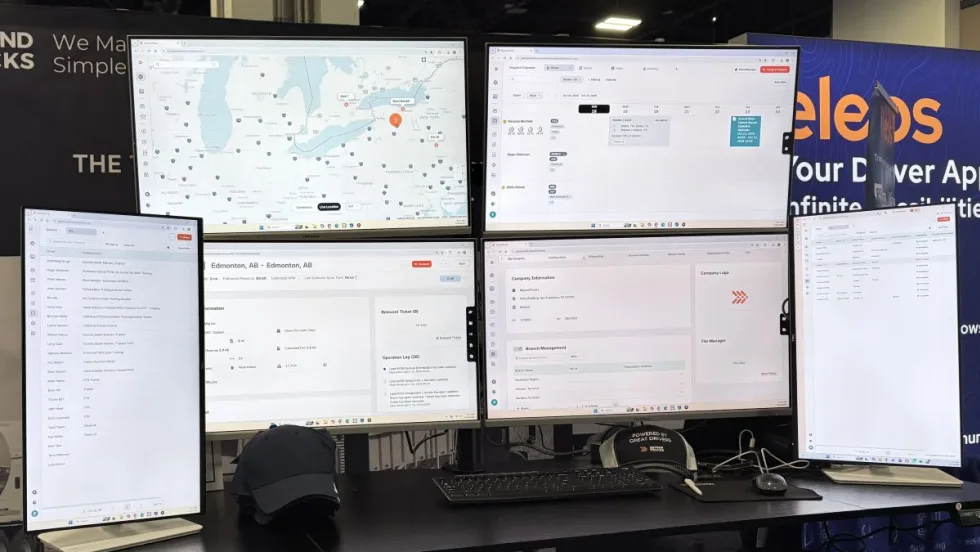
BeyondTrucks Adds Rules Checks to Dispatch
New Compatibility Engine checks driver qualifications, equipment requirements and fleet policies before loads are dispatched.
Read More →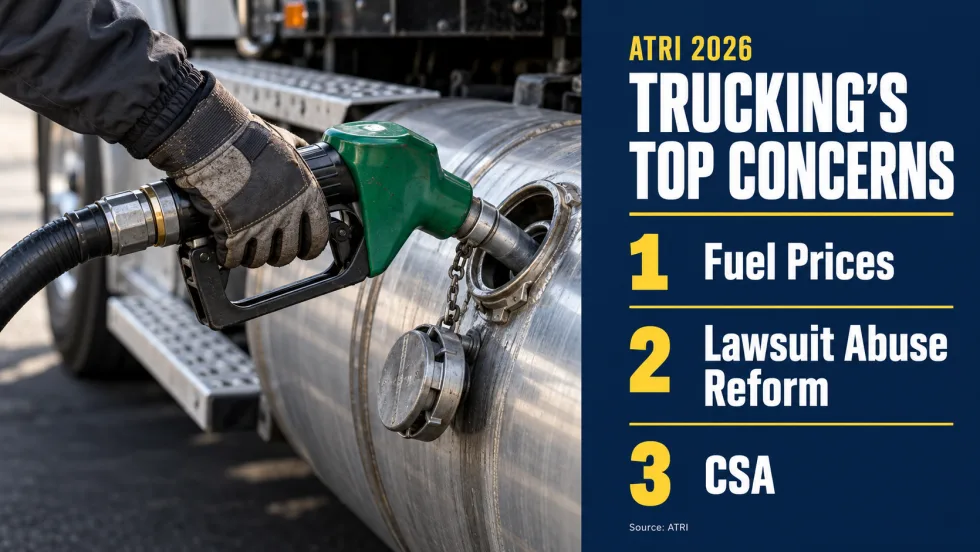
Diesel Prices Hijack Trucking’s Worry List
ATRI’s annual survey finds cautious optimism about freight, but diesel costs, litigation, and insurance continue to squeeze fleets. Drivers have different priorities on several issues.
Read More →
Nomination Deadline Extended for HDT Emerging Leaders
Just a few more days to nominate accomplished trucking fleet professionals under 40 who are making an impact and helping lead the industry forward for the HDT Emerging Leaders award. Deadline extended to October 20!
Read More →
What Will ATA’s New Leader Bring to Trucking's Table?
Incoming President and CEO Mark Colson’s record in Alabama offers clues about his priorities and approach following Chris Spear’s abrupt departure as the head of the American Trucking Associations.
Read More →
Volvo, Waabi Start Commercial Autonomous Operations in Texas
Volvo VNL Autonomous trucks, powered by the Waabi Driver, are hauling freight directly to third-party facilities for a customer in Texas.
Read More →
Samsara Launches Custom AI Agent Builder
Agent Studio lets fleets create AI tools for hours-of-service monitoring, reporting and driver support, including agents that communicate by phone.
Read More →