




Did FMCSA Spin Report on HOS Restart?
The day after the Federal Motor Carrier Safety Administration stated its general satisfaction with a Government Accountability Office study of the hours-of-service changes implemented in 2013, the American Trucking Associations slammed the safety agency for “cherry-picking” a few points “in a desperate effort to influence lawmakers.”



The day after the Federal Motor Carrier Safety Administration stated its general satisfaction with a Government Accountability Office study of the hours-of-service changes implemented in 2013, the American Trucking Associations slammed the safety agency for “cherry-picking” a few points “in a desperate effort to influence lawmakers.”
FMCSA said on July 30 that it agreed with GAO’s review of the 2013 changes made to the 34-hour restart provisions of the HOS rule.
“This GAO report provides further evidence that the changes FMCSA made to the HOS rules improve highway safety by saving lives and lowering the risk of driver fatigue,” said Transportation Secretary Anthony Foxx.
“This reinforces our belief that these life saving measures are critical to keeping people safe on the roads," added Foxx. "We value the GAO’s independent review and will use their recommendations to further strengthen our Department’s research to ensure that we have the best data available to keep our roads safe.”
In its news release, FMCSA highlighted four positive aspects of the GAO report. The agency said that “during the nearly 18 months in which the new restart provisions were in effect, the GAO report found evidence of reduced driver fatigue and enhanced roadway safety,” specifically in terms of fewer fatal crashes; fewer drivers working the maximum schedules; lower risk of driver fatigue; and no increase in crashes during the 5 a.m. to 9 a.m. morning rush hour.
In addition, FMCSA advised that the GAO report also recommended that the Dept. of Transportation “adopt formal guidance outlining Agency research standards” and that Congress should consider “directing DOT to study and report on how electronically collected driver schedule data can be extracted, stored, and analyzed in a way that addresses cost and privacy concerns.”
Alluding to those two recommendations, Secretary Foxx had remarked that “We value the GAO’s independent review and will use their recommendations to further strengthen our Department’s research to ensure that we have the best data available to keep our roads safe.”
ATA, in a July 31 news release, claimed that FMCSA had “ignored the bulk of the Government Accountability Office’s report on the agency’s 2013 hours-of-service changes” and focused only on a “handful of points” that cast the rule change positively.
“It is unfortunate that rather than present an accurate and balanced characterization of the GAO report, FMCSA is once again living in Spin City,” said ATA Executive Vice President Dave Osiecki.
In making its point, trucking’s biggest lobby detailed at length elements of what “the full GAO report said”:
On crashes including on FMCSA’s “fewer fatal crashes” from its press release– GAO says “Without additional data over a longer period of time, we are unable to robustly determine whether the HOS rule had an impact on crashes” (see Appendix VII, page 115);
On FMCSA’s “fewer drivers working the maximum schedules” comment– GAO says “Findings are not representative of the motor carrier industry and are not generalizable.” (see Table 2, page 26);
On FMCSA’s “lower risk of driver fatigue”- “We found the field study’s sample size was insufficient to estimate statistically significant differences in the primary fatigue measure—the PVT—for each of these industry segments and times.” (see Appendix II, page 58);
“Fatigue analysis is based on simulated schedules, is not representative of the motor carrier industry, and is not generalizable” (see Table 2, page 26)
“While we agree that evidence generally supports that fatigue and crash risk are related, we are uncertain how fatigue differences of the size reported in the field study would be associated with crash risk. Thus, the safety implications and policy importance of the study’s estimated effects on fatigue may be overstated.”
ATA went on to claim that “in large part, FMCSA justified its July 2013 hours of service rules not with safety benefits, but by claiming hundreds of millions of dollars in assumed health benefits.”
The association then said that by contrast GAO found that: “There are no data available to assess the health effects of the rule” (see Table 2, page 26) and that “Motor carriers and drivers reported no noticeable positive health effects from the rule.” (see Table 2, page 26)
Also, per ATA, with respect to its prior field study, GAO said that: "These shortcomings leave the agency open to criticism over the integrity of the study and invite skepticism about the results.” (see page 42)
“Not only did FMCSA’s field study shortcomings invite criticism,” said Osiecki, “so too does the agency’s attempt to spin the GAO findings. The public must have trust in its government. Unfortunately, FMCSA’s continued spin does not invite that trust.”
But the Trucking Alliance, a coalition of trucking businesses that lobbies for truck-driver safety, views FMCSA’s take on the report in a much different light.
“The GAO did an exhaustive review of the hours of service study and the Alliance has no reason to question the GAO findings or the FMCSA statement in support of the GAO findings," Lane Kidd, Managing Director of the Alliance told HDT. He added that, “The Alliance no longer comments on ATA policies."
More Drivers
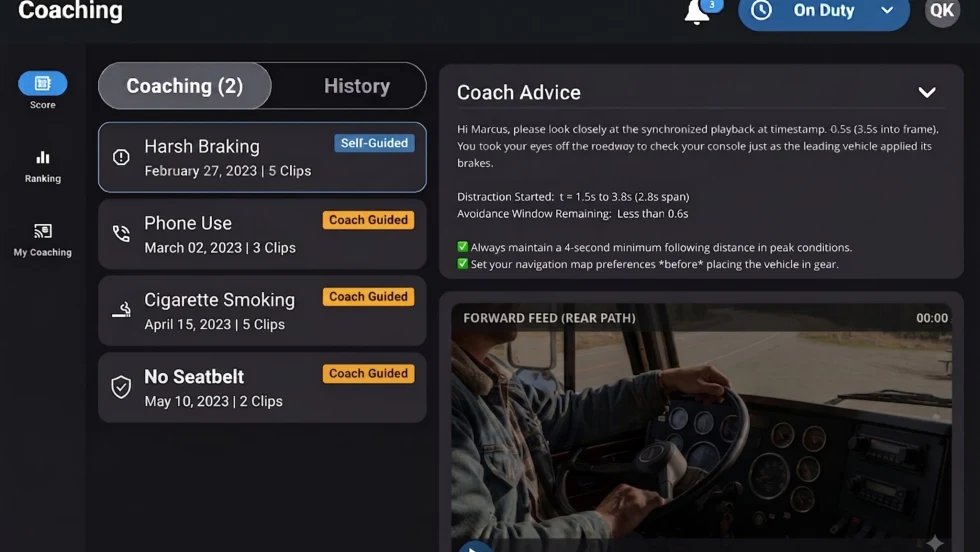
Platform Science Adds Dispatch and Safety Tools
Four additions to PS Fleet help fleets monitor loads, manage driver coaching, share truck locations and adjust video system settings.
Read More →
When Language Stops the Truck: The Return of ELP Out-of-Service Orders
English language proficiency rules for commercial drivers aren’t new, but renewed out-of-service enforcement has raised the stakes. Here’s what carriers need to know before a driver reaches a roadside inspection.
Read More →
Samsara Launches Custom AI Agent Builder
Agent Studio lets fleets create AI tools for hours-of-service monitoring, reporting and driver support, including agents that communicate by phone.
Read More →
Trucker Path Expands Reserved Parking Network
Trucker Path has added close to 6,000 more truck parking spaces to its Trucker Path Reserved Parking Network with the addition of Safe Truck Parking.
Read More →
EEOC Sues Texas Trucking Company Over Driver Age Limits
The agency says Trancasa USA rejected applicants over 65 and applied tougher driving-record standards to those over 60.
Read More →
Nussbaum, Roehl Announce Second Driver Pay Increase This Year
This year has seen a swath of major truck driver pay increases as freight capacity has tightened.
Read More →
From One Generation to the Next: How Mentorship Builds Safer Truck Drivers
After three decades in trucking, Harold Perry shares what he's learned about driver safety, mentorship, and helping the next generation build confidence behind the wheel.
Read More →
Truck Drivers Need More Than Another Alert
Fleets have more visibility into truck health, safety events, and driver activity than ever. The next challenge is turning all that information into useful guidance for the person who has to decide what to do next.
Read More →
FMCSA Removes 110 Truck Driver Training Schools from Certified ELDT List
Federal regulators also are targeting more than 160 additional training providers and launching a nationwide audit of third-party CDL skills testers as part of a broader crackdown on trucking fraud.
Read More →
Hours of Service Pilot Programs: FMCSA Readies for 2027 Rollout
Two pilot programs could eventually reshape hours-of-service rules, giving truck drivers options to pause their 14-hour clock or use longer split sleeper rest periods.
Read More →