




The National Highway Traffic Safety Administration has issued its long-awaited final rule to require electronic stability control (ESC) systems on Class 7-8 trucks and large buses.
 MENU
MENU SEARCH
The National Highway Traffic Safety Administration has issued its long-awaited final rule to require electronic stability control (ESC) systems on Class 7-8 trucks and large buses.
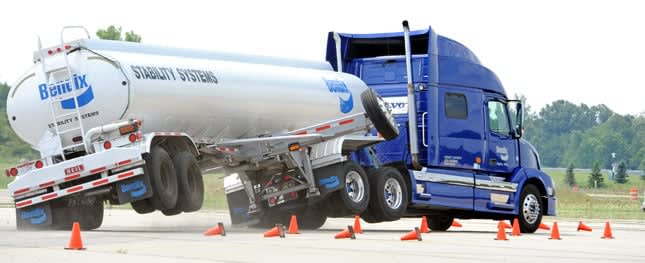
Outrigger-equipped for test-track safety, a rig demonstrates what happens when its electronic-stability control (ESC) system is not activated.
The National Highway Traffic Safety Administration has issued its long-awaited final rule to require electronic stability control (ESC) systems on Class 7-8 trucks and large buses.
The rule, Federal Motor Vehicle Safety Standard 136, will take effect for “most heavy trucks” in 2017, per NHTSA. The agency said that compliance will be achieved using a “J-turn” test that replicates a curved highway off-ramp.
“ESC is a remarkable safety success story, a technology innovation that is already saving lives in passenger cars and light trucks,” Secretary of Transportation Anthony Foxx said upon introducing the new rule on June 3. “Requiring ESC on heavy trucks and large buses will bring that safety innovation to the largest vehicles on our highways, increasing safety for drivers and passengers of these vehicles and for all road users.”
According to NHTSA, the mandate was needed because “ESC works instantly and automatically to maintain directional control in situations where the driver's own steering and braking cannot be accomplished quickly enough to prevent the crash.”
The agency stated that implementing “ESC will prevent up to 56 percent of untripped, rollover crashes-- that is, rollover crashes not caused by striking an obstacle or leaving the road.” NHTSA estimates the rule will prevent as many as 1,759 crashes, 649 injuries and 49 fatalities annually.
“Reducing crashes through ESC in these trucks and buses will save lives-– nearly 50 each year,” said NHTSA Administrator Mark Rosekind. “It will move goods and people more efficiently and reduce the toll crashes take on our economy through traffic delays and property damage. It’s a win for the safety and convenience of the traveling public and for our economy.”
The rulemaking effort dates back at least 2011, when the National Transportation Safety Board first issued a recommendation that ESC be required on heavy-duty vehicles. When the current highway bill (MAP-21) was enacted a year later, one of its provisions directed NHTSA to consider an ESC requirement for motor coaches, which are included in the final rule just issued. Also in 2012, a rule requiring light-duty vehicles to include ESC took effect.
The American Trucking Associations said it welcomed the mandate. “Ensuring the safety of America’s highways has always been ATA’s highest calling,” said ATA President and CEO Bill Graves, “and we’ve long known the positive role technology can play in making our vehicles and our roads safer. Today’s announcement by NHTSA will reduce crashes on our highways and make our industry safer.”
“Last month, NHTSA reported to Congress that truck rollover and passenger ejection were the greatest threats to truck driver safety,” said ATA Executive Vice President Dave Osiecki. “We can save lives by preventing rollovers with electronic stability control technology, and that’s a positive for our industry. Many fleets have already begun voluntarily utilizing this technology and this new requirement will only speed that process.”
Bendix Commercial Vehicle Systems LLC has advised that its supports NHTSA’s choice of ESC for its final rule requiring full-stability technology on heavy-duty vehicles. The manufacturer of ESC systems noted that the mandate will be implemented in three phases, starting August 1, 2017, for most three-axle tractors.
“At Bendix, we always prefer to let the market be the catalyst to drive safety technology adoption,” said Fred Andersky, director of government and industry affairs. “We believe ESC stands alone in terms of safety, performance, and value. And we have also seen a market acceptance of this technology – over RSC [roll stability control] – at a rate of three to one. This technology is another positive step on the part of our industry toward helping to further improve highway safety.”
According to Andersky, full-stability technology,which Bendix markets as its ESP Electronic Stability Program, “fully complies with the NHTSA rule.” He cautioned that it’s “critical for fleets currently equipping their vehicles either with ABS only or with roll-only stability systems to understand three key differences in order to better prepare for the arrival of full stability.”
He outlined those differences as follows:
“Full-stability systems use more sensors than either ABS or roll-only stability systems, creating a more comprehensive system capable of addressing both roll and directional stability. These additional sensors enable the unit to more quickly recognize factors that could lead to vehicle rollovers or loss-of-control. On dry surfaces, this means the system recognizes and mitigates conditions that could lead to rollover and loss-of-control situations sooner than roll-only options. Full-stability technology also functions in a wider range of driving and road conditions than roll-only systems, including snowy, ice-covered, and slippery surfaces. ABS systems are not designed to react to potential roll or loss-of-control situations.”
“Interventions can also differ. Full-stability systems rely on automatic brake interventions involving the steer, drive, and trailer axles, whereas roll-only systems typically apply the brakes only on the drive and trailer axles. Slowing the vehicle quickly helps mitigate rollovers faster, while slowing and redirecting can help the driver maneuver in loss-of-control situations.”
“Stability systems are the foundation for advanced active safety technologies. For example, as a collision mitigation system detects a possible collision with a forward vehicle and automatically applies the brakes in order to prevent or lessen its severity, the brake system should help the vehicle maintain its stability throughout the maneuver. This level of performance is best achieved with a full-stability system that is consistent with the new NHTSA rule.”
Andersky also pointed to the high degree of market acceptance already in place. “In our view, the market had already made its technology choice known prior to the formal introduction of NHTSA’s rule,” he said.
“Industry-wide, full stability is outselling roll-only technology three to one, up from three to two in previous years,” Andersky added. “The increasing adoption of ESC demonstrates the willingness by fleets to invest in the technology because of full stability’s ability to help reduce the number of heavy truck accidents, improve safety records, and deliver the return on investment that fleets need.”
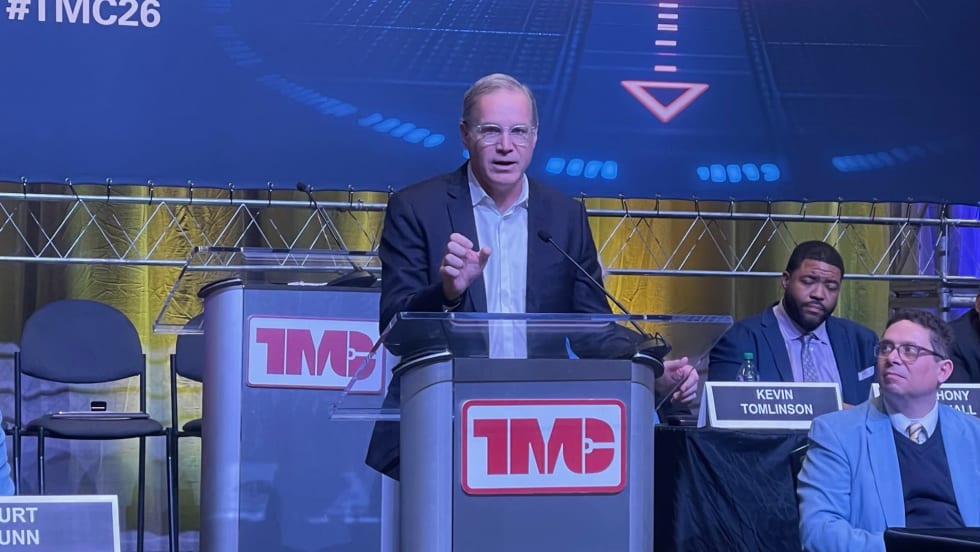
Speaking at the TMC Annual Meeting in Nashville, ATA President Chris Spear said trucking faces mounting pressure from rising fuel prices, geopolitical instability, and uncertainty around trade policy.
Read More →
More than 100,000 new trucking companies enter the industry each year, but regulators manage to audit only a fraction of them. That churn creates opportunities for inexperienced startups — and for “chameleon carriers” that shut down after safety violations and reappear under new identities. Read more from Deborah Lockridge in this commentary.
Read More →
HDTX is an intimate event that connects heavy-duty trucking fleet managers with industry suppliers through small-group discussions, educational sessions, and structured one-on-one meetings.
Read More →
New DAT One feature shows top-paying loads directly on an iPhone’s home screen, helping carriers react faster to spot-market opportunities.
Read More →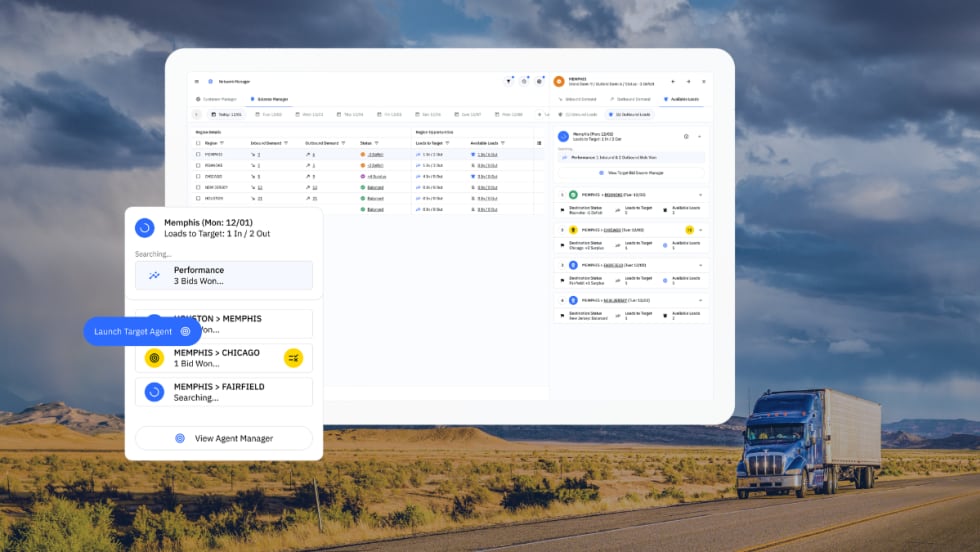
Optimal Dynamics says its new Scale platform uses AI agents and optimization to help carriers find and secure freight that improves network balance and profitability.
Read More →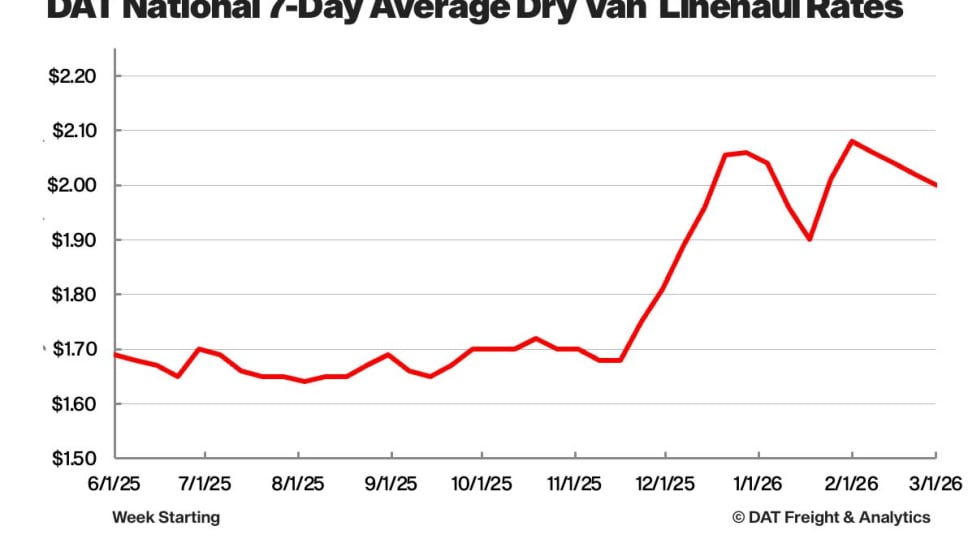
DAT Freight & Analytics data shows tightening flatbed capacity, easing produce markets, and softening van and reefer rates.
Read More →
NACFE's Run on Less - Messy Middle project demonstrates the power of data in helping to guide the future of alternative fuels and powertrains for heavy-duty trucks.
Read More →
A federal court ruling allows New York City’s congestion pricing program to continue, leaving truck tolls in place for fleets delivering into Manhattan.
Read More →
Fontaine Modification has introduced a new customer portal designed to give fleets real-time visibility into the truck modification process, addressing one of the most common questions fleet managers face: “Where’s my truck?”
Read More →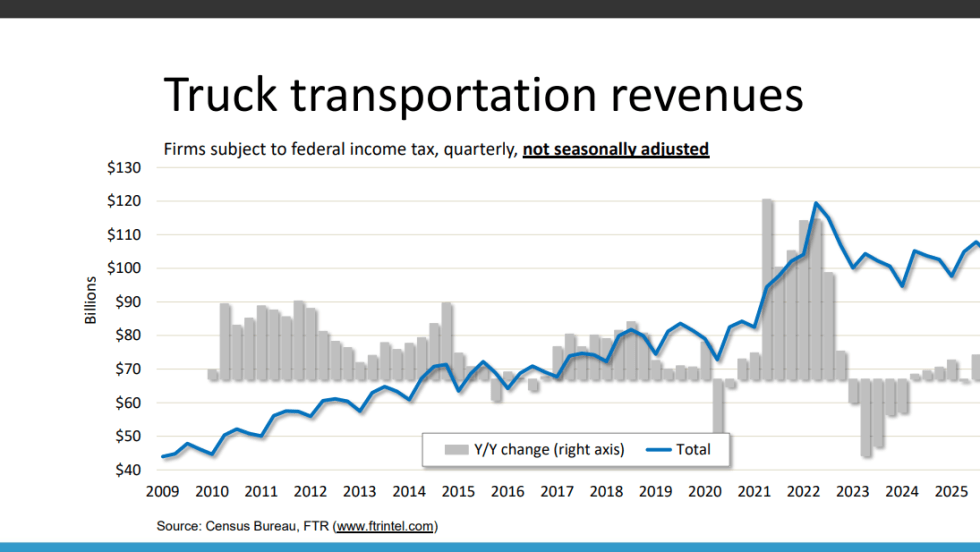
Strong freight rates, rising volumes and tighter capacity push trucking conditions higher, though diesel prices could temper gains in the near term, FTR cautions.
Read More →