





Related: NHTSA Urged to Mandate Truck Crash Avoidance Technology
Makers of Collision-Mitigation Systems Say They Pay for Themselves
Bendix and Meritor Wabco like the renewed attention put on their products by recommendations issued this week by the NTSB. But they don’t necessarily want to see them mandated.
June 10, 2015
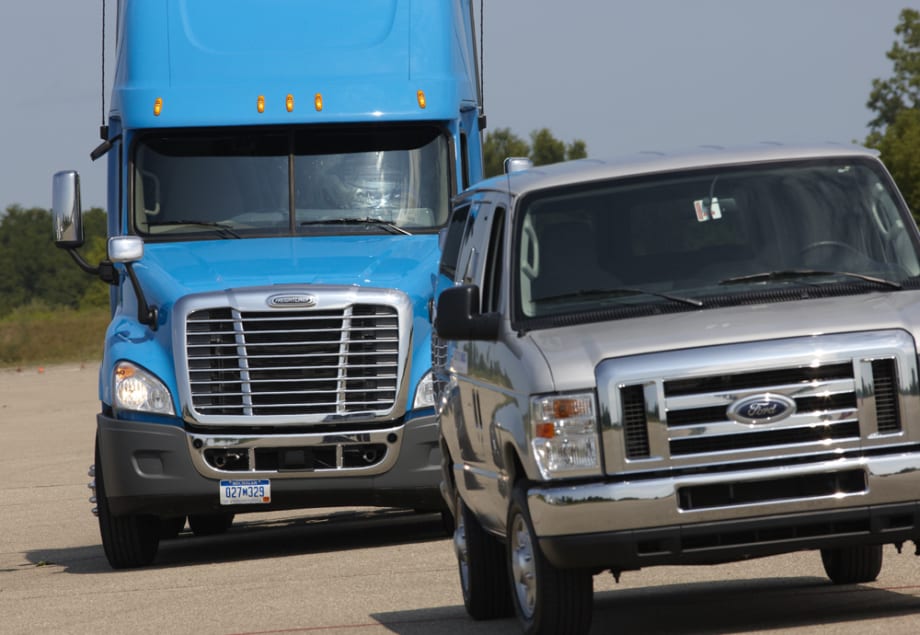
Reducing severity of rear-end collisions is all the products promise. But they can avoid some accidents, too. Photo: Meritor Wabco
3 min to read
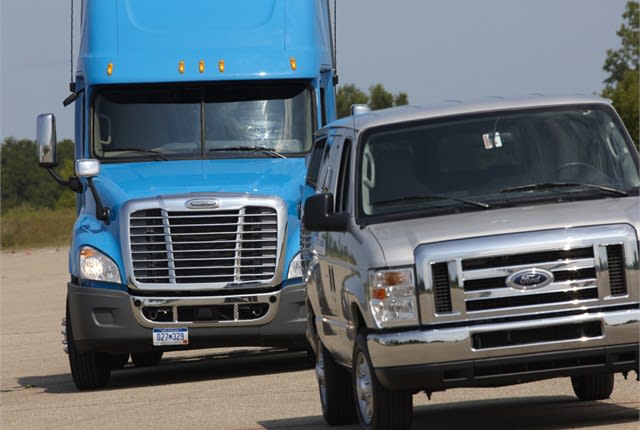
Reducing severity of rear-end collisions is all the products promise. But they can avoid some accidents, too. Photo: Meritor Wabco
Representatives of Bendix and Meritor Wabco, the two major suppliers of safety devices that warn drivers of impending collisions, are glad to see renewed attention put on their products by recommendations issued this week by the National Transportation Safety Board. But they say they don’t necessarily want to see them mandated on trucks.
And they make a point of calling the products “collision mitigation” systems, because they cannot promise to eliminate accidents, only to reduce their severity. The NTSB used the term “collision avoidance” in its call Monday for the National Highway Traffic Safety Administration to require such devices on new trucks and cars.
“It’s kind of nice to see all this conversation about this technology,” said Fred Andersky, director of government and industry affairs at Bendix Commercial Vehicle Systems, in an interview with HDT. “There must be something there,” and fleet-customer experience shows that it’s positive.
“It’s not all that surprising,” he said of NTSB’s push. “A lot of collisions occur, and there are different types, including rollover and jackknifes. Collisions with stationary (or slow-moving) objects are a lot more serious than those from lack of roll stability control.”
Those benefits are driving industry adoption in absence of a mandate.
“Companies that are developing this type of product are not waiting for NHTSA to come out with a rule,” said Alan Korn, director of Advanced Brake Systems Integration for Meritor Wabco Vehicle Control Systems. “We’re responding to a demand” from safety-minded fleets.
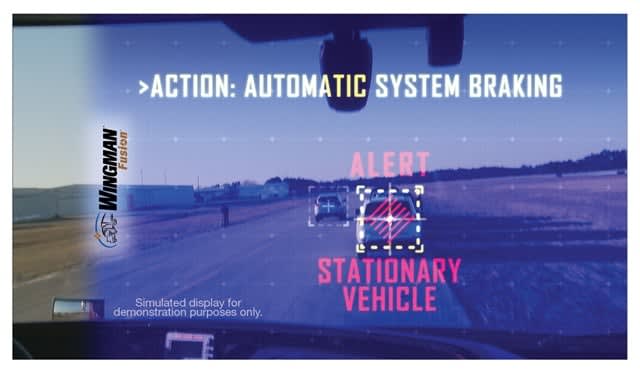
The latest collision-mitigation systems warn drivers of impending collisions, then apply the brakes if they take no action. Photo: Bendix
Systems currently available provide warning of an impending collision. If the driver doesn't respond, some systems offer active braking “to take out some of the energy from the collision,” Andersky said. “Fleets wouldn’t be buying it if they didn’t see a return on investment from it.” The payback comes from reducing severity of crashes and avoiding some of them altogether.
All OEMs offer collision-mitigation systems, and they set the prices, he said. “I’ve seen list prices from $2,500 to $6,000, but there’s always adjustments on volume.” And selling prices are almost always less than list.
About 20% of Class 8 tractors are now sold with collision-mitigation devices, according to Korn at Meritor Wabco, and there's been more interest from operators of straight trucks.
How they work
These devices address collisions with something ahead of a truck in the same travel lane, also called a rear-end collision. Korn explained that a forward-looking system “will react to it and if it can’t avoid it, it will at least mitigate it” by reducing vehicle speed and therefore the violence of an impact.
Radar cuts through fog, rain and heavy snow to sense an object ahead, he and Andersky explained. Partly because of fast closing speeds, a stationary object up ahead is difficult for software in the controls to deal with. Adding a camera enhances its understanding of what the object is, and what to do about it.
Bendix offers a series of radar-based products called Wingman, with the latest being Wingman Fusion. This combines radar sensing with camera views of what’s ahead, and will apply service brakes if the driver doesn’t.
Meritor Wabco sells OnGuard radar products that start with Forward Collision Warning and advance to Active Braking and adaptive cruise control. The latest is OnGuardActive, which uses a longer-range radar antenna to provide advanced warning of slow-moving vehicles and other obstructions. Fleets using OnGuard report reductions of up to 87% involving rear-end accidents, the company says.
NTSB wants NHTSA to develop performance standards rather than specify technologies that could be used, Korn explained. NHTSA must respond to four petitions calling for adoption of the systems, and probably will by the end of the year.
There’s a good chance that NHTSA will respond affirmatively to the petitions because “the new NHTSA administrator, Dr. (Mark) Rosekind, comes from the NTSB,” he said. “He is 100% committed to safety.”
More Safety & Compliance

Hours of Service Pilot Programs: FMCSA Readies for 2027 Rollout
Two pilot programs could eventually reshape hours-of-service rules, giving truck drivers options to pause their 14-hour clock or use longer split sleeper rest periods.
Read More →
New Guide Offers Pet Safety Tips for Truck Drivers
Hundreds of thousands of pets travel in truck cabs. A new safety guide from Volvo Trucks and the Center for Pet Safety offers practical advice for truck drivers who bring dogs and cats along for the ride.
Read More →
Medical Cards, English Proficiency Reshape Roadcheck Violations
Medical-card violations jumped to the top of the driver out-of-service list during CVSA’s 2026 International Roadcheck, while English-language proficiency violations appeared among the leading violations for the first time.
Read More →
How Lance Evans Turns Enforcement Experience Into Better Fleet Safety
HDT Truck Fleet Innovator Lance Evans brings lessons from law enforcement to K&B Transportation’s approach to safety technology, data, driver coaching, and compliance.
Read More →
New FMCSA Chief Safety Officer Has Trucking Industry and Law Enforcement Experience
Steve Dowling joins FMCSA after serving as senior director of safety at Covenant Logistics and in leadership roles in commercial motor vehicle industry organizations.
Read More →
Driver Trust Can Make or Break the Success of Fleet Safety Technology
New Teletrac Navman research suggests that onboarding, transparency about driver data, and positive feedback can play a significant role in how commercial drivers respond to safety and coaching technology.
Read More →
FMCSA: Stop Using These 15 Electronic Logging Devices
Fleets and drivers must replace the revoked ELDs with ones on the FMCSA's registered device list of electronic logging devices.
Read More →
How HDT’s 2026 Truck Fleet Innovators Are Rethinking Fleet Operations
Meet five trucking leaders who are challenging assumptions, solving operational problems, and putting innovative ideas to work.
Read More →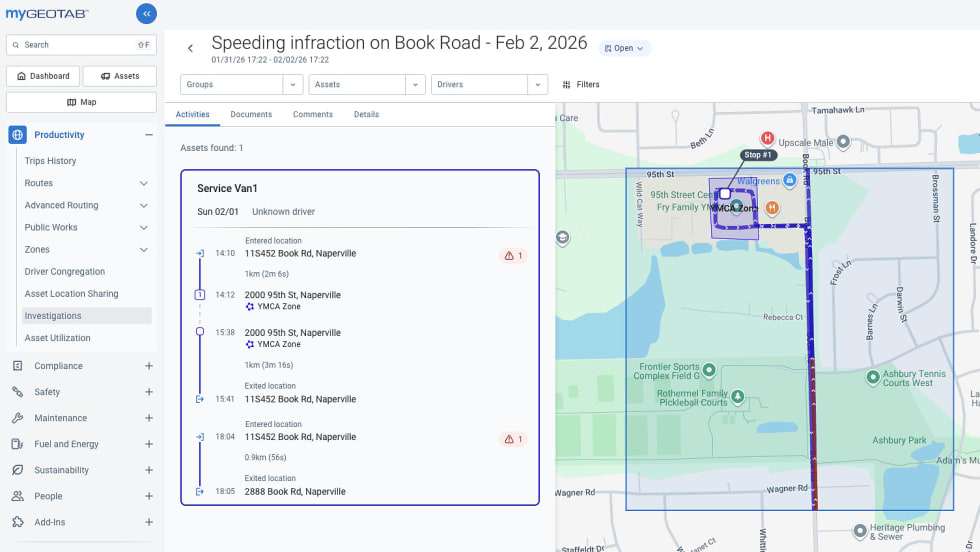
Geotab Launches Tool to Speed Fleet Incident Investigations
Geotab Investigations brings telematics data, video, photos, reports and other evidence into one case file to help fleets determine what happened and resolve incidents faster.
Read More →
FMCSA Moves to Codify English Language Requirements for Commercial Drivers
By changing regulations on English-language proficiency requirements for commercial drivers, rather than relying on a guidance memo, the FMCSA said future administrations won't be able to walk back the Trump administration's stricter enforcement with just a memo.
Read More →