




EPA SmartWay Plans to Expand Programs, Leadership Worldwide
Vision 2020 is a blueprint for building SmartWay's reputation and outreach to increase fuel efficiency and cut “black carbon” emissions worldwide.



Staffers running SmartWay, the federal Environmental Protection Agency’s voluntary program that promotes truck fuel economy and emissions reduction, have global ambitions and plan to expand their activities in response to anticipated steep growth in transportation.
SmartWay now deals with truck, rail and barge transport in the U.S., and is preparing to branch into marine and air haulage for “a complete freight footprint,” said Buddy Polovivk, an environmental specialist, during a webinar on June 24. The webinar explained its Vision 2020, a blueprint for building its reputation and outreach to increase fuel efficiency and cut “black carbon” emissions worldwide.
One overall goal is “to reduce carbon emissions before the benefits of regulations become available,” said Joanne Jackson-Stephens, the SmartWay brand manager.
Staffers, working with counterparts at the Federal Aviation Administration, are preparing a domestic air transport program to be ready for beta testing by airlines and air-freight shippers next year, Povolick said. Also being readied is a program for ocean shippers and steamship lines, using data and contacts from EPA’s Port Initiative.
SmartWay aims to be the global leader in Clean Air initiatives, and is cooperating with environmental agencies in China and countries elsewhere in Asia and Latin America, and hopes to enlist like-minded officials and private entities in developing countries, he said. SmartWay information has been translated into Mandarin Chinese, Spanish, Portugese and French for use all over the world.
Staffers have been working with Chinese officials since 2009, Povolick said, identifying opportunities to increase transport efficiency there. For example, backhauling of freight by trucks is seldom done in China, and the return-empty rate is over 50%.
All three countries in North America are aboard the SmartWay effort, with Canada joining the United States’ program and Mexico involved since 2010 through its Transporte Limpio organization. “Mexico can set the stage for Latin America, including Argentina, Brazil, Columbia and Peru,” he said.
“We want to leverage the SmartWay brand” beyond its current use in the States, where green-minded shipper partners use the logo on products, packaging, labels and bills of lading, and trucker partners apply the logo to their vehicles, said Denise Kearns, an environmental specialist who hosted the webinar.
For instance, there’ll more visits to partners so more information can be exchanged and more progress made in transport efficiency.
SmartWay also wants to engage consumers by educating them on the need to save fuel and reduce pollution, and offer them choices in products and shipping so they can become part of the effort, she said.
The effort is important because freight-shipping volume is expected to grow 45% by 2025 and quadruple by 2050, said Jackson-Stephens. That means more vehicles of all kinds hauling freight on land, in the air, on waterways and across the oceans, all consuming energy and producing emissions that induce Climate Change.
“We want to encourage more shipper cooperation,” she said, “and collaboration between shippers, carriers, logistics companies and consumers, all across the supply chain.”
Not much will change with SmartWay’s truck program, Povolick said, except that partners might be asked to supply more details on ton-miles and fuel use so EPA has a better understanding of transport situations.
Organizations wanting to get involved can contact the SmartWay Helpline at 734-214-4767 or emailing SmartWayTransport@epa.gov.
More Fuel Smarts

Record Diesel Prices Squeeze Trucking Fleets
Average U.S. diesel prices have climbed to nearly $6 a gallon, surpassing the 2022 record as tight refinery capacity and Middle East disruptions keep fuel costs elevated.
Read More →
How Fuel Delivery Shapes Engine Performance
Fuel delivery depends on more than what happens at the injector. For fleet, maintenance and technical professionals, looking at the full path from pump to injector can provide useful context for understanding engine performance.
Read More →
East Coast Port Launches $45M Electric Truck Push
The Port Authority of New York and New Jersey announced millions in incentives for zero-emission drayage trucks, yard tractors, and new charging hubs near the port.
Read More →

California Bill Could Shed Light on Electric Truck Prices
Why do battery-electric Class 8 trucks remain so expensive? A California bill headed to Gov. Gavin Newsom would give fleets and state agencies more visibility into what manufacturers charge.
Read More →
Detroit Opens Orders for EPA 2027 Engines
Detroit isn’t starting from scratch to meet EPA 2027 diesel emissions standards. Its Gen 6 DD13 and DD15 engines keep much of today’s platform while updating the fuel and aftertreatment systems.
Read More →
Zero-Emission Truck Corridor Planned for West Coast
California, Oregon, Washington, British Columbia and Baja California are coordinating plans for truck charging and hydrogen fueling from Canada to Mexico.
Read More →
A Closer Look at Kenworth’s Electric T880E Vocational Truck [Video]
Learn more about Kenworth's T880E battery-electric vocational truck at the Paccar Technical Center, including its range, applications, upfitting considerations, and PTO options, in this HDT Spotlight video.
Read More →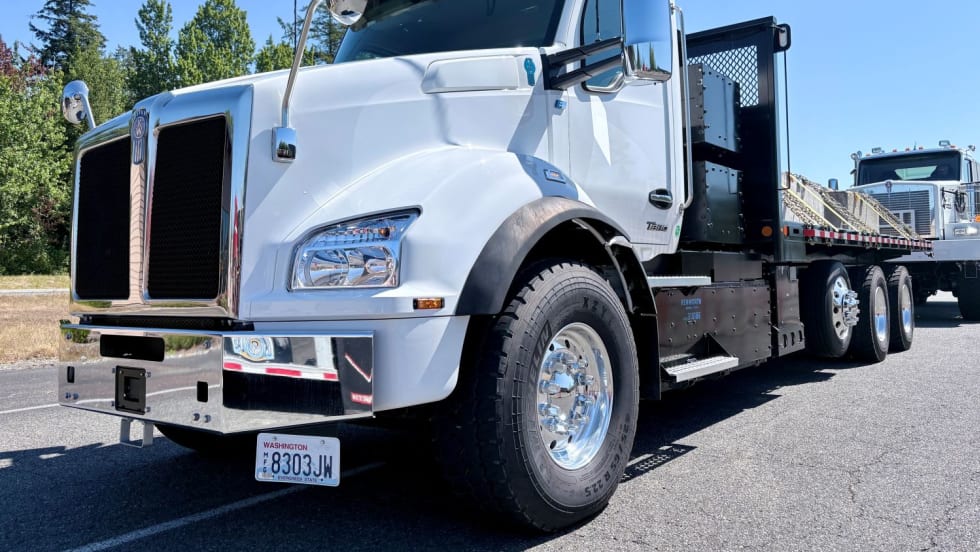
Kenworth T880E Brings EV Power to Vocational Trucks
A closer look at the Kenworth T880E’s range, charging, powertrain and upfit options — and where fleets are showing the most interest.
Read More →
Jennie Abarca Is Proving Electric Trucks Can Do the Job
HDT Truck Fleet Innovator Jennie Abarca is building confidence in fleet electrification one load at a time while openly sharing the challenges she encounters along the way as a small-fleet owner.
Read More →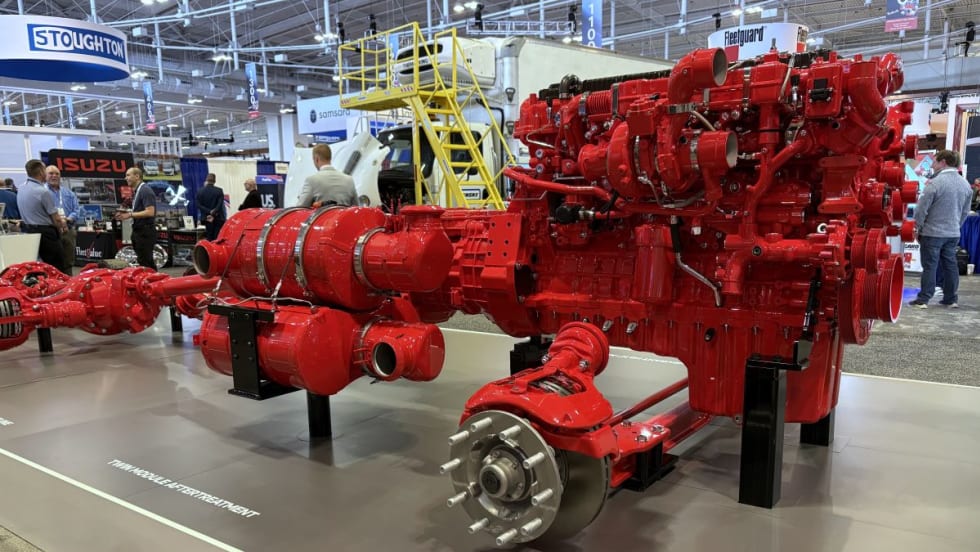
Cummins Adjusts 2027 Engine Rollout After EPA Proposal
The engine maker will gradually introduce its new Model Year 2027 diesel engines while continuing to offer current models during the transition, citing the EPA's proposed emissions rule changes.
Read More →