




Economic Watch: Consumer Spending Jumps, Service Sector Declines
Economic Watch: American consumers opened their wallets a whole lot more in May, with consumer spending increasing the most in nearly six years.


American consumers opened their wallets a whole lot more in May, according to a new U.S. Commerce Department report, with consumer spending increasing the most in nearly six years.
The 0.9% increase from the month before, the biggest since April 2009, came as the government also upwardly revised April’s performance from no growth to a 0.1% gain.
On a three-month annualized basis, consumer spending is up 4%, on par with the pace at the end of last year.
The same report also showed a 0.5% increase in personal income for the second straight month, the best back-to-back monthly hikes since early 2014, while the personal savings rate fell to 5.1% from 5.4% in April.
Lindsey Piegza, chief economist at the investment banking firm Stifel, called it “a much more favorable picture of the U.S. consumer, as May spending surged relative to the lackluster pace over the first couple of months of the year. At this trajectory, if sustained, second quarter gross domestic product is positioned to outpace our sub-2% forecast.”
She cautioned that even with an above trend growth rate from April-June, coupled with an annualized 0.2% in the GDP across the first three months of the year, first half growth will remain a disappointment.
“After all, consumption is averaging just 0.2% over the past six months, meaning a more positive, but hardly impressive trend,” she said.
The Federal Reserve earlier hinted of a increase in interest rates this summer after being near zero percent for many years, however, the latest indication is that it is hoping for such a liftoff later this year.
A separate report on the service sector part of the economy was less encouraging.
The Flash U.S. Services Purchasing Managers Index from the financial information services information service provider Markit fell to 54.8 in June, from 56.2 in May, though still above the neutral 50 threshold for the 20th successive month.
The report highlighted a further moderation in new business growth from March’s recent peak. Anecdotal evidence suggested that improving domestic economic conditions continued to support new order volumes, although some firms noted a degree of caution among clients about the business outlook, according to Markit. Reflecting this, service providers signaled the least optimistic year-ahead outlook for business activity since March. The degree of confidence in June was also weaker than the average since the survey began in October 2009.
“The latest flash PMI surveys showed the smallest rise in service sector activity since January and the slowest growth of factory output for over a year and a half, linked to the strong dollar,” said Chris Williamson, chief economist at Markit. “With the exceptions of the weather-related slowdown at the turn of the year and the 2013 government shutdown, June saw the weakest pace of economic growth since May 2013.”
He said while this survey and one covering the U.S. manufacturing sector point to the economy growing at an annualized rate of around 3% in the second quarter as a whole, there has clearly been a loss of momentum in recent months.
“With June also seeing one of the smallest increases in new orders recorded over the past two years, the surveys suggest that GDP growth could slow appreciably in the third quarter,” Williamson said.
More Fleet Management

How Innovative Trucking Leaders Turn Change Into an Advantage
As the pace of change accelerates in trucking, the fleets that adapt best have more than the latest technology. They have cultures that embrace improvement.
Read More →
Freight Broker Bonds Just Got Harder to Get. Here's What That Means for Your Fleet.
When it gets harder for a freight broker to prove they are financially sound, the ones who cannot clear that bar get pushed out of the market. And those are exactly the brokers who used to leave motor carriers holding the bag.
Read More →
Long-Awaited Canadian Border Bridge to Open in Detroit
For trucking, the bridge opening should offer immediate improvements in efficiency and reliability, with new customs facilities, expanded inspection capacity, and direct freeway-to-freeway connections.
Read More →
Aurora Rolls Out Next Generation of Driverless Trucks for Commercial Freight
Aurora's latest autonomous trucks it's rolling out with International feature lower-cost hardware designed for a million miles as the company expands commercial driverless freight operations across the U.S. Sun Belt.
Read More →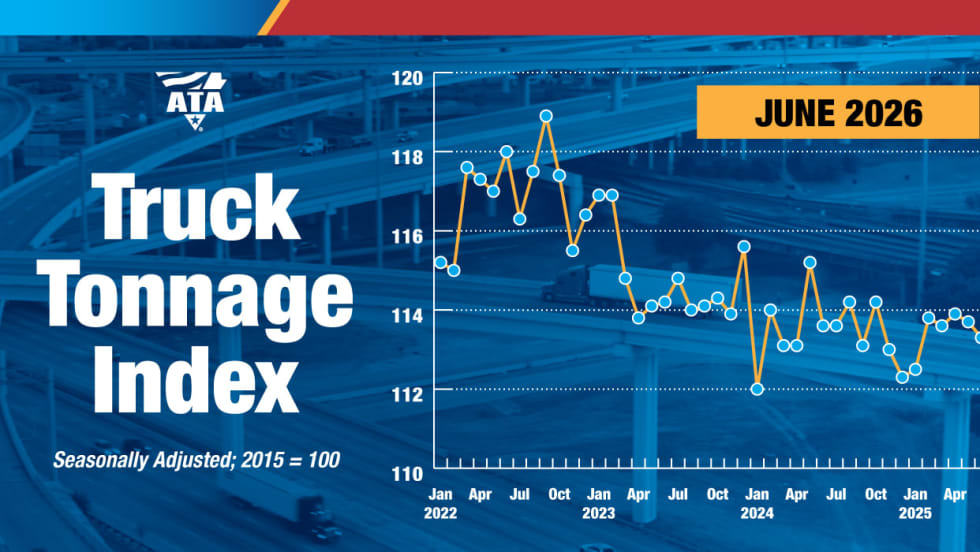
Freight Tonnage Down, Rates up, as Lower Capacity Powers Trucking Recovery
The recovery from the freight recession continues to be driven by reduction in capacity rather than by increased demand.
Read More →
Think Your Trucking Fleet Isn't Using Much AI? Think Again
Shadow AI — the use of unauthorized artificial intelligence tools at work — is becoming increasingly common, putting sensitive company data at risk. Learn how trucking fleets can protect sensitive data while embracing AI.
Read More →
ArcBest Consolidates Brands, Cuts Workforce
The company will bring three business units under the ArcBest brand, eliminate about 2% of positions, and expects the changes to generate $40 million in annual savings.
Read More →
Trucking Fleets Faced Record Operating Costs During Third Year of Freight Recession
ATRI's annual operational cost report shows carriers trimmed fleets, delayed equipment purchases, and ran older trucks as expenses continued to outpace freight rates.
Read More →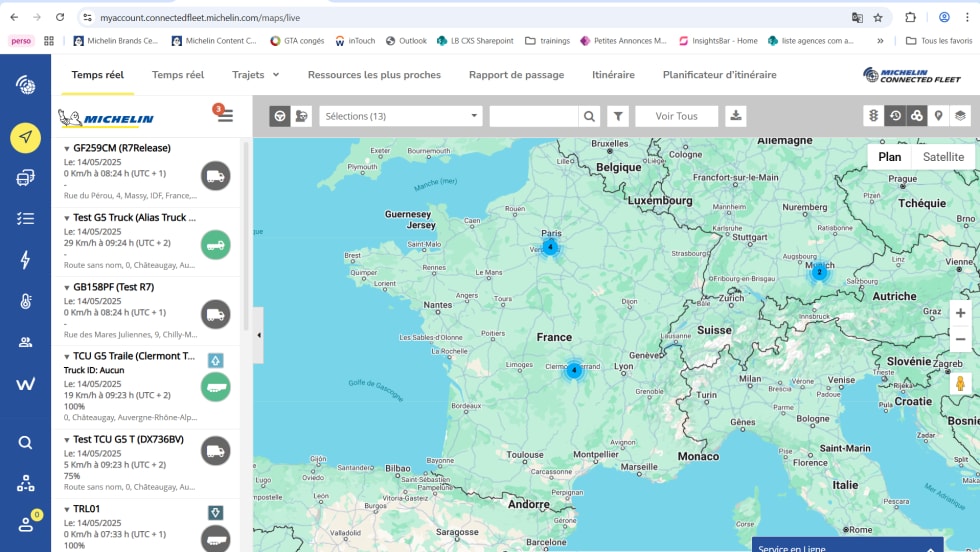
Michelin Adds AI Assistant to MyConnectedFleet Platform
Michelin’s new generative AI tool delivers instant fleet insights, helping managers analyze fuel use, tire maintenance, vehicle status, and operational performance without manually creating reports.
Read More →
LytxOne Platform Now Features AI, Compliance, and Asset Tracking Tools
New enhancements add AI-powered insights, asset tracking, compliance automation, and configurable privacy controls to Lytx's all-in-one fleet management platform.
Read More →