




Related: Truck Platooning System Offers Fuel Savings Potential
Truck Platooning Report Shows Fuel Economy Gains
A report on the first phase of research into the possible benefits of truck platooning technologies showed that all trucks in a platoon gained fuel efficiencies, with the lead truck gaining as much as a 5 percent improvement while the trailing truck got up to 10 percent improvement.
by Staff
May 27, 2015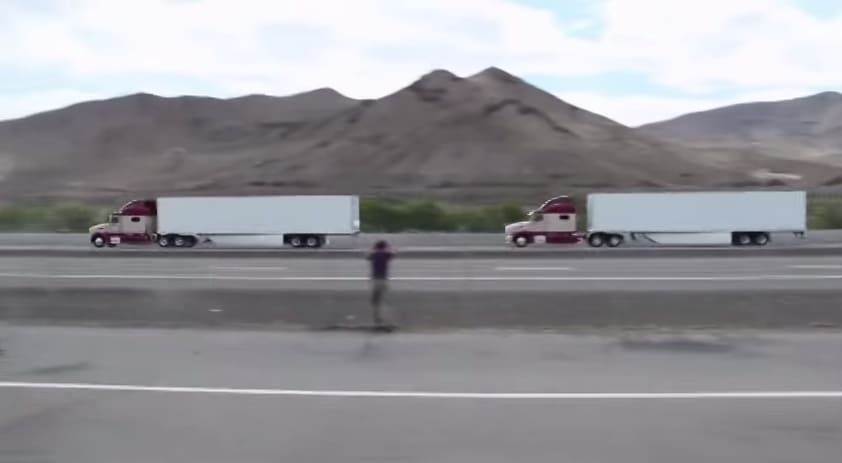
3 min to read
A report on the first phase of research into the possible benefits of truck platooning technologies showed that all trucks in a platoon gained fuel efficiencies, with the lead truck gaining as much as a 5 percent improvement while the trailing truck got up to 10 percent improvement.
The study, which was conducted by Auburn University’s GPS and Vehicle Dynamics Laboratory, along with partners Peloton Technologies, Peterbilt Motors, Meritor-Wabco and the American Transportation Research Institute.
As part of the Federal Highway Administration’s advanced research project on heavy truck cooperative cruise control, the first phase of the study looked at the commercial feasibility of driver assistive truck platooning, or DATP.
DATP makes use of available vehicle-to-vehicle communications and other technologies such as adaptive cruise control, collision avoidance systems, radar, GPS data and other systems to allow two or more trucks to “platoon” in a very tight formation at highway speeds, thereby reducing drag and helping all trucks in the platoon gain mpg benefits. The trucks constantly maintain a communication link which allows them to share data. If the lead truck’s collision avoidance system activates its adaptive cruise control to slow down, the following truck or trucks will do the same.
The first phase gathered industry input for a preliminary case analysis and also looked at technical issues such as system modeling, aerodynamics modeling, research for developing algorithms for platooning formation, human-machine interface evaluations and other aspects of the technology.
According to the report on the research released by ATRI, “the going-in hypothesis was that DATP technology is near market-ready for industrial use and will provide value in specific roadway and operating conditions for heavy truck fleet operations.”
DATP technology builds on adaptive cruise control, which has been available in the trucking industry for several years. The report said there were approximately 100,000 Class 8 trucks on the road now with adaptive cruise control. Adding to the functionality are collision mitigation systems, which have also been on the market for some time.
Some key findings:
Truckload and line-haul LTL operations would be the most likely fit for early adoption of DATP.
A majority of fleet managers contacted said such a system would have either a positive impact or no impact on driver retention and 39% said they felt drivers were likely to use a DATP system.
Owner-operators response was more toward the “negative end of the scale” the report said and owner-operators would want a ROI payback within 10 months, while fleet respondents expected a payback within 18 months.
Using models based on historical traffic slows, researchers at Auburn found that platoon formation would not cost truckers excess time.
The “most challenging aspect,” of DATP, according the report comes down to who to platoon with. Most fleets would prefer platooning with their own trucks, while owner-operators would prefer platooning with other owner-operators, with only 7% of surveyed owner-operators willing to platoon with large fleets and 5% of large fleets willing to platoon with owner operators.
Phase II of the study will focus on system testing using donated Peterbilt tractors equipped with the Peloton system and performance testing systems, specifically wireless communications, vehicle control, positioning, driver comfort and safety.
Additional information can be found at www.atri-online.org.
More Drivers

Truck Drivers Need More Than Another Alert
Fleets have more visibility into truck health, safety events, and driver activity than ever. The next challenge is turning all that information into useful guidance for the person who has to decide what to do next.
Read More →
FMCSA Removes 110 Truck Driver Training Schools from Certified ELDT List
Federal regulators also are targeting more than 160 additional training providers and launching a nationwide audit of third-party CDL skills testers as part of a broader crackdown on trucking fraud.
Read More →
Hours of Service Pilot Programs: FMCSA Readies for 2027 Rollout
Two pilot programs could eventually reshape hours-of-service rules, giving truck drivers options to pause their 14-hour clock or use longer split sleeper rest periods.
Read More →
Medical Cards, English Proficiency Reshape Roadcheck Violations
Medical-card violations jumped to the top of the driver out-of-service list during CVSA’s 2026 International Roadcheck, while English-language proficiency violations appeared among the leading violations for the first time.
Read More →
Driver Trust Can Make or Break the Success of Fleet Safety Technology
New Teletrac Navman research suggests that onboarding, transparency about driver data, and positive feedback can play a significant role in how commercial drivers respond to safety and coaching technology.
Read More →
EEOC Sues KLLM Over Alleged Sex Discrimination in Driver Training
KLLM is facing a federal sex-discrimination lawsuit over policies the EEOC alleges put female truck driver trainees at a disadvantage.
Read More →
FMCSA Moves to Codify English Language Requirements for Commercial Drivers
By changing regulations on English-language proficiency requirements for commercial drivers, rather than relying on a guidance memo, the FMCSA said future administrations won't be able to walk back the Trump administration's stricter enforcement with just a memo.
Read More →
Drivers Put Western Star Trucks to the Test at Star Nation Experience
Watch to get an inside look at the Western Star trucks, technology, and community behind the Star Nation Experience 2026!
Read More →
Trump Administration Looks to Put More Veterans Behind the Wheel
The Freedom Haulers program pulls together existing and expanded programs at several federal agencies to recruit veterans to drive commercial heavy-duty trucks and cut the red tape for them to get a CDL, training, and employment.
Read More →
Putting Mack’s Command Steer to the Test
A test drive of Mack’s Command Steer active steering system evaluates how it can make truck driving easier and less tiring.
Read More →